Bringing a young dog home is one of life’s most rewarding experiences, but dealing with a puppy crying in crate at night can quickly push even the most enthusiastic pet parent to the edge of exhaustion. Those high-pitched whimpers, frantic yelps, and prolonged howls echoing through a dark bedroom can make you question whether you are doing something terribly wrong. Rest assured that nighttime vocalization is a completely normal biological reaction for an infant canine experiencing their first solo evenings away from their mother and littermates.
In a puppy’s instinctual mind, being alone in the dark represents vulnerability and danger. In the wild, a solitary pup left behind by their pack uses distress vocalizations as a survival mechanism to call their mother back. Recognizing that initial night crying stems from instinctual apprehension rather than stubborn defiance helps you respond with calm, structured reassurance rather than frustration.
Integrating a thoughtful puppy training schedule into your daytime and evening routine is the single most effective way to eliminate bedtime stress. When your puppy enjoys predictable exercise, mental enrichment, proper feeding times, and regular daytime crate rest, they arrive at bedtime physically relaxed and ready for deep, restorative sleep.
According to veterinary guidance published by the Ohio State University Veterinary Medical Center, fostering crate independence helps prevent separation anxiety, and owners should avoid releasing a puppy while they are actively crying. The guidance emphasizes that the adjustment process can take a long time and vocalizations may temporarily increase before improving, requiring consistent patience rather than expecting quiet nights in just a few days.
Understanding Why Your Puppy Is Crying in Crate at Bedtime

Separation Distress from Littermates
Diagnosing the root cause of nighttime distress is essential for responding effectively. When your puppy is crying in crate enclosures after lights out, their vocalizations almost always stem from one of three primary triggers: separation apprehension, biological bathroom urgency, or an excess of unspent physical energy.
Separation apprehension is the most common culprit during your first week together. For the first eight weeks of life, a puppy sleeps nestled against a warm pile of littermates and a mother dog. Placed alone inside a novel wire crate in a quiet room, the sensory deprivation feels startling. Whimpering is their natural, instinctive plea for closeness and comfort.
Immature Bladder Capacity and Nighttime Urgency
Biological necessity is another major factor. An eight-week-old puppy possesses an immature bladder that cannot physically hold urine for an eight-hour night. According to VCA Animal Hospitals, a two-month-old puppy should be taken outside at least every two hours, including overnight. When a young dog wakes up feeling bladder pressure, their natural instinct compels them to cry out to avoid soiling their sleeping area.
Lastly, lack of daytime decompression often fuels bedtime resistance. Puppies that spend evening hours napping on the living room sofa frequently awaken right at human bedtime with renewed vigor. Ensuring your puppy follows an active late-afternoon routine prevents midnight wakefulness and vocal agitation.
Surviving the First Night and Setting Up the Bedroom Crate

Your preparation for the first night dictates how smoothly the transition will unfold. The most critical decision you can make is placing the sleeping crate directly inside your bedroom, ideally right alongside your bed within arm’s reach. Banishing a brand-new puppy to an isolated laundry room or downstairs kitchen amplifies feelings of abandonment and intensifies vocal panic.
Having the crate bedside provides vital sensory comfort. Your puppy can smell your familiar presence, hear your regular breathing, and know they are safe within your pack.
Equip the sleeping den with comfortable bedding. Place a soft fleece blanket inside, and consider draping a light sheet over three sides of the wire crate to create a snug, darkened cave that minimizes visual distractions.
Establishing a Calm Bedtime Wind-Down Routine
Establish a strict evening wind-down routine. Dim the household lighting an hour before bedtime, turn off loud television screens, and avoid high-energy wrestling or games of chase. Gentle handling, calm petting, and low-key bonding signal to the puppy’s nervous system that the household is transitioning toward quiet rest.
How to Stop Crying in Crate at Night: Practical Protocols
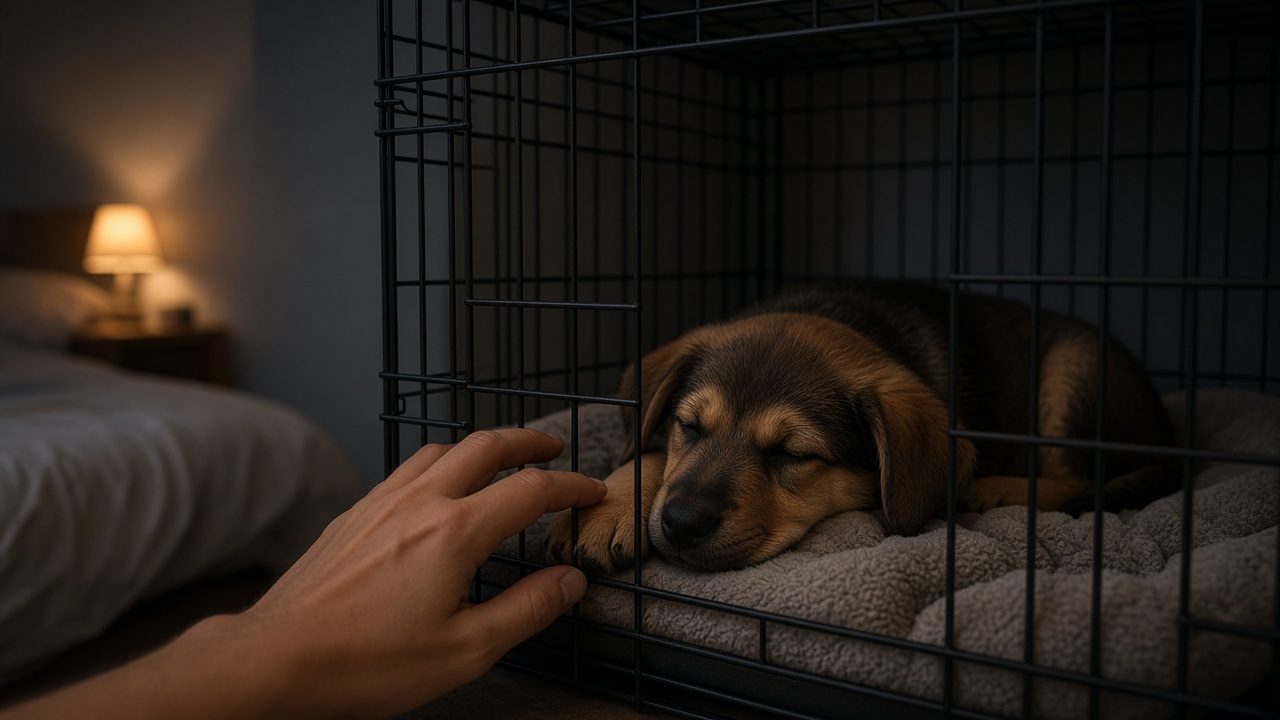
Learning how to stop crying in crate routines requires mastering the distinction between genuine physical distress and behavioral demand barking. If you rush to open the crate door every time your puppy makes a sound, you accidentally reinforce crying as an effective tool to escape bedtime confinement.
When practicing crate training at night, guidance from the American Kennel Club and the Ohio State University Veterinary Medical Center emphasizes patience, noting that learning to settle quietly in a crate is a gradual process.
However, if whimpering begins abruptly in the middle of the night after hours of peaceful slumber, assume it is an urgent bathroom request. Young canines rarely wake from deep sleep to complain about confinement; waking almost always indicates that a full bladder is creating uncomfortable physical pressure.
According to the American Kennel Club, if a puppy whines in the middle of the night, owners should calmly let them out, as they most likely need to eliminate. Carry your puppy quietly outside on a leash, place them directly on their elimination spot, wait quietly for them to go, deliver brief calm praise, and place them immediately back into their crate without fanfare.
Managing Midnight Whining and Essential Potty Breaks

Managing recurrent whining in crate at night requires establishing proactive rather than reactive bathroom schedules. Waiting for your puppy to reach full bladder desperation often induces frantic crying that elevates adrenaline levels, making it difficult for the dog to settle back down once returned to the crate.
For an eight to ten-week-old puppy, consider setting a quiet alarm on your phone to take them outside every two hours overnight, in line with guidance from VCA Animal Hospitals. Waking up proactively to escort your sleeping puppy outside for a calm bathroom break before they start crying prevents the development of distress vocalizations entirely. It teaches the puppy that you will reliably care for their biological needs without them needing to scream for attention.
Manage evening routines carefully. According to the ASPCA, clean, fresh water should be available to pets at all times, and the American Kennel Club advises providing water in the crate rather than restricting access. Pair regular hydration with a double-potty opportunity: take your puppy outside thirty minutes before bed, and then offer one final quick outdoor trip right before you turn out the lights.
Resist the temptation to take your puppy into your bed or offer midnight snacks, and keep the environment quiet and dark to allow them to settle back to sleep.
Achieving Full Overnight Independence

Achieving complete crate training overnight independence is a gradual process that requires realistic expectations. According to VCA Animal Hospitals, a three-month-old puppy should be taken out every three hours, and comfortable all-night crating often takes until roughly six months of age. Furthermore, UC Davis Veterinary Medicine notes that puppies require frequent elimination trips throughout early development, so owners should not expect young dogs to hold their bladder for an eight-hour night.
Monitor your puppy’s vocal patterns closely over their first few weeks. Normal protest whimpering decreases in duration and intensity as your puppy adjusts, though the timeline varies for every dog. The American Kennel Club notes that crate training can take anywhere from a single day to several months, and the Ohio State University Veterinary Medical Center cautions that teaching a puppy to settle quietly can be a lengthy process.
According to the Cornell University College of Veterinary Medicine, you should never force a dog to stay crated if they are panting, drooling, pacing, or eliminating. In such situations, do not force the issue; consult your veterinarian to evaluate your puppy.
Conquering the challenge of a puppy crying in crate at night requires patience, consistency, and a clear understanding of canine developmental psychology. By keeping your puppy close, attending to their biological bathroom needs promptly, and maintaining calm, predictable bedtime routines, you will soon enjoy quiet, restorative nights and a happy, confident canine companion.
Frequently Asked Questions
Should you let your puppy out of the crate if they cry at night?
Guidance from the Ohio State University Veterinary Medical Center advises against releasing a puppy while they are actively crying, as this accidentally reinforces vocal protests. However, if a puppy wakes up whimpering abruptly after hours of sleep, assume an urgent bathroom need. Take them outside on a leash calmly to eliminate, deliver brief quiet praise, and place them immediately back into their crate without playtime.
How often does an eight-week-old puppy need nighttime bathroom breaks?
According to VCA Animal Hospitals, an eight-week-old puppy should be taken outside at least every two hours, including overnight, due to limited bladder capacity. A three-month-old puppy generally requires an outdoor break every three hours. Most young dogs cannot comfortably hold their bladder through an entire night until roughly six months of age.
Where should the crate be placed during the first week at home?
Place the sleeping crate directly inside your bedroom within arm’s reach of your bed. Hearing your breathing and smelling your familiar presence provides critical sensory comfort to a newly homed puppy and reduces separation apprehension. Banishing a puppy to an isolated room elevates distress and triggers prolonged vocal panics.
When does nighttime crate crying indicate an emergency or severe distress?
While mild whimpering during crate acclimation is normal, extreme distress requires veterinary attention. Guidelines from the Cornell University College of Veterinary Medicine state that owners should never force a dog to remain crated if they show signs of severe panic, such as heavy panting, drooling, frantic pacing, or eliminating inside the crate. If these signs occur, discontinue confinement and consult your veterinarian.