Preparing a comprehensive new puppy checklist ensures your household is fully equipped with safe, practical supplies before your new family member arrives. Bringing a young pet into your living environment requires thoughtful preparation, childproof safety checks, and dedicated confinement spaces. Having essential gear organized in advance reduces arrival day stress, allowing you to focus entirely on comforting your companion during their first hours home.
Early puppyhood involves energetic exploration, frequent chewing, and rapid physical maturation. Equipping your home with dependable confinement enclosures, durable feeding dishes, and safe enrichment items establishes healthy boundaries from the start. A thoughtful setup sets the stage for predictable routines, rapid housebreaking, and calm behavioral habituation.
Before welcoming your dog, walk through each room to verify that safety barriers, clean bedding, and basic care supplies are positioned appropriately. Creating a structured daily puppy training schedule alongside these physical supplies provides the supportive framework necessary for a smooth household transition.
Essential Setup Gear for Safe Confinement

Safe confinement tools form the cornerstone of successful house management and accident prevention. Without secure physical boundaries, young dogs explore hazardous household areas, chew electrical cords, or soil flooring unnoticed. Investing in durable enclosures gives your companion a calm personal refuge while giving caregivers peace of mind.
The ASPCA general dog care recommendations note that pets need a warm, quiet place to rest, away from drafts and off the floor, such as a training crate with a blanket.
To master enclosure habituation and prevent nighttime anxiety, refer to our step-by-step tutorial on crate training a puppy for positive conditioning methods and setup tips.
Selecting Proper Wire Crates and Exercise Pens
An appropriately sized wire enclosure should allow your pet to stand erect without hunching, turn around in a complete circle easily, and stretch out fully on their side. Avoid purchasing an oversized crate without a divider panel, as excess interior space encourages puppies to eliminate in one corner and sleep in another.
Adjustable exercise pens provide valuable enclosed play space during daytime hours. Setting up an exercise pen in a high-traffic family area allows your companion to participate in daily household life while remaining safely separated from carpets and dangerous chewing hazards.
Bedding Choices and Washable Absorbent Liners
During the earliest weeks of housebreaking, prioritize bedding that is easily washable and resistant to chewing. Soft fleece pads or durable canvas mats with removable, machine-washable covers handle occasional accidents without retaining moisture or odors. Avoid plush polyfill-stuffed beds early on, as teething puppies frequently disembowel and ingest synthetic stuffing.
Keep multiple replacement liners on hand so soiled bedding can be laundered immediately without leaving the sleeping enclosure bare. Waterproof mattress protectors placed beneath soft mats provide an additional layer of protection for underlying trays.
Daily Feeding and Hydration Supplies
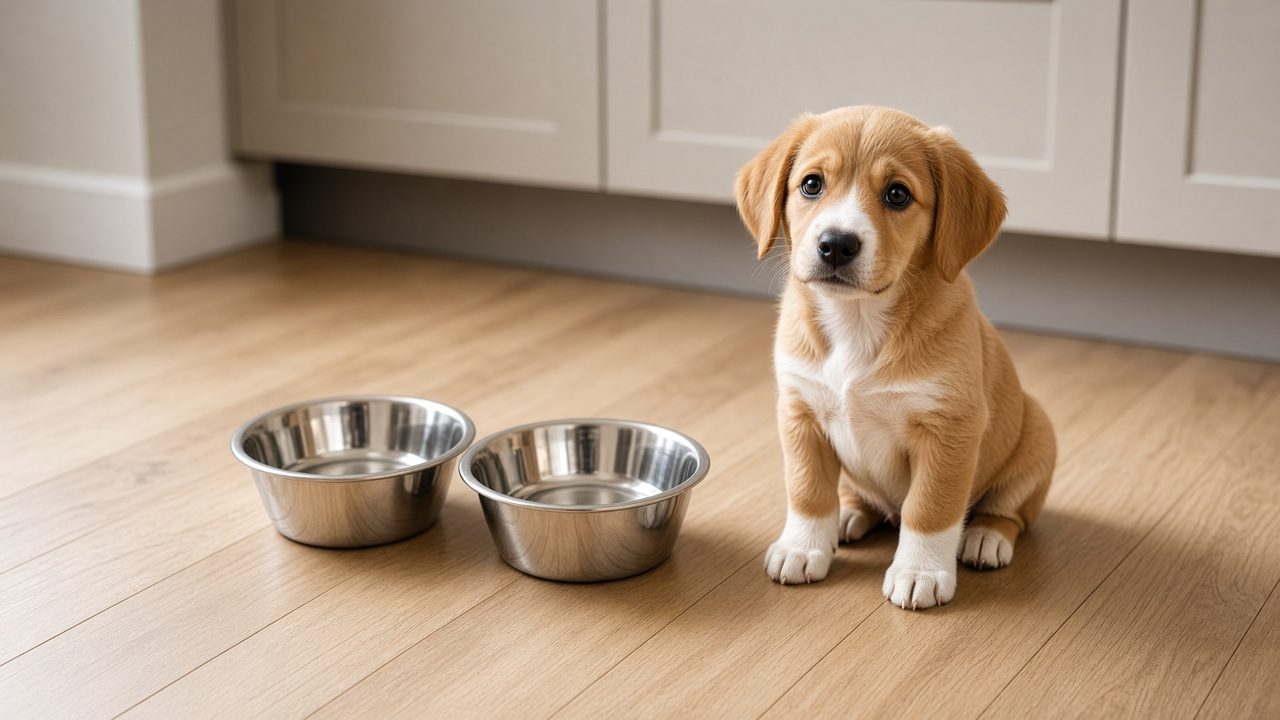
High-quality feeding dishes and measured dietary routines support steady physical growth and predictable elimination timing. Establishing designated feeding stations away from busy walkways promotes relaxed meal consumption and prevents food guarding behaviors. Sticking to scheduled meal times rather than free-feeding simplifies outdoor bathroom scheduling significantly.
The American Kennel Club puppy checklist guide recommends practical food and water bowls, highlighting options such as elevated or adjustable designs. Heavy rubber-bottomed bases prevent energetic pups from tipping bowls during enthusiastic dining.
Pairing structured meals with predictable outdoor trips forms the basis of how to potty train a puppy, turning biological digestion into a dependable management tool.
Non-Slip Stainless Steel Food and Water Bowls
Selecting heavy-gauge stainless steel or lead-free ceramic bowls allows thorough sanitizing in dishwashers. Choosing weighted, wide-based designs prevents accidental water spills across hardwood floors.
Provide clean, fresh water at all times during daytime waking hours, refreshing bowls multiple times daily. For puppies with long ears or rapid eating habits, specialized narrow-opening or slow-feeder maze bowls encourage slower swallowing and healthier digestion.
Teething, Toys, and Safe Stimulation Items
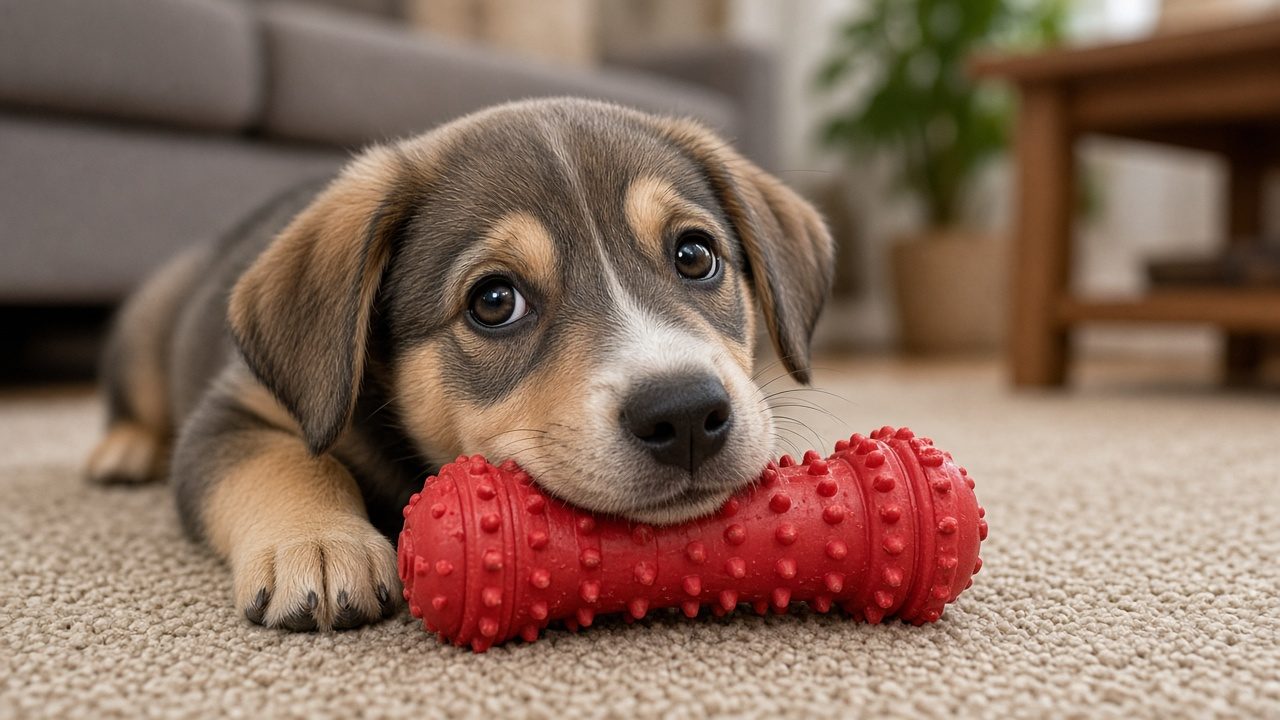
Teething puppies experience gum discomfort as baby teeth loosen around 12 to 16 weeks, with adult teeth typically emerging by about six months (AKC). Providing a diverse selection of safe, durable chew items redirects natural biting impulses away from furniture legs, baseboards, and human hands. Enrichment toys also satisfy mental curiosity, preventing boredom-induced vocalization.
Always inspect toys regularly for loose parts, cracks, or missing pieces, discarding damaged items promptly before ingestion hazards arise. Rotating toys regularly maintains novelty and enthusiasm without cluttering living areas with excessive gear.
Never offer cooked animal bones, hard plastic items that splinter, or small decorative trinkets that present choking hazards. For specific guidance on dental health or safe chew firmness, speak directly with your veterinarian during your initial wellness examination.
Durable Natural Rubber Toys for Teething Gums
Hollow rubber toys that can be stuffed with approved puppy kibble or wet food provide soothing, long-lasting mental stimulation. Chilling a stuffed rubber toy in the refrigerator offers cooling relief for inflamed, tender gum tissue during peak teething weeks.
Braided cotton rope toys soaked in water and briefly chilled offer similar dental relief under active supervision. Ensure loose threads are trimmed immediately to prevent accidental thread swallowing during enthusiastic tugging games.
Sanitation, Cleanup, and Grooming Necessities
Maintaining a clean, sanitary household environment requires specialized cleaning supplies formulated specifically for organic pet waste. Standard household cleaners often fail to remove organic pet waste completely, leaving microscopic scent markers that draw pets back to the same indoor spot. Equipping your utility closet with proven enzymatic solutions ensures thorough sanitation.
Enzymatic cleaner formulations break down chemical bonds in urine, feces, and vomit on molecular levels. Generously saturate accident areas and allow the solution to air dry naturally so the active enzymes can digest organic residues completely. Stocking absorbent paper towels, rubber gloves, and a dedicated pet waste scoop streamlines daily yard maintenance.
Gentle grooming tools also belong on your early preparation list. A soft-bristle brush, blunt-tipped nail trimmers, puppy-formulated gentle shampoo, and ear-cleaning solution introduce gentle body handling during critical early socialization windows.
Puppy-Proofing Living Spaces Before Arrival
Completing a thorough puppy-proofing sweep of your home protects curious pets from environmental hazards while preserving valuable household belongings. Young dogs explore their surroundings primarily with their mouths, investigating low-lying objects with relentless curiosity. Viewing your home from your dog’s eye level reveals surprising risks that adults easily overlook.
Tuck away dangling electrical cords behind furniture or secure them inside split-tubing cord protectors to eliminate electrical shock dangers. Remove toxic houseplants, lock lower kitchen and bathroom cabinets containing household cleansers, and store human medications, chocolates, and shoes securely inside closed closets.
Using this practical new puppy checklist as your roadmap transforms arrival preparations into an organized, stress-free milestone. Taking time to prepare your home environment thoroughly establishes the foundation for safety, comfort, and joyful companionship.
Frequently Asked Questions
What should be at the top of a checklist new puppy owners prepare?
The most critical items include an appropriately sized wire crate, stainless steel food and water bowls, safe chew toys, and enzymatic urine cleaner. Securing reliable confinement gear and immediate sanitation supplies prevents early indoor accidents from becoming habits. Having these essentials positioned before your companion walks through the door ensures a smooth start.
How many safe chew items belong in a checklist for new puppy routines?
Provide a variety of safe chew items with different textures, including firm natural rubber toys, chilled teething rings, and pliable chews. Offering varied textures satisfies teething urges and redirects mouthing away from household furniture. Rotating toys regularly keeps mental engagement high.
Which enzymatic cleaners are necessary for early household accidents?
Select a dedicated pet-formulated enzymatic cleaner designed to break down organic waste proteins completely. Enzymatic sprays destroy scent markers so your pet does not revisit previous accident spots.
What outdoor walking gear should owners prepare in advance?
Acquire an adjustable, lightweight nylon or mesh harness, a standard four-to-six-foot flat nylon leash, and a secure collar with an identification tag. Comfortable, well-fitted walking gear protects delicate necks and builds positive outdoor associations.