Introducing your young dog to a dedicated indoor enclosure is one of the kindest and most practical steps you can take as a new dog owner. Done properly, crate training a puppy creates a secure, comfortable personal sanctuary where your pet can rest peacefully, recover from daily stimulation, and remain safe whenever unsupervised. Rather than serving as a place of confinement or punishment, a properly introduced crate taps directly into a dog’s natural canine instinct to seek out a sheltered, clean den.
Wild canines instinctively seek out small, covered spaces to sleep, rear their young, and hide from predators. In a modern human home filled with bustling family activity, unpredictable noises, and unfamiliar smells, a cozy crate provides that exact sense of biological security. It gives your young dog an undisturbed personal refuge where they can decompress without feeling vulnerable.
Integrating a thoughtful puppy training schedule into your daily routine ensures that crate acclimation occurs smoothly alongside housebreaking, playtime, and feeding. When crate time is balanced with outdoor exercise, social connection, and mental enrichment, your dog views their crate as a welcome resting place rather than a restriction on their freedom.
According to the Ohio State University College of Veterinary Medicine, a crate can prevent destructive behavior, protect young animals from ingesting dangerous household objects, and help prevent inappropriate elimination. Furthermore, the American Kennel Club notes that prior crate training can help a dog be less stressed during veterinary visits, boarding, or travel.
Essential Crate Training Tips from Day One
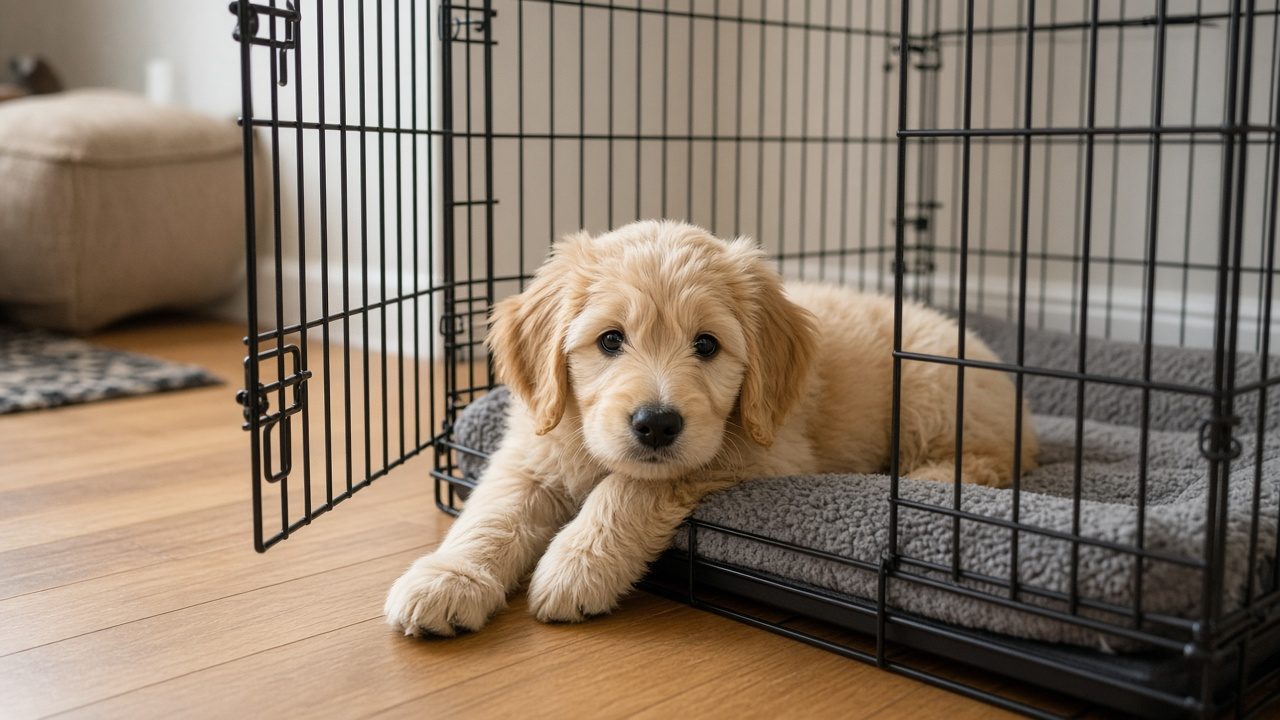
Optimal Enclosure Placement in Living Areas
Setting up your crate environment correctly establishes positive associations right from the beginning. Practical crate setup tips for your young dog start with finding the optimal location in your home. Place the enclosure in an active, temperature-controlled living space, such as the corner of your family living room or kitchen, rather than exiling the dog to a damp basement or isolated garage. Puppies are social animals that want to feel connected to family life even while resting.
Comfortable and Chew-Resistant Bedding
Equip the crate with comforting, durable bedding. For the first few weeks, choose bedding that is easy to wash and resistant to chewing, such as a sturdy orthopedic crate pad or a soft fleece blanket. Avoid plush beds filled with loose polyfill stuffing, which an inquisitive teething puppy could tear open and swallow.
Positive Association and Mealtime Games
Leave the crate door permanently latched open during initial introduction exercises. Scatter delicious high-value treats, such as small bits of freeze-dried liver or plain cooked chicken, near the entrance and inside the enclosure. Allow your puppy to explore the space at their own pace without physically forcing them inside or closing the door behind them. Let them discover that entering the space produces wonderful rewards.
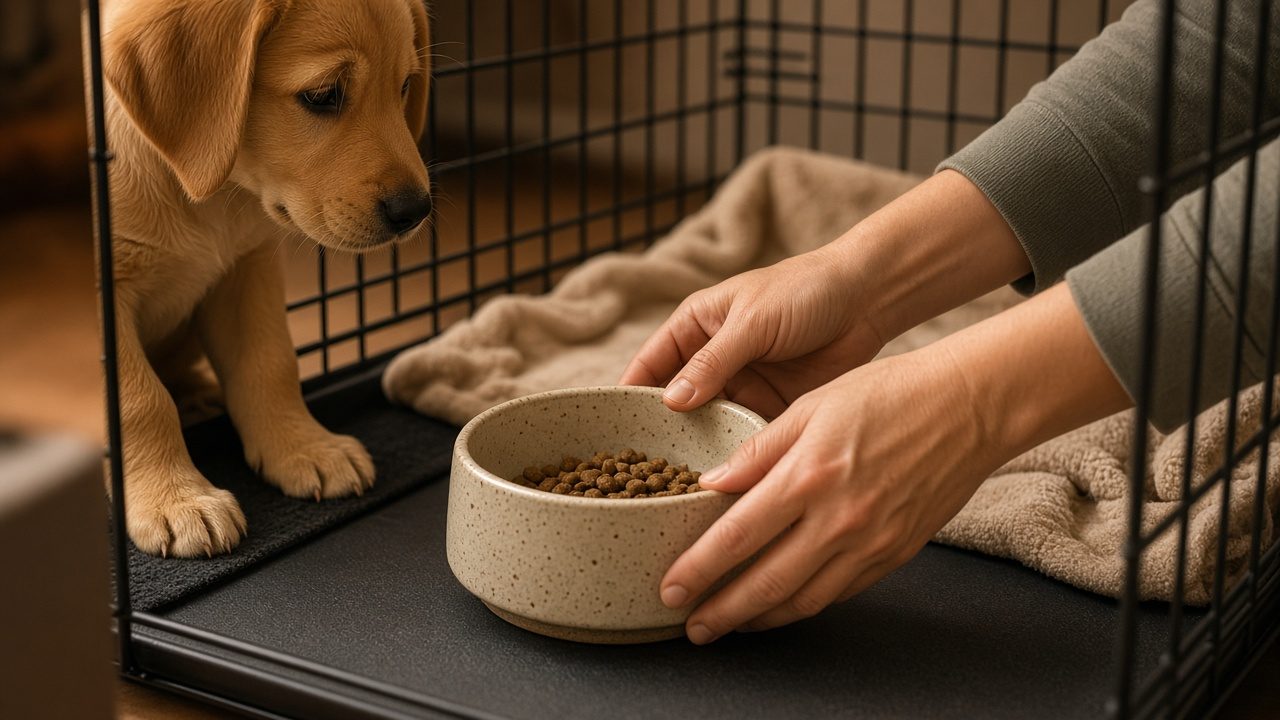
Feed all daily meals inside the enclosure. Place your puppy’s food bowl just inside the doorway at first, gradually moving it farther back toward the rear wall with each consecutive meal. Eating regular meals inside creates a powerful positive emotional conditioning between the physical crate and pleasurable sustenance.
How Long Does It Take to Crate Train a Puppy Successfully?
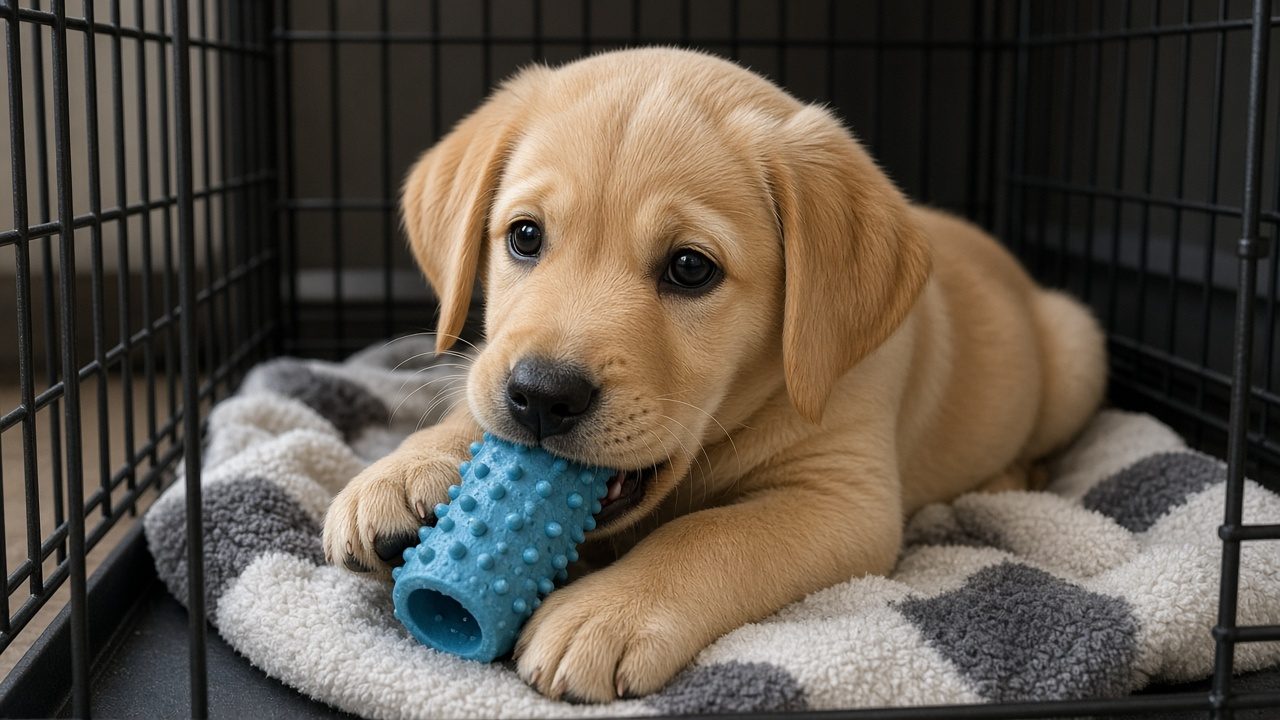
Every dog possesses an individual personality and learning pace, leading many owners to wonder: how long does it take to crate train a puppy? According to the American Kennel Club, crate training can take anywhere from a single day to several months, while VCA Animal Hospitals notes that a puppy often takes one to two months to adjust to a crate and may not be comfortable crated through the night until about six months of age.
The total duration of training depends significantly on early life experiences, temperament, and owner consistency:
- Early Breeder Acclimation: Puppies whose breeders introduced open nesting boxes or crates during the weaning phase often adjust within several days.
- Puppy Temperament: Naturally confident puppies adapt quickly, whereas sensitive, timid, or anxious pups require a slower, more gradual desensitization process.
- Human Consistency: Owners who adhere to predictable routines and never use the enclosure as a threat or punishment experience much faster breakthroughs.
- Pacing and Incremental Steps: Moving too quickly by locking an unprepared puppy inside for hours before they are comfortable can cause panic, creating negative associations that require weeks of patient retraining to overcome.
Recognize that true crate reliability is an evolving process that grows alongside your puppy’s physical maturity. Celebrate small daily victories, such as a voluntary nap inside or three minutes of quiet resting while you prepare dinner, as meaningful indicators of lasting progress.
Step-by-Step Desensitization and Door-Closing Exercises
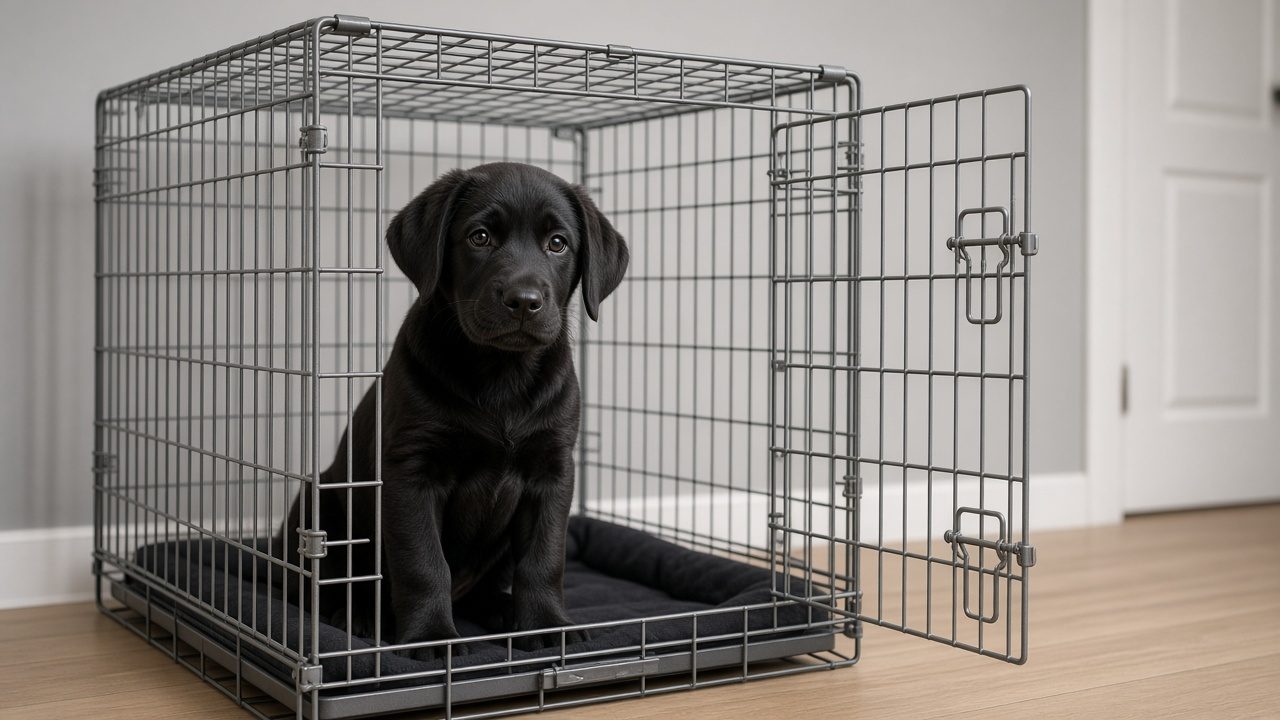
Once your puppy readily walks into the enclosure to retrieve treats and enjoy meals, begin practicing brief door-closing routines. Step-by-step methods outlined by the American Kennel Club recommend introducing door closure in small increments while tossing treats on the floor.
Prepare a long-lasting enrichment item, such as a hollow rubber toy stuffed with puppy-safe peanut butter or canned puppy food frozen overnight. Lure your puppy inside, hand them the high-value toy, and gently pull the wire door closed without latching it. Sit calmly right beside the crate while your puppy licks the toy. After one to two minutes, gently open the door before they finish the treat, allowing them to exit freely.
Gradually increase the duration of door closure while remaining in the room. Progress from two minutes to five, ten, and fifteen minutes over several training sessions across multiple days. If your puppy remains completely calm and absorbed in their chew toy, begin standing up and taking a few steps around the room, demonstrating that door closure does not mean permanent abandonment.
Next, begin practicing brief physical departures from the room. Walk quietly out of sight into an adjacent hallway for thirty seconds, then return calmly and sit back down without fanfare. Slowly extend your absence to one minute, three minutes, and five minutes. Always return and reward while the puppy is quiet, reinforcing that peaceful relaxation brings your return.
Avoiding Common Mistakes and Building Lifelong Comfort
Even well-intentioned owners frequently make missteps that inadvertently slow down the training process. The most damaging error is using the enclosure as a punishment. If your puppy nips your hand, steals a shoe, or has an accident on the rug, never angrily shout or shove them into their crate. Using the space as a “time-out cell” creates dread and resistance, destroying their perception of the crate as a safe haven.
Another common mistake is letting the puppy out of the crate while they are actively barking, whining, or pawing at the door. If you open the door in response to vocal fussing, your puppy learns that crying is the magic key that unlocks freedom. Instead, wait for a distinct lull of at least five to ten seconds of complete silence before opening the latch.
Be mindful of maximum daytime confinement durations. A young puppy should never be confined in a crate for excessive hours without bathroom breaks and mental stimulation. As a general rule, an eight-week-old puppy should not remain crated while awake for longer than one to two hours, while a three-month-old needs a bathroom break about every three hours (VCA Animal Hospitals).
Overnight Crate Rest and Safe Daytime Management
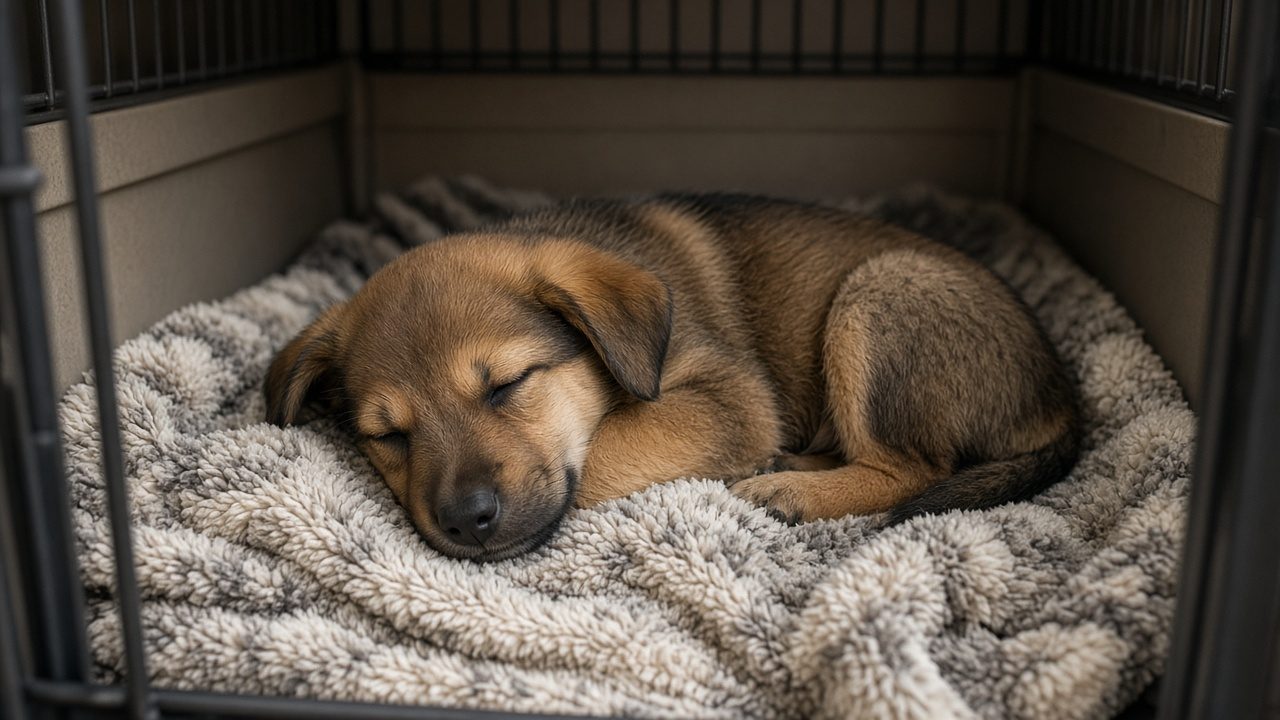
Transitioning daytime crate comfort into overnight sleep requires thoughtful planning. For the first two to three weeks, keep the sleeping crate in your bedroom directly next to your bed. Being close enough to hear your breathing and smell your scent provides immense comfort to a newly homed puppy, significantly reducing nighttime separation distress.
Before putting your puppy to bed, ensure their physical and biological needs are fully met. Provide a vigorous play session, followed by quiet downtime and a final outdoor bathroom break right before lights out. Avoid late-evening roughhousing that leaves the dog mentally overstimulated at bedtime.
As your puppy matures and achieves complete housetraining reliability, you can gradually move the sleeping crate to its permanent location in your home if desired. With patience, empathy, and consistent positive reinforcement, crate training a puppy transforms an ordinary piece of equipment into your dog’s favorite private retreat for years to come.
Frequently Asked Questions
How long does it take for a puppy to adjust to a crate?
According to the American Kennel Club, crate training can take anywhere from a single day to several months depending on your dog’s temperament and prior breeder acclimation. Guidelines from VCA Animal Hospitals note that puppies often take one to two months to fully adjust and may not settle comfortably through the night until about six months of age. Consistent daily routines and incremental positive training ensure lasting comfort.
How long can an eight-week-old puppy stay crated during the day?
Daytime crating must strictly respect your puppy’s physical age and bladder capacity. As a general rule from VCA Animal Hospitals, an eight-week-old puppy should not remain crated while awake for longer than one to two hours. By three months of age, a crated puppy still requires an outdoor bathroom break and exercise about every three hours.
Where should I place the crate during the first few weeks?
Keep the sleeping crate in your bedroom directly next to your bed for the first two to three weeks. Being close enough to hear your regular breathing and smell your scent provides comfort to a newly arrived puppy and prevents separation distress. Once your dog is confident and sleeping soundly, you can move the crate to another living area if desired.
What should you do if your puppy cries or whines inside the crate?
Never open the crate door while your puppy is actively barking, whining, or pawing, as releasing them teaches that vocal fussing unlocks freedom. Instead, wait for a distinct lull of at least five to ten seconds of complete silence before unlatching the door. Never use the crate as punishment or a time-out space, as this creates fear and resistance.