Bringing a young dog into your home comes with many questions, and new pet owners frequently ask how long does it take to crate train a puppy during their first month. While individual timelines vary widely, many puppies learn to comfortably accept and rest inside an enclosure over several days to several weeks of steady, positive acclimation. The overall timeline depends on your dog’s individual temperament, previous background, and your dedication to patient, reward-based routines that never force confinement.
A crate serves as a canine bedroom, providing a safe sanctuary where your young dog can unwind, recharge, and stay out of household trouble when unsupervised. Crate familiarization works hand in hand with housebreaking because dogs naturally avoid soiling their immediate sleeping space. Understanding this biological drive makes crate acclimation a foundational part of early dog ownership.
Implementing an organized puppy training schedule provides the daily structure required for quick crate acceptance. When rest periods, feeding times, and outdoor bathroom trips happen on a predictable timetable, young dogs learn when to expect rest and when they will be let out. Exploring our comprehensive resource on crate training a puppy offers helpful step-by-step techniques for initial introductions.
Guidance from VCA Animal Hospitals highlights that crate training should always be a gradual process associated with comfort and rewards. Forcing a frightened puppy into a confined space can trigger lasting distress and delay training progress for weeks.
Average Crate Training Timelines and Key Milestones
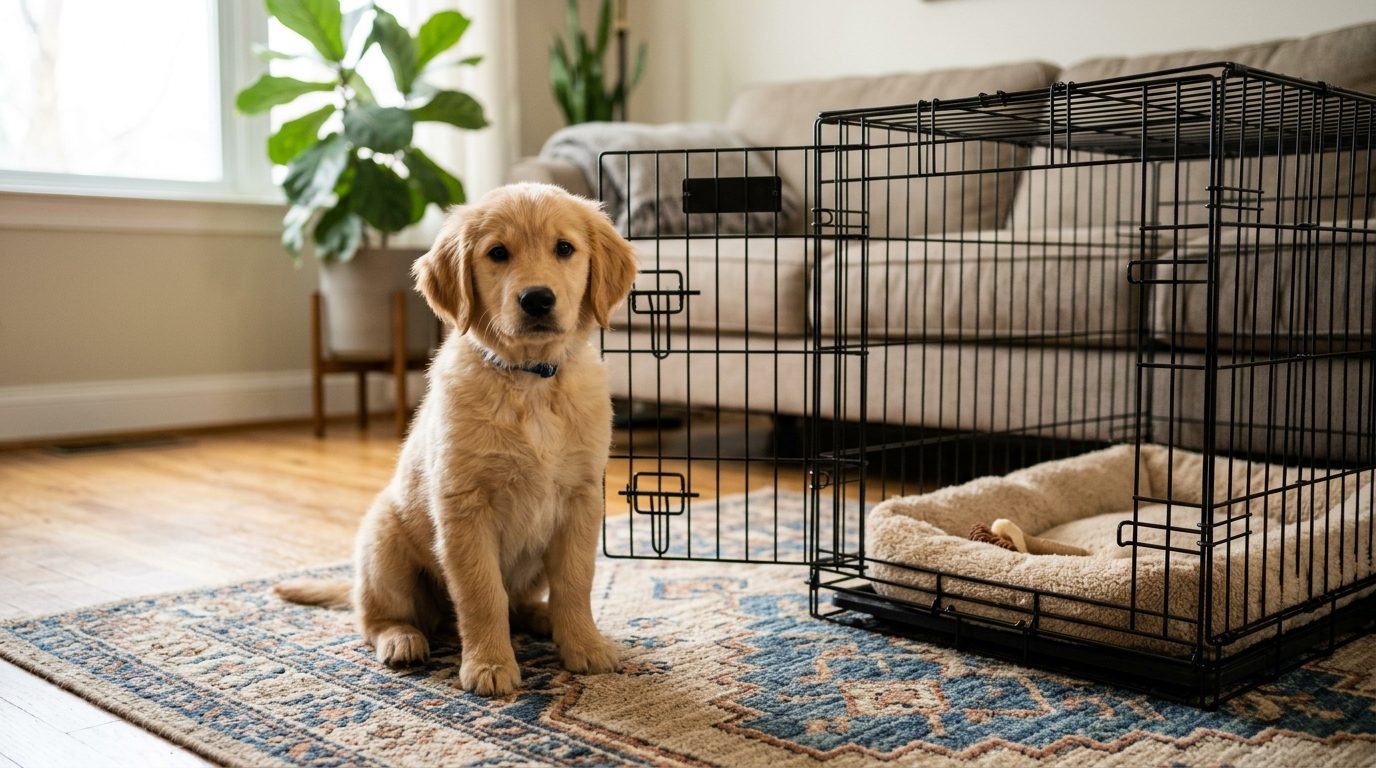
First Week Expectations and Acclimation
During the initial week, the primary goal is helping your dog form a positive emotional response to the enclosure. Keep the door propped open securely so it cannot accidentally swing shut and startle your pet. Scatter high-value treats, kibble, and safe chew toys inside the crate so the puppy enters voluntarily to explore the cozy interior without feeling trapped.
In these early days, avoid closing the door for extended periods. Begin with micro-sessions lasting just thirty seconds to two minutes while you sit right next to the crate, feeding treats through the wire bars. Once your puppy can calmly eat a treat while the door is latched, you can gradually stand up, step a few paces away, and return before any distress begins.
Two to Four Week Milestones
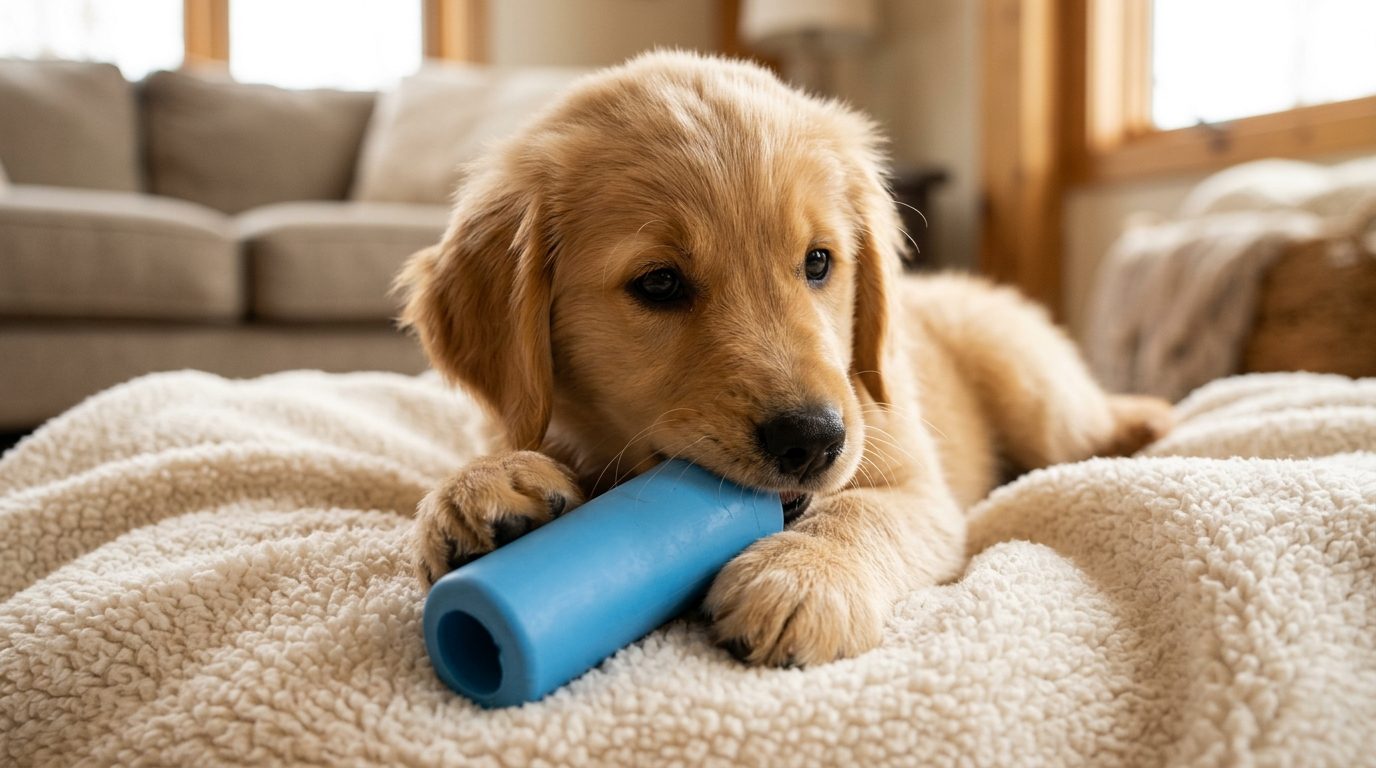
By the second and third weeks of consistent practice, most puppies begin walking into their crate on cue or heading inside independently when they feel tired. During this phase, you can lengthen confinement intervals to thirty to sixty minutes while you remain in the same room or move quietly throughout the home. Providing a durable food-stuffed toy keeps your dog occupied and relaxed while resting inside.
Between weeks three and four, a well-managed puppy should be able to rest quietly inside their crate for age-appropriate daytime naps and sleep peacefully through the night with scheduled bathroom breaks. If your puppy struggles with evening vocalization, reading our detailed guide on puppy crying in crate at night provides specific techniques for managing bedtime stress.
Factors That Influence Training Duration
Not every puppy progresses along the exact same schedule. Several environmental and developmental variables directly impact how rapidly an individual dog adapts to their enclosure.
Age and Bladder Capacity Considerations
Very young puppies aged eight to ten weeks possess limited bladder control and require frequent bathroom breaks day and night. According to housetraining guidance from the Ohio State University College of Veterinary Medicine, puppies need time to adjust to confinement and should never be left crated longer than their physical maturity allows. Expecting an eight-week-old puppy to stay crated without bathroom relief for many consecutive hours sets training up for failure.
Past experiences also play a significant role in training speed. Puppies raised by responsible breeders who began early den acclimation often accept crates within days. Conversely, puppies from crowded shelters or pet stores who were forced to sleep in soiled enclosures may take several weeks of patient counter-conditioning to learn that a clean crate is a comforting space.
Creating Positive Associations to Speed Up the Process
Speeding up crate acceptance requires making the interior space the most rewarding location in your home. Everything wonderful in your puppy’s daily life should originate around or inside the crate.
Treats and Feeding Inside the Enclosure
Serve your puppy’s regular daily meals inside the crate. Place the food bowl near the front opening initially, and gradually slide the dish toward the rear of the enclosure over several feeding sessions. Eating meals inside creates a powerful neurological association between the crate and nourishment, helping the puppy look forward to entering the space.
Guidance from the ASPCA recommends providing safe chew toys or food-stuffed puzzle toys inside the enclosure to keep puppies engaged and relaxed.
Common Mistakes That Delay Crate Success
Several common training errors can stall progress and create intense resistance to the enclosure. Recognizing these missteps ensures you maintain steady forward momentum.
Using the Crate as Punishment
Never send your puppy to their crate as a disciplinary consequence for chewing furniture, jumping, or having an accident. If confinement becomes associated with human anger or isolation, your dog will view the crate as a hostile holding cell rather than a safe haven. The enclosure must remain an exclusively positive retreat.
Another widespread error is letting a puppy out while they are actively barking, whining, or pawing at the door. If you open the latch during vocalization, your puppy learns that crying unlocks freedom. Instead, wait for calm, quiet behavior before turning the latch. For deeper insights on managing whining, review our troubleshooting guide on how to stop puppy crying in crate habits effectively.
Signs Your Dog Is Fully Crate Trained
Recognizing true crate comfort helps you know when your foundational training is complete. While assessing how long does it take to crate train a puppy, look for clear behavioral indicators of genuine relaxation rather than mere passive resignation.
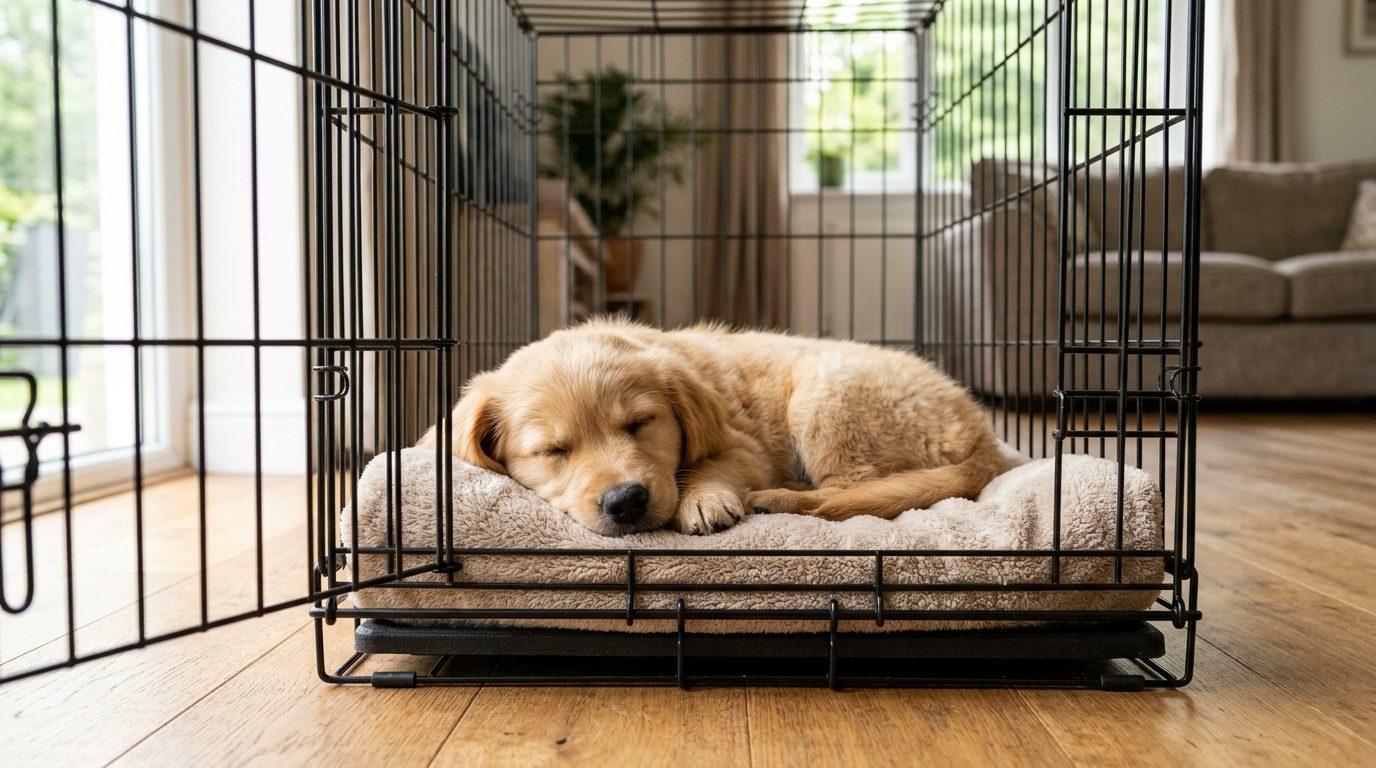
A fully acclimated puppy enters the crate willingly without hesitation when asked. They do not pant heavily, drool, or pace when the door is closed. Instead, they quickly lie down, engage with a chew toy, or curl up for a restorative nap. Outside of scheduled training sessions, a comfortable dog will frequently wander into the open crate on their own to nap during quiet family afternoons.
Voluntary Resting and Independent Settling
When your dog chooses the crate as their favorite resting retreat while the door remains wide open, you have succeeded in creating a true personal haven. Maintain this comfort by never disturbing your dog while they sleep inside, ensuring they always feel secure in their private space.
If your puppy displays extreme panic, attempts to bite through metal wire bars, or salivates excessively, stop crate sessions immediately and consult your veterinarian or a certified professional dog trainer. Severe confinement anxiety requires specialized behavioral protocols rather than standard training routines.
Frequently Asked Questions
How many weeks does crate training typically take?
Crate training timelines vary for each individual puppy, often taking several days to several weeks of consistent, positive practice. The timeline varies depending on the dog’s previous experiences, age, and how consistently owners pair the enclosure with meals and praise. Rushing the process often causes setbacks, making gradual acclimation essential.
Can a young puppy sleep in a crate on their first night?
Yes, a young puppy can sleep in a crate on their first night when the enclosure is placed near your bed where they can hear and smell you. Keeping the crate in your bedroom provides reassurance in an unfamiliar environment. Placing a warm blanket or a familiar scent item inside also helps ease first-night anxiety.
What should you do if a puppy cries inside the crate?
Determine whether your puppy needs an urgent bathroom break, especially if they have been resting quietly for several hours. If physical needs are met, avoid opening the door while the puppy is vocalizing, as this rewards whining. Wait for a few seconds of silence before calmly letting them out without fanfare.
How long can a young puppy safely stay in a crate during the day?
According to guidance from VCA Animal Hospitals, young puppies should not be crated alone for more than about three hours during the day, with two-month-old puppies needing breaks roughly every two hours based on their age. Extended confinement without relief leads to distress and indoor accidents.