Bringing a young dog home is filled with joy, but learning how to stop puppy crying in crate enclosures is often the most pressing challenge facing new owners during their first few weeks. Whimpering, barking, and frantic door-scratching can leave you feeling overwhelmed, but understanding why your puppy cries in the crate allows you to address the root cause with calm empathy rather than frustration. By pairing gradual desensitization with cozy bedding, mental enrichment, and predictable bathroom timing, you can transform the crate into a peaceful sanctuary where your pet settles willingly.
In a young puppy’s instinctual world, being alone inside a crate represents unnatural isolation. For the first eight weeks of life, a puppy sleeps piled against warm littermates and a mother dog. When suddenly placed alone in a novel room behind metal wire, instinct triggers puppy crying designed to summon packmates back for safety and comfort.
A consistent puppy training schedule provides the daily predictability a puppy needs to feel secure. Balancing physical exercise, mental enrichment, regular feeding times, and scheduled resting periods ensures your puppy enters the crate relaxed and ready to sleep rather than hyperactive and frustrated.
Clinical resources from the Ohio State University Veterinary Medical Center emphasize that teaching a puppy to settle quietly in a crate is a gradual process that requires patience, noting that owners should avoid releasing a pet while the puppy is actively crying to prevent reinforcing demand behaviors. Combining these principles with foundational crate training a puppy techniques establishes enduring quiet habits.
Root Causes of Puppy Distress in the Crate

Distinguishing Biological Need from Demand Barking
Puppy crate crying generally falls into three distinct categories: biological necessity, separation apprehension, or behavioral demand. Misinterpreting these cues can accidentally prolong crate crying or cause painful housebreaking accidents.
Biological necessity occurs when a young dog’s bladder or bowels feel uncomfortably full while resting in the crate. Promptly addressing this biological call preserves clean sleeping habits.
Demand barking, by contrast, occurs when an energetic puppy protests crate confinement because they want attention, toys, or human play. Demand crate crying tends to be loud, sharp, and intermittent, often accompanied by pawing at the door. Rushing to open the door during demand barking teaches your puppy that crying is an effective way to stop confinement and control your movements.
Guidance from the American Kennel Club notes that crate training can take as little as a day or as long as several months, depending on the puppy’s personality and past experience with confinement.
Overcoming Natural Separation Anxiety from Packmates
Separation apprehension is especially pronounced during the first week in a new home. The sensory deprivation of a quiet room can feel alarming to an animal accustomed to constant physical touch and pack scent. Puppy crying in the crate represents an instinctive survival plea for connection.
Recognizing that early puppy crying in a crate reflects apprehension rather than stubbornness helps owners remain patient. The American Kennel Club suggests comfort items, such as a plush toy with a pulsing heartbeat mechanism that simulates the mother, to help a puppy settle and stop crying.
Creating a Calming Crate Sanctuary for Rest
Strategic Placement in the Bedroom and Living Areas
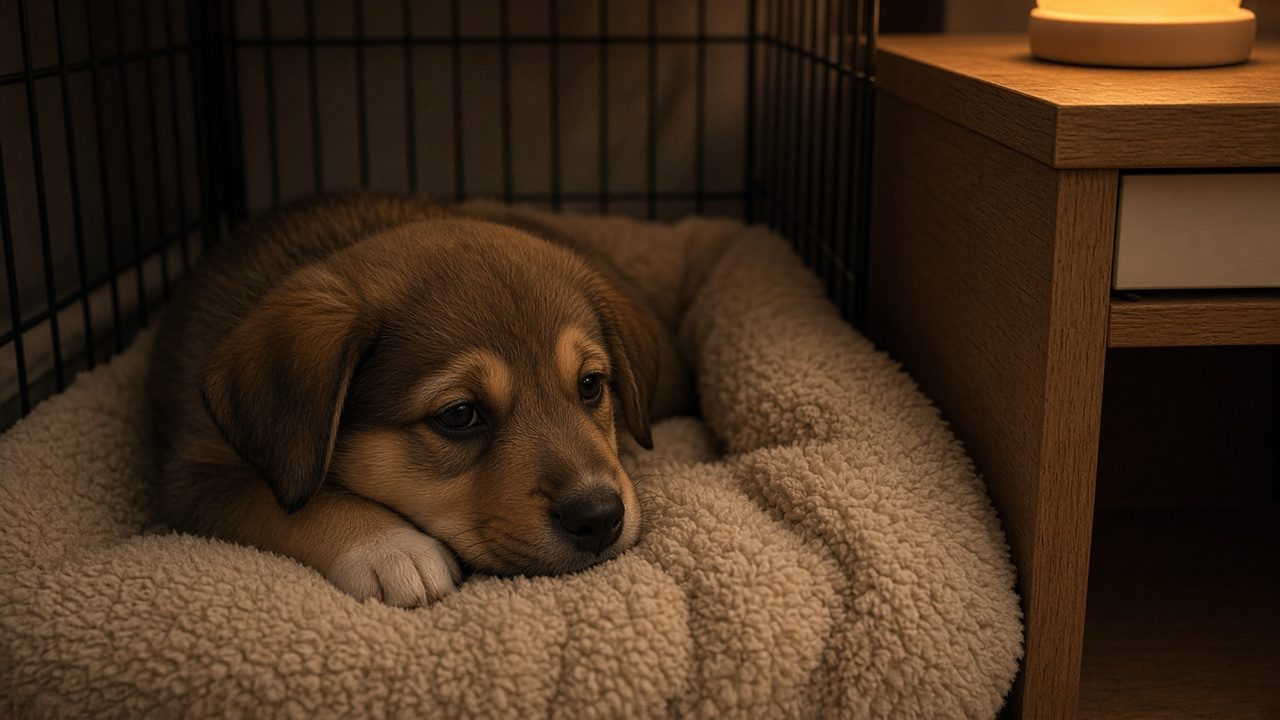
Where you place your pet’s sleeping crate directly impacts their emotional comfort. According to the American Kennel Club, many owners keep the puppy crate in the bedroom so the puppy stays near the family. Hearing your regular breathing and smelling your presence provides reassuring comfort that helps stop nighttime crate crying.
Exiling a newly homed companion to a distant basement, laundry room, or isolated garage intensifies feelings of abandonment and amplifies puppy crying. Once your puppy is sleeping soundly and feels confident in their surroundings, you can gradually move the crate to another living area if desired.
Equip the interior with comfortable, chew-resistant bedding. A snug fleece blanket or flat orthopedic pad creates an inviting den that helps stop crate crying. Draping a light, breathable sheet over three sides of a wire crate helps block distracting visual motion and creates a cozy, cave-like resting environment.
Gradual Crate Desensitization Exercises
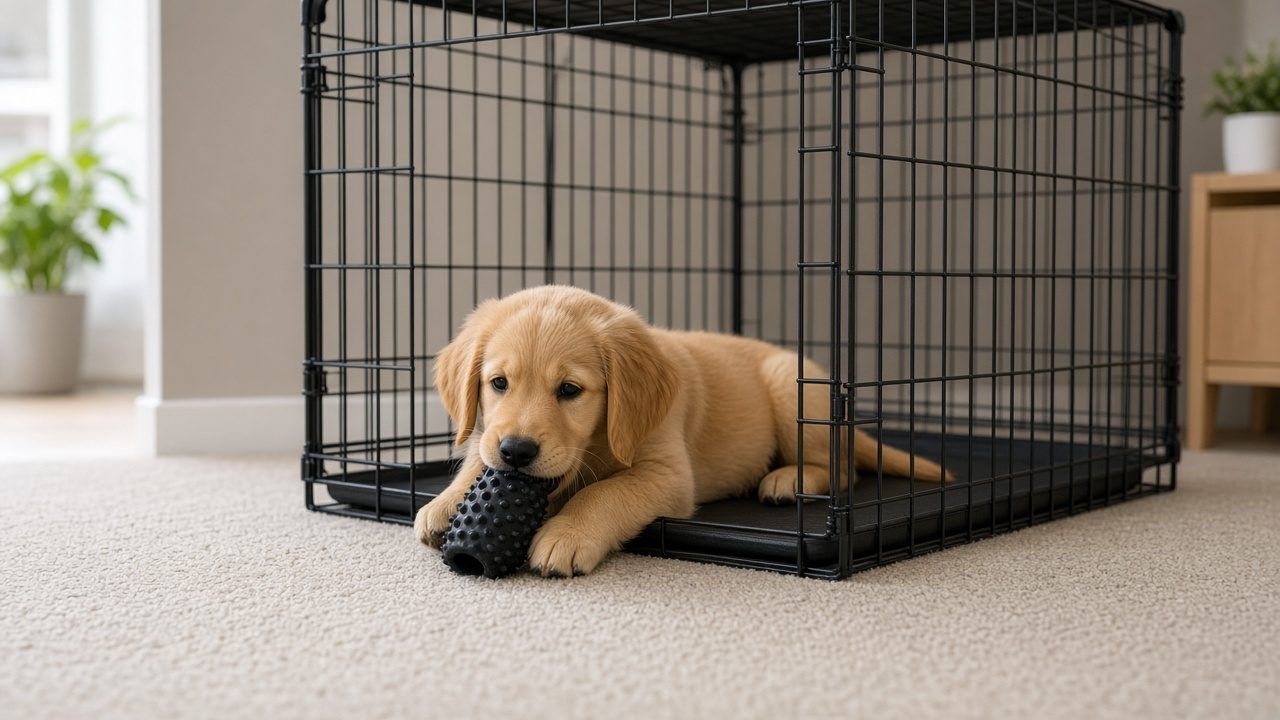
Acclimating your companion to the crate requires gradual desensitization rather than sudden confinement. Leave the door securely latched open during the daytime, scattering delicious treats and favorite toys inside so your puppy explores the crate voluntarily without apprehension.
Feed all daily meals inside the crate. Place the food bowl just inside the doorway initially, moving it deeper into the interior with each consecutive feeding. Eating regular meals inside builds a strong emotional association between the crate and pleasurable sustenance, helping stop distress crying.
Once your puppy willingly walks inside, introduce brief door-closing exercises. Hand your companion a long-lasting enrichment item, such as a rubber toy stuffed with canned food, and pull the door shut for thirty seconds while remaining seated beside them. Open the door calmly before they finish the treat, showing the puppy how crate rest is safe and helping stop crying early.
Gradually increase the duration of crate closure from two minutes to five, ten, and fifteen minutes over several days. Practicing these incremental steps teaches your companion how resting quietly in the crate brings positive rewards and consistent reunions.
Managing Daytime Whining to Stop Puppy Crying
When working on how to stop puppy crying in crate routines during daytime hours, timing your responses is critical. If your puppy begins vocalizing out of boredom or demand, avoid making eye contact, speaking, or approaching the crate while noise continues.
Wait quietly for a distinct lull of at least five to ten seconds of complete silence before walking over and unlatching the door. Releasing your puppy during quiet moments teaches them how calm composure, rather than crying, is the behavior that unlocks freedom.
Be mindful of maximum daytime confinement durations. According to clinical guidance from VCA Animal Hospitals, a two-month-old puppy should be taken outside at least every two hours, even overnight, and a three-month-old every three hours.
Addressing bedtime challenges with proven puppy crying in crate at night protocols helps stop crate crying and ensures seamless 24-hour routine management.
Nighttime Protocols for Restful Sleep and Prompt Relief
Navigating nighttime awakenings requires balancing emotional comfort with biological needs. Before bedtime, provide a vigorous play session, followed by quiet downtime and an outdoor bathroom trip right before lights out to ensure all physical needs are met.
If your puppy awakens whimpering in the middle of the night after hours of peaceful slumber, assume a biological bathroom need. Slip on your shoes, carry the puppy quietly outside on a leash, wait for elimination, deliver brief calm praise, and place them immediately back into the crate without engaging in play to stop nighttime excitement.
Guidelines from the Cornell University College of Veterinary Medicine emphasize that owners should never force a dog to remain confined if they exhibit signs of extreme panic, such as heavy panting, excessive drooling, or frantic attempts to escape. If severe distress occurs, discontinue confinement and consult your veterinarian.
With patient daily practice, gradual acclimation, and predictable schedules, your puppy will learn how to view the crate as a secure, relaxing haven and stop crying at night.
Frequently Asked Questions
Should you let a young dog cry it out in the enclosure?
Leaving a young dog to cry for prolonged periods can induce severe panic and create negative associations with the enclosure. While brief protest whimpering lasting a few minutes is normal as a pet settles, continuous frantic howling requires evaluating whether biological bathroom needs, hunger, or genuine distress are present. Addressing root causes humanely prevents emotional trauma.
How can you tell if whining indicates an urgent bathroom need?
If your companion wakes up whimpering abruptly after several hours of quiet slumber, or if whining occurs shortly after meals and water intake, assume an urgent biological need. Take them outside on a leash calmly for a strictly business bathroom break. Demand whining typically occurs immediately upon entering the enclosure while the pet still has excess energy.
What enrichment items help keep a young dog calm inside?
Long-lasting chew items, such as durable hollow rubber toys stuffed with canned food and frozen overnight, provide soothing mental enrichment that occupies a young dog during confinement.
When does enclosure distress indicate severe separation anxiety?
According to the Cornell University College of Veterinary Medicine, owners should not force crating if a dog shows distress such as panting, drooling, or eliminating. If your companion displays these panic symptoms, discontinue confinement and consult your veterinarian or a qualified animal behaviorist for personalized guidance.