Establishing an hour-by-hour puppy potty training schedule is the most effective way to eliminate indoor accidents, reduce new-owner stress, and housebreak your young dog in record time. Because young canines have limited bladder control and fast digestive systems, anticipating physical elimination needs based on a structured clock prevents mistakes before they happen. By aligning outdoor bathroom trips with meals, naps, and supervised play, you can set your companion up for consistent daily success.
Housebreaking is fundamentally an exercise in biological timing and habit formation rather than disciplinary training. Young puppies possess an innate instinct to keep their immediate sleeping quarters clean, but they have no baseline understanding that living room rugs or hardwood floors are part of that clean human living space. Understanding canine digestive physiology allows you to anticipate when your companion needs an outdoor trip, setting up consistent opportunities for success.
A reliable puppy training schedule serves as your greatest asset during early housebreaking. When you align bathroom breaks with feeding intervals, wake-up times, and play periods, elimination becomes completely predictable. Rather than reacting to accidents after they happen indoors, you proactively escort your puppy to their designated outdoor spot before urgency strikes.
Guidance from the American Kennel Club notes that young dogs thrive on routine, and establishing a predictable daily schedule for feeding, bathroom trips, and crate rest makes housetraining far more manageable for new owners. Combining this timetable with proven how to potty train a puppy strategies ensures steady progress toward household reliability.
Understanding Canine Bladder Capacity and Elimination Timing

Age-Based Guidelines for Holding Capacity
Young canines do not possess the anatomical muscle control needed to hold urine for extended periods. A widely accepted guideline from the Ohio State University College of Veterinary Medicine suggests a holding capacity rule of thumb of roughly one hour per month of age, give or take an hour. For an eight-week-old pet, this translates to approximately two hours of bladder retention during calm periods.
However, during periods of active wakefulness, physical play, or excitement, bladder urgency accelerates dramatically. Clinical resources from VCA Animal Hospitals recommend taking young dogs out every one to two hours while awake, noting that many puppies still require an overnight outing until roughly five months of age. Expecting a two- or three-month-old pet to hold their bladder longer invites inevitable indoor accidents.
Key Elimination Triggers Throughout the Day
In addition to strict hourly intervals, several biological events reliably trigger the urge to eliminate. Young canines almost always need an immediate bathroom trip upon waking up from a nap, five to twenty minutes after eating a meal, immediately after vigorous play sessions, and following any sudden bout of excitement. Recognizing these universal behavioral triggers allows you to intervene proactively.
Watch for classic pre-elimination body language inside your home. When a young dog abruptly stops playing, begins frantically sniffing the floor in tight circles, paces toward a doorway, or squats, they are signaling urgent bathroom pressure. Scooping them up gently and heading straight outside prevents an accident in progress.
A Sample Hour-by-Hour Daily Routine for Young Dogs
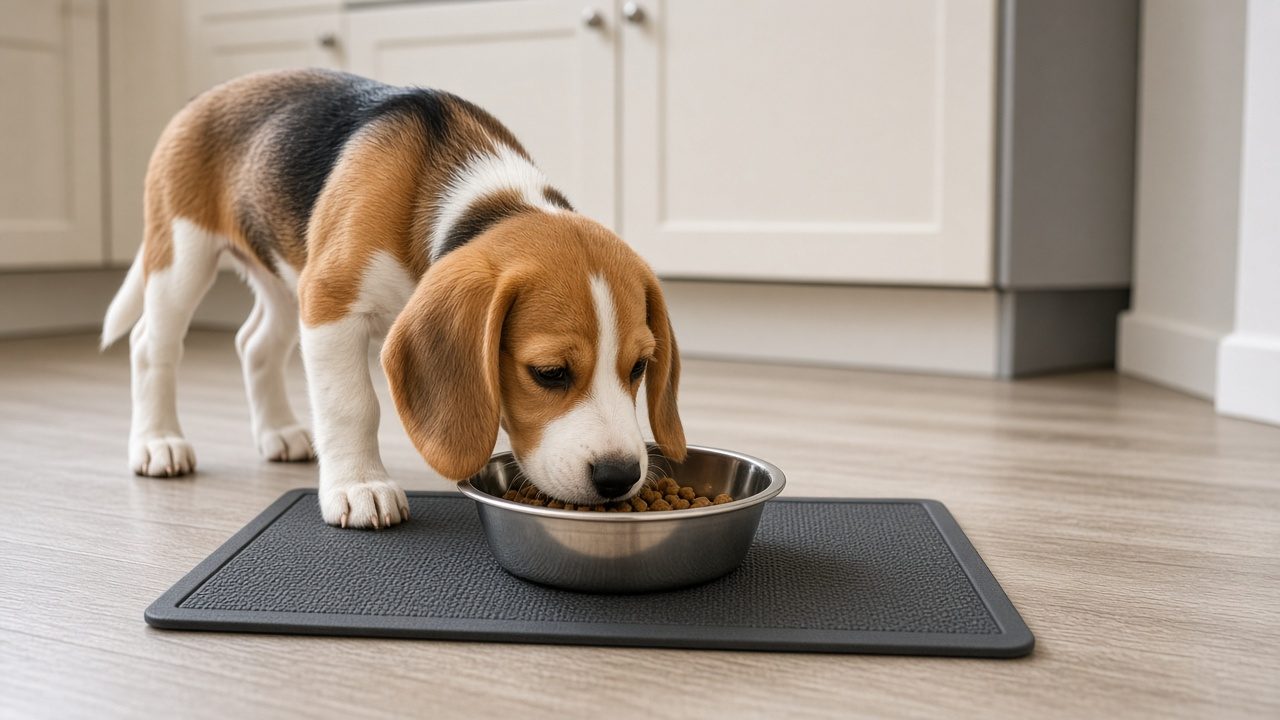
Following a structured timetable organizes your household and gives your young pet a predictable rhythm. Below is a practical daily framework tailored for an eight- to sixteen-week-old companion, incorporating essential daytime breaks and scheduled overnight trips:
| Time Window | Primary Activity | Bathroom Break Timing | Training Focus |
|---|---|---|---|
| 6:30 AM | Morning Wake-Up | Immediately upon waking | Carry directly outdoors to eliminate on grass; reward promptly. |
| 7:00 AM | Breakfast & Water | Immediately after eating | Feed measured portion; escort outside immediately as digestion begins. |
| 8:00 AM | Supervised Play & Training | Directly after play session | Practice basic sit cues; take outdoors before entering resting den. |
| 9:00 AM | Morning Nap in Den | Immediately upon waking | Restful sleep in cozy enclosure; prevents overstimulation and fatigue. |
| 11:30 AM | Midday Break & Hydration | Before and after exercise | Bathroom relief and light exercise in a private yard or carried if outdoors (avoid public ground where other dogs have walked until fully vaccinated at 16+ weeks); short playtime indoors. |
| 12:30 PM | Lunch & Quiet Downtime | Immediately after eating | Midday meal for young dogs; outdoor trip followed by chew toy rest. |
| 2:00 PM | Afternoon Nap | Before nap and upon waking | Take outdoors before nap and upon waking at 3:30 PM to keep intervals under two hours. |
| 4:30 PM | Late Afternoon Exercise | Before and after yard play | Bathroom trip in private yard; mental enrichment and sniffing restricted to private yard or carried to avoid areas where other dogs have walked before full vaccination at 16+ weeks. |
| 5:30 PM | Dinner & Family Time | Immediately after eating | Evening meal; immediate outdoor trip to designated elimination spot. |
| 7:00 PM | Evening Nap & Settle | Directly before winding down | Quiet relaxation; prevents frantic late-evening overtired zoomies. |
| 9:30 PM | Evening Wind-Down | Prior to bedtime prep | Offer fresh water; calm handling and gentle evening petting. |
| 10:30 PM | Bedtime Relief | Right before lights out | Quiet leashed trip outdoors; place in bedroom enclosure for sleep. |
| 2:00 AM | Overnight Bathroom Break | Every 2 to 3 hours overnight | Quiet leashed outdoor break for young puppies; return calmly to den for sleep. |
Balancing Feeding Intervals and Hydration
Maintaining fixed feeding hours directly regulates your companion’s digestive timetable. When young canines graze on free-choice food all day, their digestive tract operates irregularly, making bowel movements impossible to forecast. According to the American Kennel Club, puppies need four meals daily from six to twelve weeks, transitioning to three meals daily between three and six months.
Pairing meal times with designated crate potty training a puppy protocols ensures that digestive rest is respected and unmonitored indoor accidents are eliminated during critical learning weeks.
Managing Supervised Indoor Freedom Between Outdoor Breaks

Indoor freedom must be earned through consistent bathroom reliability. During the first two months at home, an un-housetrained companion should never have unrestricted access to multiple rooms. If you are not actively observing your pet with undivided attention, they should be resting in an exercise pen or den.
A practical supervision technique is the umbilical cord method, where you attach a lightweight six-foot leash from your dog’s harness to your belt loop. Keeping your pet within six feet ensures they cannot sneak behind a couch or into an adjacent hallway to relieve bladder pressure unnoticed. You can observe every subtle cue and respond instantly.
Whenever your pet successfully eliminates outdoors, grant twenty to thirty minutes of relaxed indoor freedom in the same room. Supervised freedom reinforces that eliminating outdoors unlocks positive human companionship and household engagement.
Implementing a rigorous puppy potty training schedule transforms housebreaking from an unpredictable guessing game into a straightforward, manageable daily routine that protects your home and builds trust.
Adjusting the Routine for Working Owners and Apartments
Balancing housebreaking with professional workplace demands requires strategic planning. Young canines cannot remain crated for an eight-hour workday without intense distress and inevitable accidents. Confining a young pet beyond their physiological capacity forces them to soil their bedding, severely damaging natural den cleanliness instincts.
Working owners should arrange for a trusted family member, neighbor, or professional pet sitter to provide midday visits. According to the ASPCA, young puppies should not be crated for more than one to two hours at a time during the day.
For apartment dwellers navigating multi-story buildings, calculate the transit time required to reach street-level grass. Carrying your young pet down hallways and elevators prevents accidents in shared common areas, as the physical sensation of moving across hallway carpets often stimulates elimination before reaching the outdoors.
Set up a designated balcony grass station or reliable indoor relief tray if ground-level outdoor access takes several minutes to reach during urgent moments.
Handling Nighttime Elimination Needs and Early Awakenings
Nighttime housebreaking demands patience and realistic expectations regarding infant canine physiology. Very young canines rarely sleep through a full eight-hour night without waking to relieve bladder pressure. Keeping your pet’s sleeping enclosure directly beside your bed allows you to detect early rustling or whimpering before panic sets in.
When your pet wakes in the dark, slip on your shoes, clip on their lead, and escort them quietly outside. Keep lighting dim, avoid speaking in an excited voice, and do not engage in play or roughhousing. Allow your companion three to five minutes to eliminate, deliver brief calm praise, and return them immediately to their den for continued sleep.
Do not punish accidents that occur overnight or during the day. If a mistake happens, calmly clean the soiled surface with an enzymatic cleaner to eliminate residual organic odors. If a previously trained companion begins soiling repeatedly, consult your veterinarian to evaluate potential medical or behavioral causes.
With patient adherence to your daily timetable, gentle guidance, and prompt rewards, your companion will develop dependable lifelong house habits.
Frequently Asked Questions
How often should a two-month-old dog go outside for bathroom breaks?
An eight-week-old young dog generally requires an outdoor bathroom opportunity every one to two hours while awake, immediately following naps, within a few minutes of eating, and after active play. In addition, two-month-old puppies typically require overnight bathroom outings every two to three hours. Consistent scheduling prevents indoor accidents.
How long after meals does a young dog need to eliminate?
Eating naturally stimulates digestive activity, prompting young puppies to need a bathroom break within a few minutes of finishing a meal. Escorting your companion directly to their designated outdoor bathroom area immediately after eating ensures maximum success and reinforces clean household habits.
What should you do if your dog does not eliminate during a scheduled break?
If your pet does not eliminate within three to five minutes outdoors, calmly bring them back inside and place them in their resting den or on an umbilical leash for ten to fifteen minutes. This brief pause prevents indoor mistakes while pressure builds. Escort them back outside to try again until successful elimination occurs.
When can you begin extending the time between bathroom trips?
Owners can gradually extend intervals by roughly one hour per month of age as a young dog matures, reaching three to four hours around three months and approximately six hours by six months. As bladder capacity increases, scheduled breaks can be spaced farther apart while continuing to reward outdoor success.