Bringing a young dog into your home is an exciting milestone, and mastering crate potty training a puppy is an effective management method to establish clean bathroom habits. By working with your dog’s instinctive desire to keep their sleeping area clean, you can prevent indoor accidents, reduce stress, and teach your companion where and when to eliminate. Establishing a predictable routine from day one helps your young dog feel secure while speeding up the entire housebreaking process.
Housebreaking relies on biological timing and consistent supervision rather than scolding or punishment. Young dogs do not automatically know that human living areas are off-limits for elimination, but they do have an innate reluctance to soil their sleeping quarters. When you combine this natural denning behavior with regular outdoor trips and positive rewards, your dog quickly learns that outdoor grass is the proper place for bathroom relief.
A structured puppy training schedule provides the daily predictability young dogs need to regulate their bladder and bowels. Aligning feeding times, nap periods, and outdoor breaks creates a dependable rhythm that prevents house soiling before it occurs.
According to veterinary guidance published by the Ohio State University College of Veterinary Medicine, housetraining succeeds when owners anticipate physical needs, provide frequent outdoor opportunities, and never punish mistakes. Combining these habits with how to potty train a puppy fundamentals builds a solid foundation for lifelong household manners.
Setting Up the Enclosure for Housebreaking Success
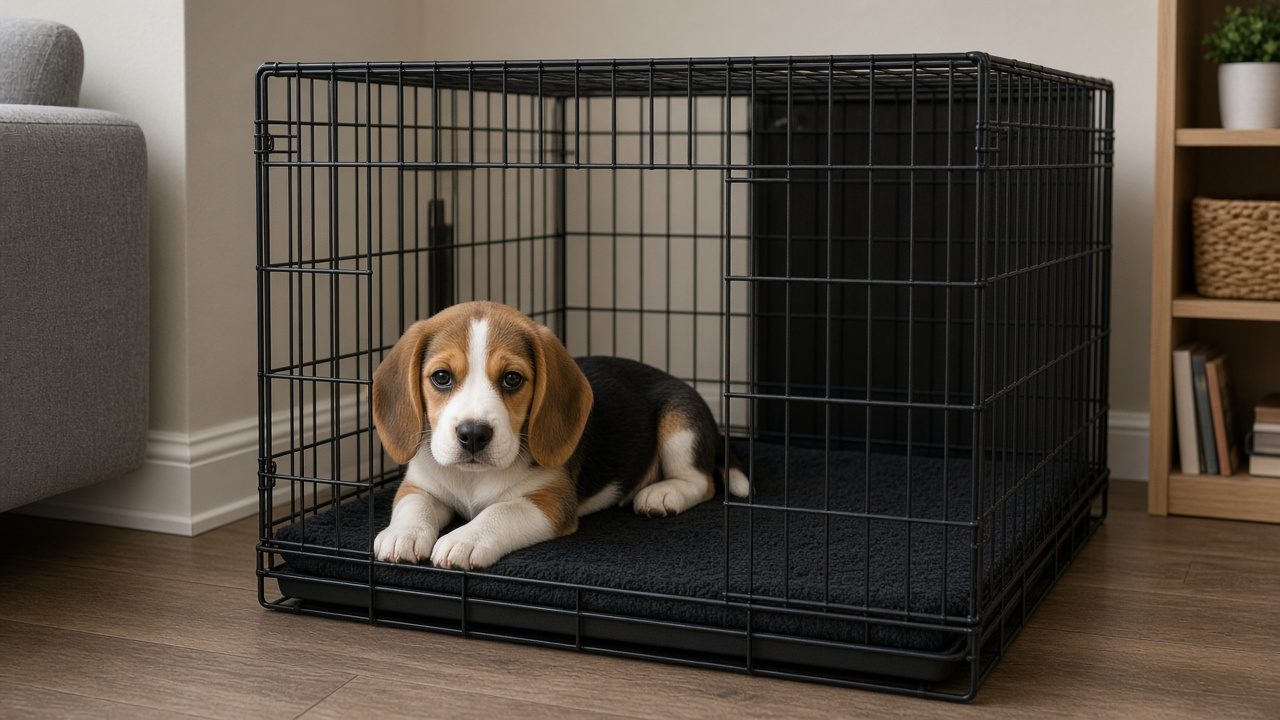
Choosing the Correct Dimensions for House Training
Selecting the proper enclosure size is crucial when using a den for housebreaking. If the space is too large, a young dog will designate one far corner as a bathroom and curl up to sleep on the clean opposite side. To prevent this habit, the interior space should only allow your companion to stand up comfortably, turn around without difficulty, and lie down fully stretched out.
Many modern wire enclosures include an adjustable metal divider panel. This divider allows you to partition a larger enclosure, expanding the available space as your young pet grows. Proper sizing preserves the natural instinct to avoid soiling the sleeping area, which is the core principle behind toilet training puppy with crate methods.
Strategic Placement in Central Living Areas
Position the enclosure in an active, temperature-controlled room where your family spends substantial time, such as a corner of the living room or kitchen. Dogs are social animals that thrive on companionship, and isolating a young dog in a dark garage or distant laundry room can trigger anxiety and vocal distress. Keeping the den in a central living area helps your pet feel connected to daily household activity while resting safely.
Equip the space with a durable, easy-to-clean resting mat or a soft fleece blanket. Avoid plush bedding with loose stuffing that a teething pet might chew and swallow. Maintaining a comfortable, calm environment encourages restful naps between scheduled outdoor bathroom excursions.
Establishing a Predictable Routine from Morning to Night

The First Morning Elimination Trip
A reliable daily routine begins the moment you wake up in the morning. Open the enclosure quietly, clip a standard leash onto your pet’s collar, and escort them directly outside to their designated bathroom spot. Do not pause to prepare breakfast, check messages, or greet other pets, as bladder pressure is highest after hours of sleep.
Escort your pet to the exact same patch of lawn every time. Familiar scent markings remind young canines of their bathroom purpose. Stand calmly in place on the grass for three to five minutes without playing or throwing toys, allowing your dog to focus on elimination.
As soon as your pet finishes urinating or defecating, offer gentle verbal praise and deliver a small, tasty treat immediately on the grass while still outside. Immediate reinforcement cements the connection between outdoor elimination and positive outcomes. Once bathroom duties are complete, your companion can enjoy indoor breakfast and supervised play.
Following structured house training a puppy crate guidelines ensures that feeding and outdoor breaks occur at consistent hours. Clinical guidance from VCA Animal Hospitals recommends taking young dogs out every one to two hours while awake, noting that puppies rarely hold their bladder for extended intervals during early development.
Leveraging Natural Den Instincts to Prevent Accidents
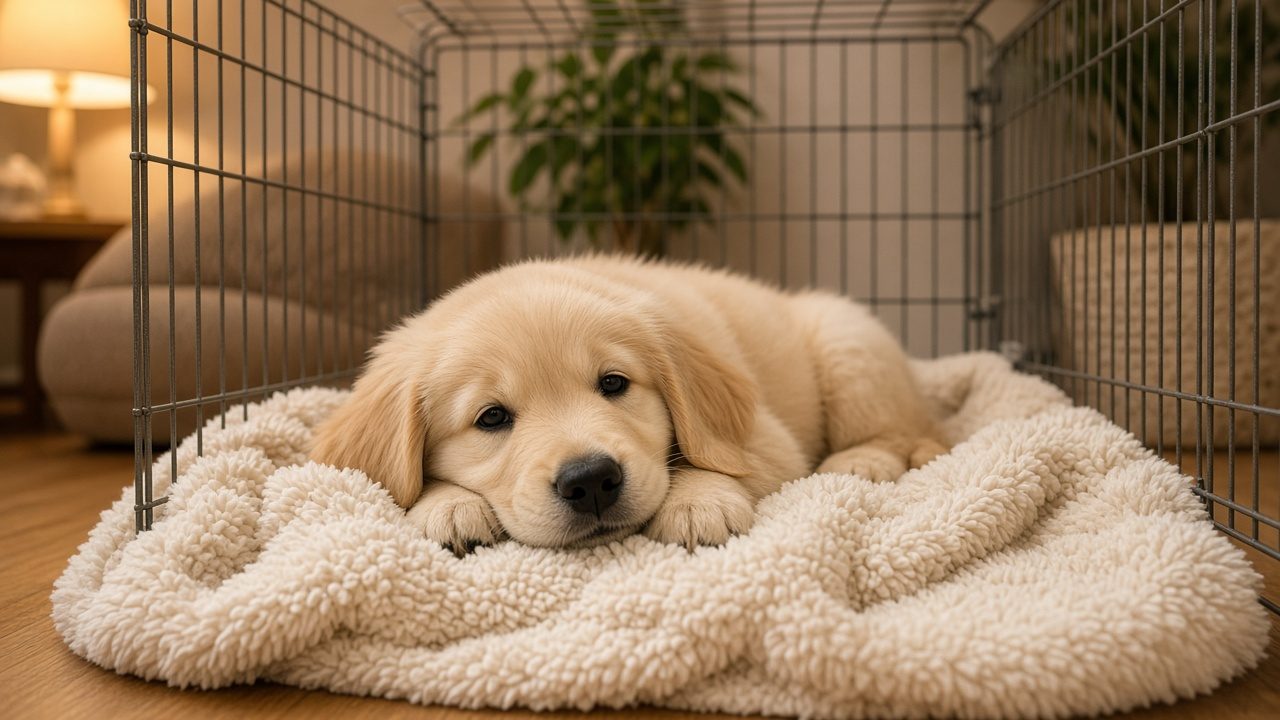
The success of den-based housebreaking stems from canine maternal habits. In the whelping nest, mother dogs keep the sleeping area clean, teaching young canines to step away from bedding before eliminating. By providing a properly sized enclosure, you tap directly into this hardwired behavioral preference.
Understanding this instinct helps explain why confinement is a management tool rather than a disciplinary measure. Confining your young dog during moments when you cannot offer direct, active supervision prevents unsupervised indoor accidents on carpets and furniture. It keeps your pet safe from household hazards while reinforcing bladder control.
Resources from the Ohio State University College of Veterinary Medicine point out that a crate helps prevent indoor elimination and unsupervised destructive behavior when used humanely. Balancing confinement with outdoor exercise and companionship creates positive associations with the enclosure.
Never leave a dog confined for excessive periods. A young pet forced to stay in an enclosure beyond their physical holding capacity will eventually have no choice but to soil their bedding. Once a young dog is forced to soil their sleeping den, the natural cleanliness instinct breaks down, making future housebreaking substantially more challenging.
Managing Daytime Intervals and Crate Transitions
Managing daytime transitions smoothly is key to maintaining consistent house habits. Whenever you remove your young pet from their den after a nap, take them straight outside on a leash before allowing any household freedom. If they eliminate outdoors, grant twenty to thirty minutes of supervised play in a puppy-proof room.
If your pet does not eliminate during an outdoor trip, calmly guide them back to their enclosure for ten to fifteen minutes. This short resting window prevents them from wandering off to soil a quiet indoor corner. After the brief pause, take them outside again to try once more, repeating the sequence until outdoor success is achieved.
Integrating crate potty training a puppy into your weekly schedule also requires managing periods when you must leave home. For working owners, arranging for a family member, neighbor, or pet care professional to provide midday bathroom visits ensures your young companion stays on track without experiencing physical discomfort.
Pairing these confinement routines with foundational crate training a puppy techniques ensures your dog views their den as a comforting retreat rather than an isolated cell.
Handling Nighttime Breaks and Solving Setbacks
Nighttime housebreaking requires patience and realistic expectations regarding bladder maturity. Very young dogs cannot sleep through an eight-hour night without needing to eliminate. Place the sleeping enclosure right beside your bed so you can hear quiet stirring or whimpering when bladder pressure awakens your pet.
When your pet stirs in the middle of the night, slip on your shoes, carry or leash them, and head quietly outside for a strictly business bathroom break. Keep lighting dim, avoid speaking in an excited voice, and do not engage in play. After elimination, praise softly and place your companion directly back into the enclosure for sleep.
If an indoor accident occurs during the day, remain calm. Never shout, scold, or rub your dog’s nose in waste, as punitive measures induce fear and teach dogs to eliminate out of sight behind furniture. As emphasized by the American Kennel Club, puppies learn faster when rewarded immediately for outdoor elimination, whereas punishment can make a puppy afraid to eliminate in front of you.
Thoroughly clean any indoor accident spots using an enzymatic cleaner to eliminate residual organic odors. If a previously reliable pet begins soiling indoors repeatedly, schedule an examination with your veterinarian to evaluate possible medical or behavioral causes.
Frequently Asked Questions
How long can a young dog hold their bladder while crated?
As a general ceiling, a young dog can hold their bladder for roughly one hour per month of age, but they require bathroom breaks much more frequently. Puppies should be taken outdoors immediately upon waking from naps and right after play sessions. Young dogs should never be crated for extended periods beyond their developmental capacity.
What size should the enclosure be for effective housebreaking?
The interior should provide just enough room for your companion to stand up comfortably, turn around easily, and stretch out flat on their side. An enclosure that is too spacious encourages a dog to soil one corner while sleeping on the opposite side. Using an adjustable divider panel ensures proper sizing as your pet grows.
What should you do if an accident happens inside the den?
Calmly escort your pet outside to their designated bathroom area without scolding or showing anger. Clean the enclosure and all soiled bedding thoroughly with an enzymatic cleaner to eliminate lingering scent cues that could prompt future accidents. Review your daily schedule and shorten the intervals between outdoor bathroom opportunities.
How should you respond to whining during quiet resting periods?
Distinguish between protest vocalizations and genuine biological urgency by observing timing and body language. If your pet wakes up whining after several hours of restful sleep, calmly escort them outside on a leash for an unexciting bathroom break. If the whining is demand behavior right after entering the enclosure, wait for several seconds of quiet before offering attention.