Bringing a puppy into your home is an exciting milestone, but discovering how to stop puppy barking is essential for maintaining household tranquility and good neighborly relations. Vocalization is a completely natural form of canine expression, yet excessive noise often stems from unmet physical needs, excitement, boredom, or confusion regarding household boundaries. By identifying specific triggers, teaching a dependable quiet cue through positive reinforcement, and meeting your dog’s daily mental and physical needs, you can curb persistent barking effectively.
Barking serves as an important communication tool for dogs, conveying everything from excitement and alarm to frustration and requests for social attention. Because young puppies are adjusting to an unfamiliar human environment, they often vocalize when they feel isolated, uncertain, or eager to initiate interactive games. Understanding why your dog vocalizes enables you to address the root cause rather than attempting to suppress natural canine communication through harsh measures.
Implementing a predictable puppy training schedule provides your companion with regular meals, structured nap times, and dedicated enrichment intervals. When puppies know exactly when their physical and emotional needs will be met, they are far less likely to resort to vocal complaints or restless barking.
According to behavioral guidance from the American Kennel Club, effective barking management requires patience, consistency, and avoiding shouting or yelling. Pairing positive reinforcement with consistent routine management such as crate training a puppy and addressing issues like a puppy crying in crate at night creates a balanced, quiet environment. Furthermore, addressing mouthing through how to stop puppy biting exercises helps keep overall arousal levels low.
Why Young Puppies Bark and Common Triggers

Understanding Normal Canine Vocal Communication
Vocalization begins early in a puppy’s life as a way to solicit warmth, care, and food from their mother. As puppies mature and enter human homes, they continue using vocal sounds to express their immediate emotional state.
Recognizing that puppies bark for different reasons is fundamental when planning puppy training for barking habits. Rather than viewing all noise as misbehavior, owners who identify emotional motivation can respond with appropriate management techniques that prevent barking from becoming a permanent coping mechanism.
Identifying Common Environmental Triggers
Young dogs frequently react to external environmental stimuli that catch their sensitive hearing or peripheral vision. The rumble of a delivery truck, footsteps in an apartment hallway, or a neighborhood dog walking past a front window can easily trigger alert barking in an inexperienced puppy.
Clinical resources from VCA Animal Hospitals explain that barking can be triggered by a wide range of stimuli, including alarm, fear, territorial defense, frustration, and attention-seeking.
How to Address Demand Barking for Attention

Ignoring Demanding Vocalizations Consistently
Demand barking occurs when a puppy barks directly at human family members to demand attention, food, toys, or immediate release from an enclosure. Puppies quickly learn cause-and-effect relationships: if barking causes an owner to look up, talk, offer a toy, or open a door, the puppy considers the barking completely successful and will repeat it with greater intensity.
To extinguish demand barking, every member of the household must enforce a strict zero-attention rule whenever vocalization starts. The instant your puppy barks at you demanding interaction, immediately turn your back, cross your arms, and look at the ceiling. Avoid eye contact, verbal scolding, or physical touch until your puppy has been completely quiet for at least five consecutive seconds.
Once quiet resumes, calmly turn around and reward your companion with praise, a small treat, or an interactive toy. Consistently executing this barking puppy training approach teaches your dog that silence earns affection and rewards, whereas demanding noise produces an instant social void.
Anticipating Needs Before Vocalizations Begin
Prevent demand barking by proactively meeting your puppy’s physical requirements before frustration peaks. If you know your dog usually barks at five in the afternoon for dinner, prepare their meal ten minutes earlier or ask for a polite sit before setting the food bowl on the floor. Fulfilling needs proactively eliminates the incentive for demanding vocal habits.
Teaching the Quiet Cue with Positive Reinforcement
Capturing Natural Moments of Silence
Teaching a reliable “Quiet” verbal cue allows you to interrupt vocalizations calmly without raising your voice. The most effective way to introduce this cue is by capturing natural pauses during barking episodes rather than attempting to yell over your dog’s noise.
When your puppy barks at a doorbell or outdoor noise, allow one or two alert barks to acknowledge their awareness. Then, hold a highly fragrant treat directly in front of your puppy’s nose. Because dogs cannot sniff intently and bark simultaneously, your puppy will instantly close their mouth to inspect the food.
The moment their mouth closes and silence begins, say the word “Quiet” in a calm, neutral tone of voice. Wait two seconds while they maintain silence, then mark the behavior with a cheerful “Yes!” and deliver the delicious treat. Practice this sequence across multiple brief sessions until your puppy begins anticipating the reward and immediately falling silent upon hearing the verbal cue.
Building Duration for the Quiet Response
Once your puppy understands the association between the word “Quiet” and closing their mouth, gradually extend the required period of silence before offering the treat. Start by expecting three seconds of silence, then expand to five, ten, and fifteen seconds over several days of training.
If your puppy barks before the duration target is met, simply withdraw the treat without scolding and wait for another quiet pause to try again. Over time, your puppy will learn that sustained calm behavior produces the best rewards.
Managing Environmental Stimuli to Stop Alert Barking
Reducing Visual and Auditory Household Triggers
Alert barking occurs when a puppy notices an unfamiliar person, animal, or object and sounds an alarm to alert the household. While this protective instinct is natural, allowing unchecked alert barking can turn a puppy into a hyper-vigilant watchdog that struggles to relax indoors.
Manage visual triggers proactively by closing window blinds, applying frosted window film to street-facing glass, or restricting your puppy’s access to front-facing rooms with baby gates. If your dog cannot see pedestrians or delivery drivers walking past, the visual stimulus that triggers barking is eliminated.
To reduce auditory triggers, utilize a white noise machine, run a fan, or play soft classical music near your puppy’s resting area. Background sound masks sudden outdoor noises such as car doors slamming or sirens wailing, allowing your puppy to sleep peacefully without feeling startled into barking.
Desensitizing Everyday Sounds
You can actively desensitize your puppy to common sound triggers using positive pairing. Play recorded audio tracks of doorbells, sirens, or thunderstorms at barely audible volumes while feeding your puppy high-value treats or playing an engaging game of fetch. Gradually increase the volume across several weeks as your puppy continues demonstrating relaxed, indifferent body language.
Crate Training and Mental Enrichment Strategies
Providing Calming Food Puzzles and Lick Mats
Boredom and physical under-stimulation are primary drivers of persistent daytime barking. A young dog with excess energy and insufficient mental enrichment will readily invent their own noisy entertainment. According to the American Kennel Club, puppies need both physical exercise and mental enrichment together, as mental games do not substitute for physical activity.
Provide stuffed rubber toys frozen with puppy-safe wet food, silicone lick mats coated with pumpkin puree, and snuffle mats filled with dry kibble. Chewing serves as an essential developmental and enrichment activity that keeps your puppy calmly occupied.
Managing Vocalizations Inside the Den
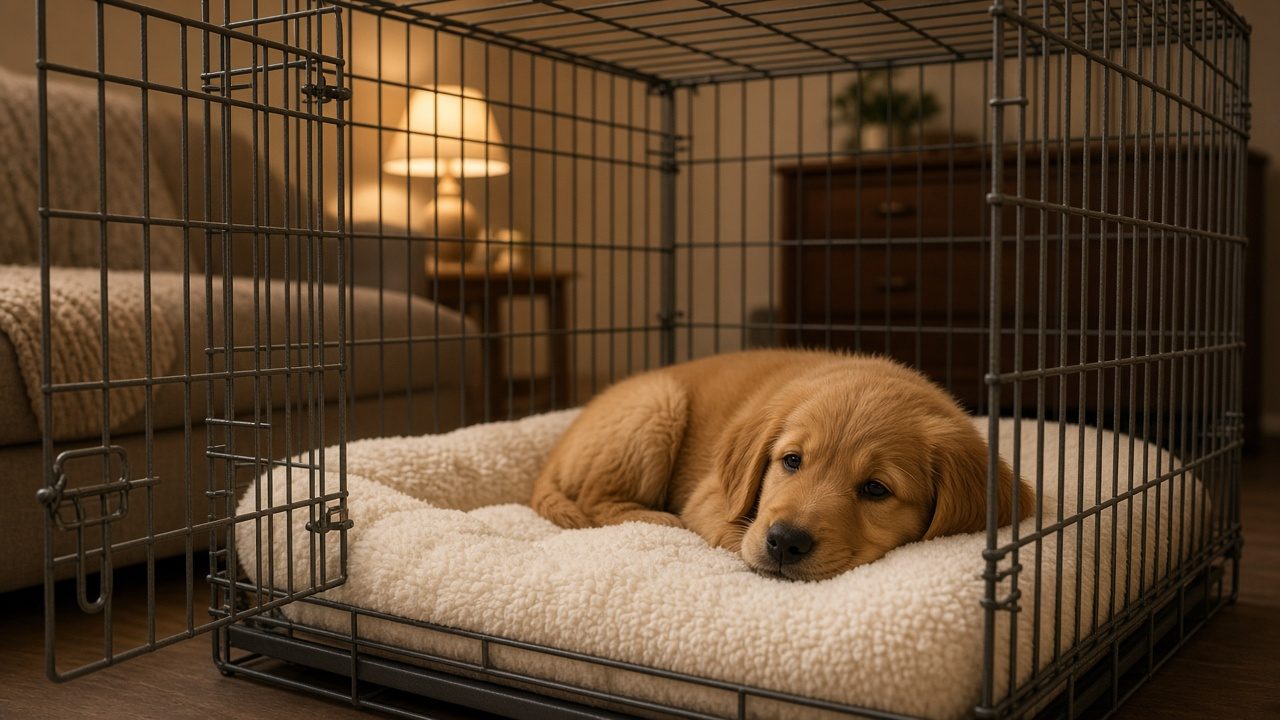
When implementing crate training and barking management routines, distinguish between a puppy expressing distress and one testing boundaries. According to the Ohio State University Veterinary Medical Center, one hour per month of age is the longest a puppy can hold urine, not a routine schedule, so while you are home take your puppy out about once an hour and never leave a puppy crated longer than it can hold it. If your puppy barks or whines in the crate, assume it may need to go out first. Take them directly outside on a leash without conversation or play, allow them to eliminate, and return them calmly to the enclosure.
However, if your puppy has just entered the crate after full bathroom and exercise breaks, wait out minor protest vocalizations without opening the door. Opening the door while a puppy barks reinforces the idea that noise opens barriers. Masterful crate training stop barking routines rely on opening the latch only during moments of quiet calm.
Understanding how to stop puppy barking requires recognizing that patience, consistent household boundaries, and calm leadership produce enduring results. By addressing the emotional root of vocalizations, you will nurture a confident, quiet companion that thrives in any household environment.
Frequently Asked Questions
Why does my puppy bark at me when I prepare meals?
Barking during food preparation is a classic example of demand barking driven by anticipation and excitement. If you hand food over while your puppy is vocalizing, you inadvertently reward the noise and ensure it continues. Instead, ignore demanding vocalizations, turn your back, and wait for five seconds of silence before setting the food bowl down.
Should you ever yell or use a loud noise to interrupt puppy barking?
Yelling or making startling loud noises should never be used to interrupt barking. Shouting or yelling adds to household noise and conflict, which frequently escalates barking and anxiety. Instead, speak in a calm, neutral tone of voice, redirect your puppy toward an approved quiet activity, and reward silent behavior.
How long does it take for a puppy to learn the quiet cue?
Teaching a puppy the quiet cue requires many repetitions of positive training, as reliable quiet around strong triggers develops gradually. However, achieving dependable responsiveness during high-distraction events such as doorbells or approaching visitors requires several weeks of gradual practice. Consistency among all household members is vital for reinforcing this habit.
When should barking concerns be evaluated by a veterinarian?
If persistent barking is accompanied by extreme panic, destruction of doors or crates, self-injury, salivation, or sudden unprovoked behavioral changes, schedule an evaluation with your veterinarian. A veterinarian can evaluate your puppy for underlying pain or severe anxiety and recommend appropriate guidance.