Welcoming a new pet into a high-rise apartment or cold winter climate makes potty training puppy with pads an invaluable housebreaking method for modern owners. When outdoor grass is inaccessible, dangerous before complete vaccinations, or separated by lengthy elevator rides, absorbent pads provide a reliable, sanitary indoor bathroom option. By establishing an organized indoor station, maintaining strict timing, and rewarding correct elimination, you can housebreak your young dog cleanly without unnecessary household stress.
Housebreaking is fundamentally a matter of habit formation and clear surface association. Young puppies naturally leave their sleeping area to eliminate and return to previously used spots identified by scent. Providing a designated absorbent pad prevents your companion from wandering across carpets in search of an indoor relief spot, channeling their natural bathroom instincts toward an approved surface.
A structured puppy training schedule provides the framework needed for dependable indoor house habits. When meals, water breaks, rest periods, and bathroom visits occur at predictable intervals, elimination becomes entirely manageable. Proactively bringing your companion to the indoor station prevents accidents before bladder urgency leads to mistakes on rugs.
Guidance from the American Kennel Club notes that absorbent pads offer a practical management tool for apartment living, slow outdoor access, and young puppies awaiting full vaccinations. Combining this approach with how to potty train a puppy fundamentals ensures your companion develops reliable elimination habits while keeping living spaces clean.
Selecting the Ideal Indoor Elimination Station
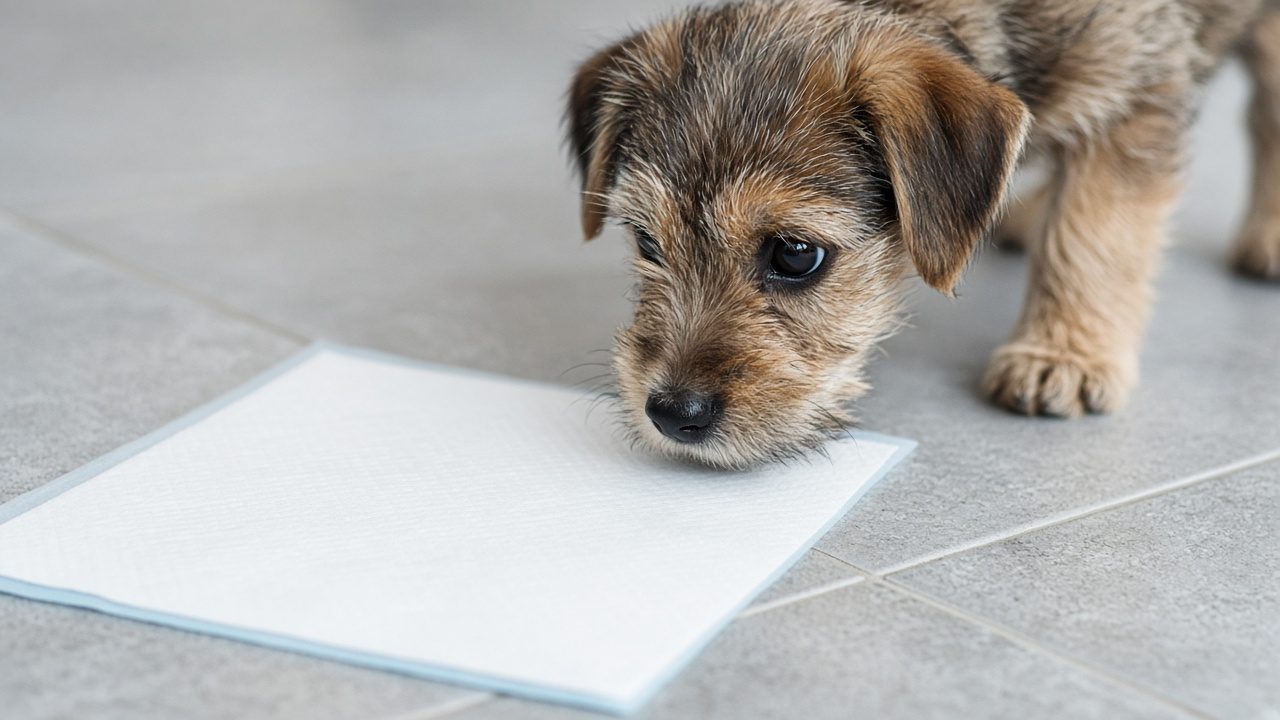
Choosing the Best Location Away from Bedding
Setting up your indoor bathroom area properly is essential for early housebreaking success. Choose an easy-to-clean hard surface, such as a tiled bathroom, utility room, or kitchen alcove, rather than placing mats directly on wall-to-wall carpets. Positioning the station away from the dog’s resting bed and feeding bowls respects the canine instinct to avoid eliminating near food and sleeping quarters.
Once you select an indoor station, keep it in that exact location throughout the training process. Dogs develop strong spatial and scent associations with their designated bathroom areas. Moving the station frequently creates confusion and increases the likelihood that your pet will return to a previously used corner of the room to relieve bladder pressure.
Securing Pads with Holders and Trays
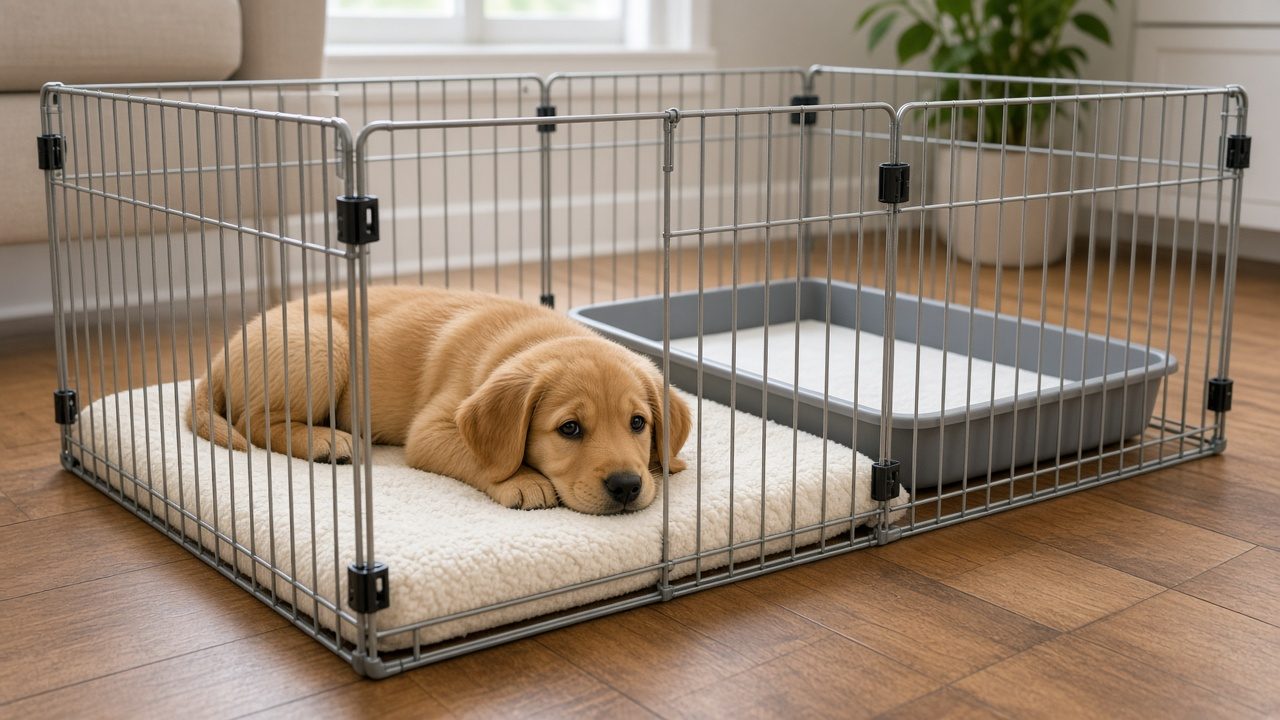
Inquisitive young dogs often view loose absorbent mats as giant chew toys or wrestling targets. To prevent shredding and messy spills, place the mat inside a specialized plastic holder tray or secure the edges to the floor using low-tack painter’s tape. A sturdy tray provides a raised plastic perimeter that contains unexpected leaks while keeping the absorbent layers flat.
If you have an energetic pet that tends to miss the exact perimeter, set up an exercise pen around the tray. This contained configuration guides your young dog directly onto the absorbent surface during bathroom trips, preventing them from stepping off the edge onto surrounding flooring.
Establishing a Consistent Daily Elimination Routine
Timing Morning and Post-Meal Bathroom Breaks
Dependable house habits depend on biological timing. The moment your pet wakes up in the morning, immediately escort them on a light leash or carry them straight to the indoor station. Bladder pressure is naturally highest after overnight sleep, making the first morning trip an ideal opportunity to establish a successful habit.
In addition to morning awakenings, young canines consistently need to eliminate after meals, vigorous play sessions, and daytime naps. According to clinical guidance from VCA Animal Hospitals, young puppies need a bathroom opportunity every one to two hours while awake.
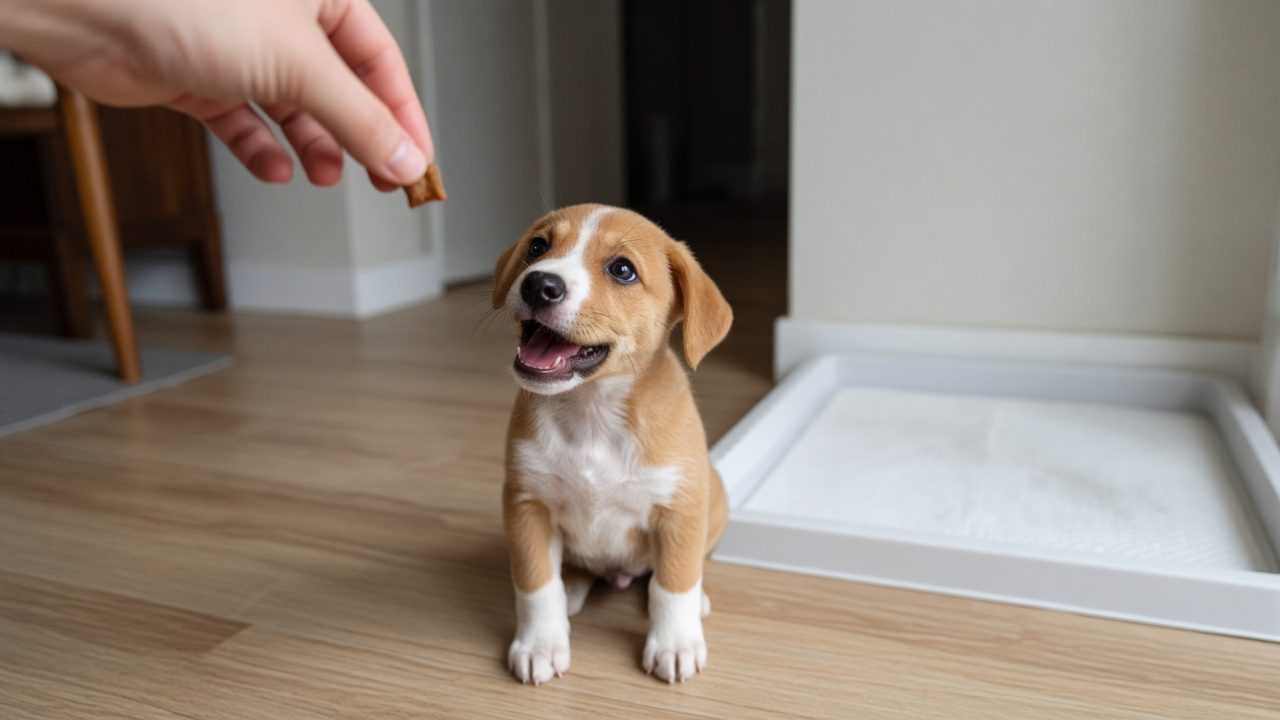
Stand quietly beside the indoor mat and wait for three to five minutes without speaking or playing. Allow your pet to sniff the surface and find their natural rhythm. The instant elimination concludes, deliver warm verbal praise and offer a small, tasty treat right at the station to reinforce the behavior.
Pairing these predictable indoor breaks with crate potty training a puppy techniques keeps your companion safe and prevents unmonitored indoor roaming between scheduled bathroom visits.
Teaching Your Companion to Target the Absorbent Surface
Teaching a young dog to recognize and target an indoor mat requires clear scent and texture conditioning. If your companion seems unsure, placing a tiny drop of their urine on a fresh pad using a paper towel provides an unmistakable scent cue.
During initial training sessions, keep your pet on a lightweight six-foot leash whenever you approach the bathroom station. Leading your dog directly onto the mat prevents them from wandering across adjacent rugs. Keep your interactions low-key and quiet until elimination occurs, ensuring full focus on the bathroom task.
Resources published by the Ohio State University College of Veterinary Medicine highlight that punishing dogs for indoor accidents is entirely counterproductive, often causing pets to hide and eliminate out of sight. Rewarding proper surface usage with immediate treats builds reliable habits without creating apprehension.
Whenever your dog successfully uses the mat, reward them generously before granting access to supervised indoor play. Immediate positive reinforcement helps young canines understand that utilizing the approved texture leads directly to praise, affection, and playtime.
Preventing Common Chewing and Missed Target Mistakes
Many owners encounter frustration when young canines begin playing with or chewing absorbent layers. Teething puppies naturally explore novel textures with their mouths. If your pet attempts to drag or tear the mat, avoid shouting or lunging toward them, as sudden movement can turn the behavior into an exciting game of chase.
Instead, interrupt the behavior calmly and redirect your pet’s attention toward an approved rubber chew toy or textured teething ring. Using a grate-covered bathroom tray prevents curious teeth from accessing paper edges entirely, eliminating chewing opportunities while maintaining full absorption functionality.
Executing potty training puppy with pads successfully also means managing partial misses, where a companion stands on the mat but deposits waste over the edge. In these situations, expand the coverage area temporarily by placing two or three mats side by side. As your pet develops better spatial accuracy, gradually reduce the area back to a single tray.
Clean accidental misses immediately using an enzymatic cleaning spray. If an accident occurs, calmly blot the liquid, apply enzymatic cleaner, and adjust your supervision routine.
Transitioning from Indoor Pads to Outdoor Grass Gradually
If your long-term goal is full outdoor housebreaking once vaccinations are complete or weather improves, plan a gradual transition rather than an abrupt change. Dogs develop strong surface preferences during early development, and moving too quickly can cause confusion.
Begin the transition by slowly shifting the indoor tray closer to your exterior exit door over the course of several days. Move the station two or three feet each day until it rests directly beside the door leading to your backyard or hallway. This gradual repositioning teaches your pet to head toward the exit whenever bladder pressure builds.
Next, move the mat outside onto the grass. Take your companion out on a leash to the outdoor mat, wait for them to eliminate, and reward them enthusiastically. Once your dog reliably targets the outdoor mat, cut the pad in half, and eventually remove it entirely, allowing the dog to eliminate directly on the grass.
With patient daily practice, consistent scheduling, and positive reinforcement, indoor pad training provides a clean, manageable housebreaking solution that supports your companion’s developmental journey.
Frequently Asked Questions
How long should you keep an indoor pad setup before outdoor training?
Many owners utilize indoor setups until a young dog completes their core vaccination series around sixteen weeks of age, or permanently for small breeds in urban apartments. If transitioning outdoors, begin moving the pad toward the exterior door once your dog reliably targets the mat indoors. Taking incremental steps prevents housebreaking regression.
Why do some young canines chew or shred their absorbent mats?
Curious young canines often chew mats because the soft, tearable texture satisfies natural exploratory and teething instincts. Using a raised plastic holder tray with a snap-in grate completely prevents access to the paper edges. Offering textured chew toys nearby also redirects chewing energy toward approved items.
How often should an indoor elimination surface be replaced?
Replace soiled mats promptly after use to maintain proper sanitary conditions and encourage repeat usage. Keeping the station clean preserves reliable bathroom habits.
Can an indoor routine confuse a dog when housebreaking?
If managed consistently with designated stations and positive rewards, indoor mats provide a clear, acceptable elimination option. However, allowing access to bathmats and rugs that mimic pad textures can create surface confusion. Restricting unsupervised access to soft floor coverings ensures your pet learns to distinguish between living rugs and approved bathroom surfaces.