Teaching your young dog to walk politely on a lead is one of the most essential life skills you can provide, and starting leash training a puppy indoors creates a stress-free foundation for a lifetime of enjoyable neighborhood walks. Rather than battling sudden pulling, vocal protests, or frantic zig-zagging outdoors, introducing walking gear in a familiar, low-distraction setting helps your pet build confidence and positive associations. With patient daily practice, gentle guidance, and high-value treats, your young companion will quickly learn to walk cooperatively by your side.
Walking on a lead does not come naturally to canines. Wild canines roam freely and explore the environment at their own pace, following enticing scents and investigating novel objects without physical constraint. Being attached to a leash restricts natural movement, and because loose-leash walking is an unfamiliar trained skill, puppies naturally pull against tension to explore.
A predictable puppy training schedule balances physical activity with structured rest throughout the day. When young dogs enjoy consistent feeding times, bathroom outings, and quiet crate naps, they arrive at walking practice emotionally calm and receptive to learning new mechanical skills.
Guidance from the American Kennel Club emphasizes that teaching a dog to walk on a lead requires introducing the collar and line gradually, using delicious rewards to establish polite manners, and practicing in quiet indoor areas before attempting outdoor sidewalks. Combining these walking fundamentals with crate training a puppy routines provides the structure young dogs need to thrive in a human household.
Selecting Comfortable Walking Equipment for Young Dogs
Standard Six-Foot Leashes Versus Retractable Lines
Choosing appropriate gear makes a significant difference during initial walking lessons. A standard four- to six-foot flat line constructed from soft nylon, biothane, or lightweight leather is the ideal tool for teaching loose-line walking manners. This fixed length allows you to maintain gentle control while giving your pet sufficient slack to explore comfortable walking paces.
Avoid using retractable flexi-leads during early walking development. Retractable lines maintain constant mechanical tension on your pet’s collar or harness, inadvertently teaching the dog that pulling forward is required to make the line extend. Furthermore, the thin cord can cause friction burns, tangle around human ankles, or snap under sudden pressure.
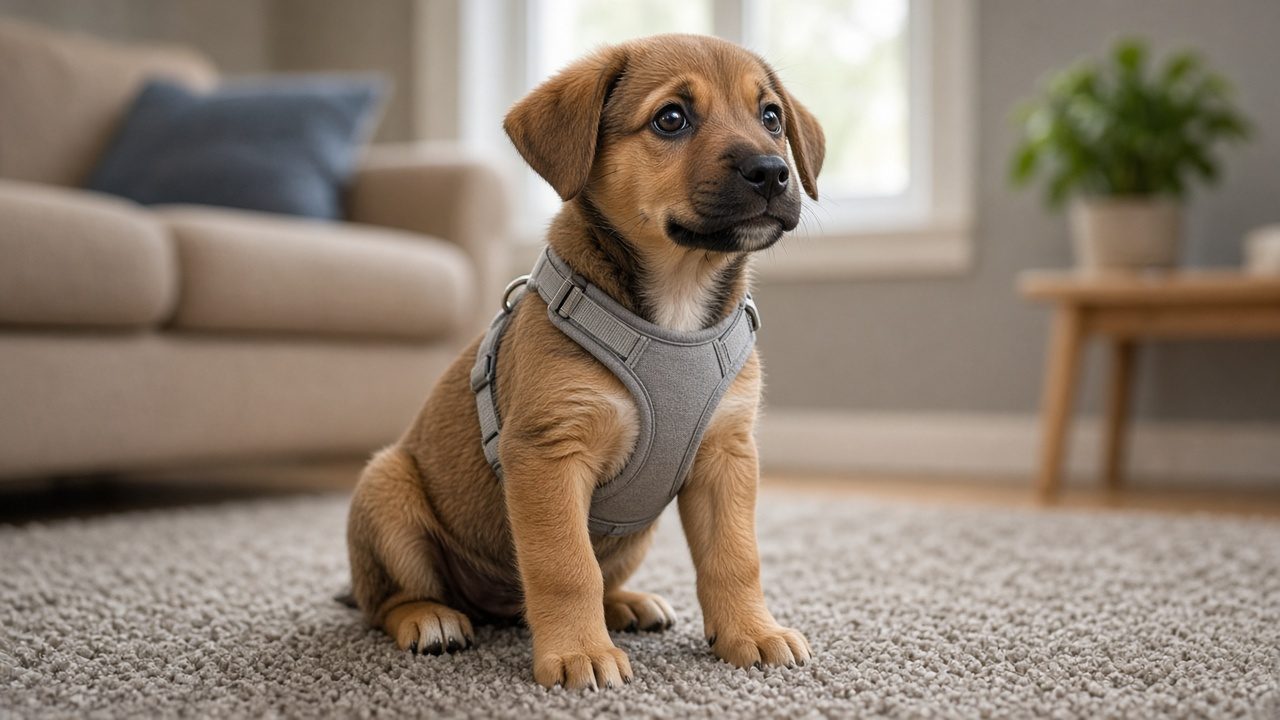
Fitting a Lightweight Collar or Flat Harness
A harness distributes pulling pressure across the broad ribcage and chest rather than concentrating force against the sensitive throat, reducing coughing and potential airway injury during sudden lunges.
If you use a traditional flat buckle collar, ensure it is fitted properly. According to the American Kennel Club, you should be able to slip one finger between the collar and neck on a small dog, or two fingers on a large-breed dog. A collar that is too loose can slip over the dog’s head during unexpected frights, while an overly tight collar restricts breathing and irritates tender skin.
Introducing the Gear Indoors with Positive Conditioning
Rewarding Calm Responses to Attached Lines
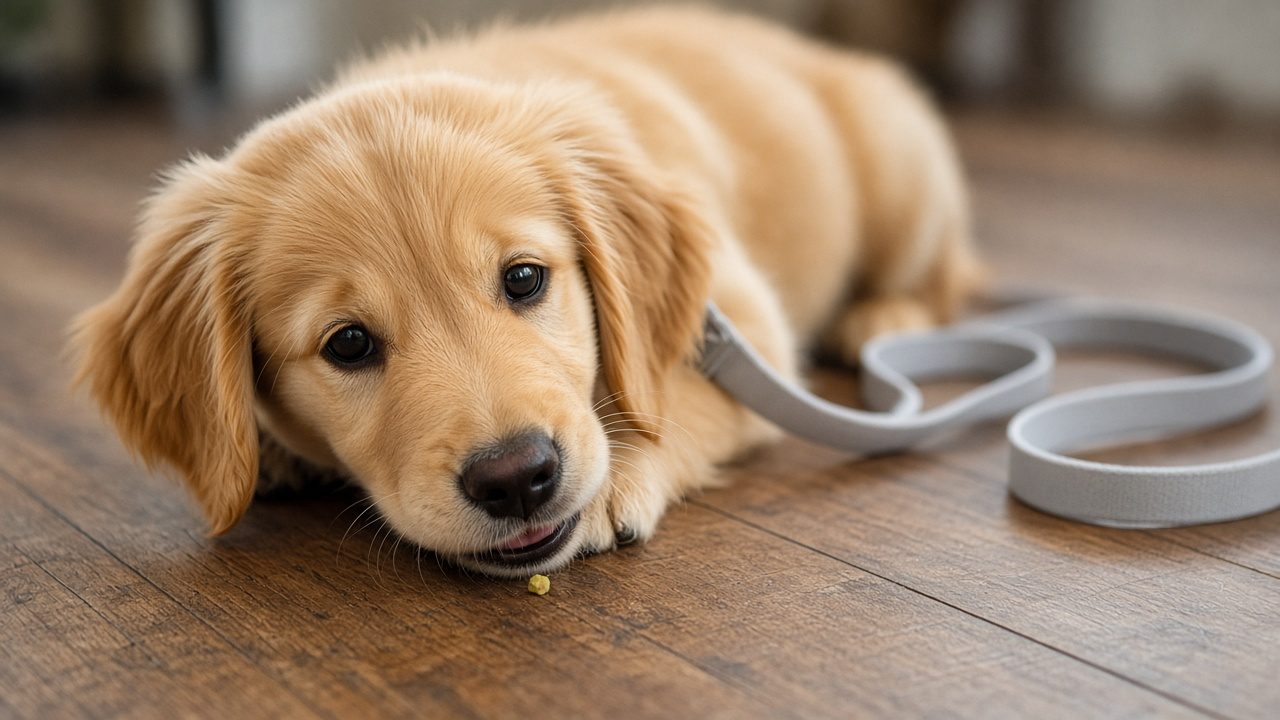
Before stepping foot onto public sidewalks, introduce the walking gear in the quiet comfort of your living room. Present the collar or harness to your pet, let them sniff the fabric, and immediately deliver a pea-sized treat. Slip the gear onto their body, fasten the buckle, and continue offering tasty morsels while engaging them in cheerful play so they associate wearing equipment with pleasure.
Once your pet wears the harness comfortably without scratching or pawing at the straps, attach a lightweight leash and allow your dog to drag it across the carpet under direct supervision. Ensure the clip is lightweight so it does not strike the floor noisily, and supervise closely to prevent the line from snagging on chair legs.
Resources from VCA Animal Hospitals emphasize that early training should focus on positive reinforcement, setting up the environment for success, and keeping training sessions brief and enjoyable. When your companion views their lead as a source of fun and rewards, initial walking sessions proceed smoothly.
Pairing indoor harness conditioning with established housebreaking habits such as how to potty train a puppy ensures your companion develops well-rounded manners without feeling overwhelmed by novel demands.
Teaching Polite Loose-Line Walking Mechanics
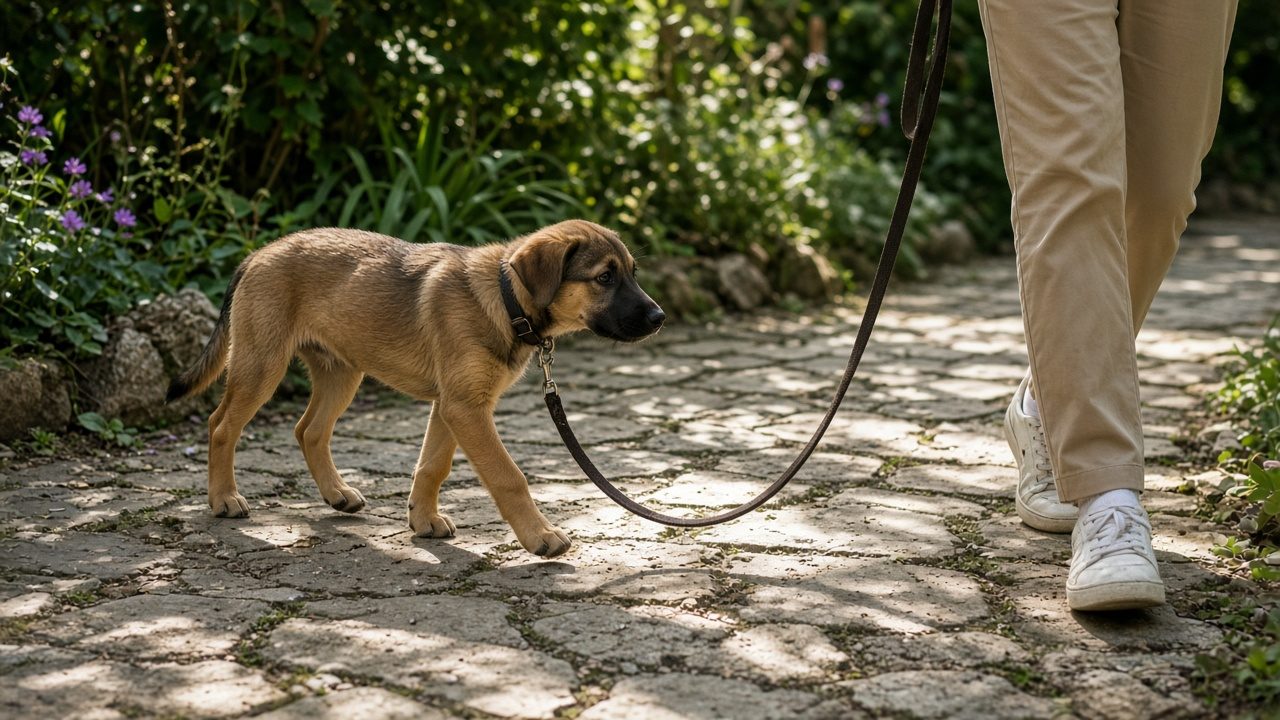
The primary goal of walking instruction is teaching your young companion that a relaxed, curved lead produces forward progress and positive rewards, whereas a taut line brings movement to a complete stop. Pick up the handle of the lead in your living room and hold several high-value treats in the hand closest to your dog.
Encourage your pet to take a few steps alongside your leg by using a cheerful voice or showing a treat at knee height. As your dog moves forward with slack in the line, mark the behavior with a verbal cue like “Yes!” and deliver a treat right at your hip. Walking near your side should become the most rewarding position in the room.
Practice turning in gentle circles and changing directions around furniture. When your pet turns with you and matches your pace, praise softly and reward frequently. At this developmental stage, delivering a small reward every two to three paces keeps your companion engaged and focused on following your movement.
Gradually increase the number of steps between rewards as your dog demonstrates consistent focus. Remember that successful leash training a puppy relies on rewarding desired habits before mistakes occur, turning polite manners into a natural default behavior.
Managing Distractions and Stopping Outdoor Pulling Habits
Once your young dog walks politely across indoor rooms, transition outdoors into a quiet backyard or enclosed patio before attempting neighborhood sidewalks. The outdoor world is rich with stimulating scents, blowing leaves, chirping birds, and unfamiliar sounds that easily compete with human attention.
If your pet surges forward and tightens the line, immediately stop walking and stand completely still like a tree trunk. Do not yank, jerk, or drag the lead backward, as sudden physical force can injure a puppy’s neck and increase frustration. Simply plant your feet and wait quietly for tension to release.
The moment your pet stops pulling, glances back toward you, or takes a step back to create slack, mark the moment with praise and resume walking forward. Walking forward serves as the ultimate real-world reward for keeping the line loose. If your dog remains fixated on an outdoor distraction, call their name cheerfully, take three steps in the opposite direction, and reward them when they turn to follow.
Behavioral recommendations from the Ohio State University Veterinary Medical Center highlight the importance of patience and positive guidance during early development, reminding owners that young dogs learn best through calm consistency rather than physical intimidation.
Overcoming Common Fear and Hesitation in New Environments
It is entirely normal for young canines to experience moments of hesitation or fear when encountering novel outdoor environments. A noisy garbage truck, a fluttering flag, or an unfamiliar barking dog behind a fence can cause a young dog to put the brakes on and sit down abruptly on the sidewalk.
Never forcibly drag a frightened pet along the pavement. Dragging increases panic and cements negative associations with outdoor walking gear. If your companion freezes, crouch down nearby, speak in a gentle, reassuring tone, and offer a favorite high-value treat to help them decompress.
Give your pet time to observe unfamiliar stimuli from a comfortable distance. If they take a voluntary step forward or sniff the ground calmly, deliver warm praise. If the environment proves too overwhelming, pick up your companion or guide them calmly back toward home, keeping experiences positive and confidence-building.
With consistent daily practice, gentle patience, and enthusiastic rewards, your young companion will transform into a confident, polite walking partner ready for countless memorable adventures together.
Frequently Asked Questions
At what age should you start introducing walking equipment?
You can introduce lightweight collars, harnesses, and indoor lines as early as eight weeks of age in your home. Early indoor acclimation allows your companion to adjust to the sensation of wearing gear in a comfortable, familiar environment before venturing into distracting outdoor spaces. Keep early sessions brief, positive, and paired with delicious treats.
What should you do if your young dog freezes and refuses to move?
Never pull or drag a frozen dog forward, as forceful pressure increases fear and resistance. Instead, crouch down at their eye level, speak in an encouraging tone, and toss a high-value treat a few inches ahead to coax voluntary movement. If your companion remains distressed by environmental stimuli, calmly retreat to a quieter area.
Why should retractable lines be avoided during early leash practice?
Retractable lines reward pulling because extending the lead gives greater freedom, rather than teaching a young dog to walk on a loose lead. Furthermore, thin cords pose severe friction hazards, lack reliable physical control in emergencies, and can cause sudden injury to young necks if a dog bolts toward a distraction.
How long should early walking practice sessions last each day?
Early walking lessons should be kept short, lasting roughly five to ten minutes, conducted two to three times daily. Young canines possess limited mental concentration and physical stamina, making brief, highly rewarding practice far more productive than exhausting, lengthy walks. End every lesson on a positive note while your pet is still engaged.