Establishing a consistent crate training puppy schedule creates a peaceful, predictable daily rhythm that accelerates housebreaking and prevents behavioral problems. Young dogs thrive on structured routines that balance energetic play, biological elimination, nourishing meals, and deep restorative sleep. An organized schedule removes uncertainty, helping young animals feel secure in their new home environment while learning essential indoor den manners.
The crate serves as a canine bedroom and safe sanctuary, leveraging natural denning instincts to keep sleeping quarters clean and comfortable. When paired with predictable wake windows, the enclosure becomes an indispensable tool for preventing household accidents and destructive chewing habits. Introducing structured rest periods ensures your developing pet receives the extensive sleep necessary for healthy physical growth.
Before implementing a daily routine, ensure the enclosure is fitted with comfortable, chew-proof bedding and placed in an area where your family spends time. Following our overarching puppy training schedule provides the overarching framework needed to guide your household through every stage of early development.
Why Structured Enclosure Routines Accelerate Learning
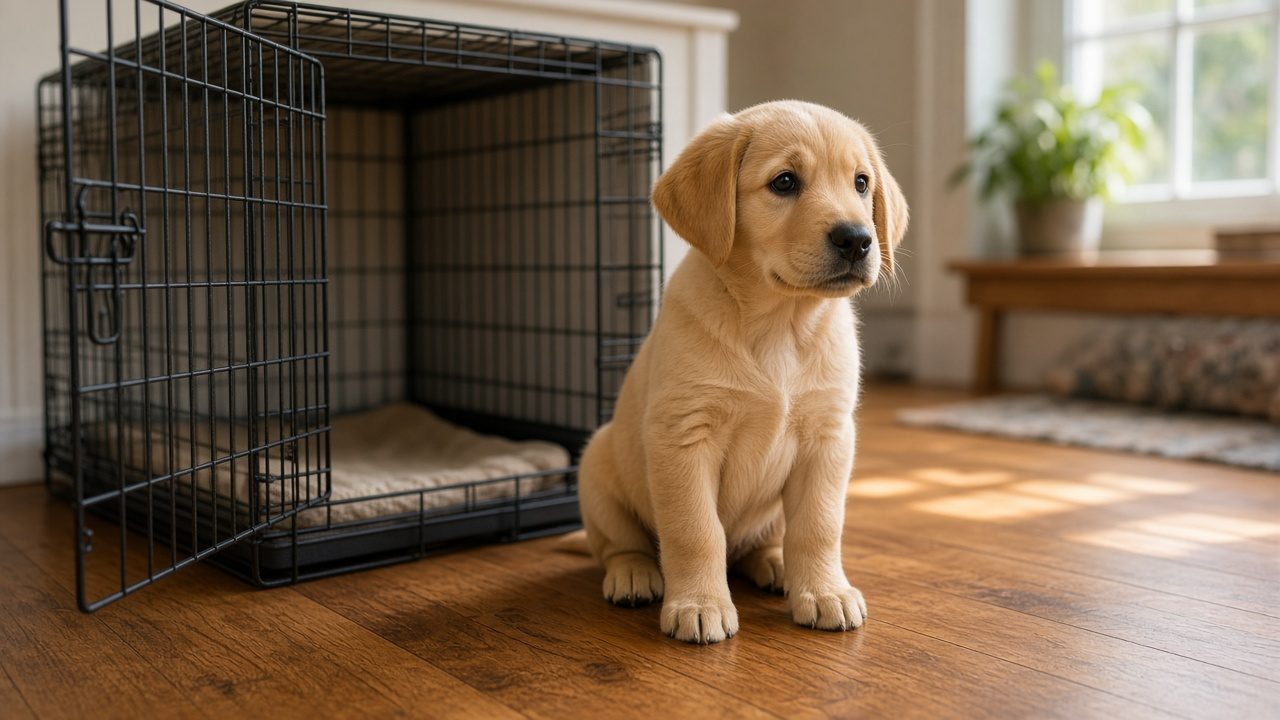
Canines naturally avoid eliminating in their personal sleeping quarters when provided an enclosure of appropriate proportions. Confining your young dog to a cozy den during resting hours prevents indoor accidents while bladder capacity develops naturally with age. Directly transitioning your pet from crate to outdoors creates clear, repeatable associations with outdoor bathroom areas.
According to the American Kennel Club crate training guide, crate acclimation must proceed gradually, and if a puppy panics or cries relentlessly, training should pause to address possible separation anxiety.
For detailed advice on selecting proper dimensions and positive conditioning games, consult our foundational tutorial on crate training a puppy before beginning structured daily confinement.
Balancing Daily Rest and Active Play Windows
Young puppies require approximately eighteen to twenty hours of sleep every day to support neurological growth and immune health (AKC). Without a structured daytime schedule, overstimulated pups struggle to self-settle, leading to frantic hyperactivity, destructive gnawing, and painful play biting. Alternating active play with enforced quiet rest keeps your companion emotionally balanced.
A typical daytime rhythm follows a cyclical pattern: bathroom trip, energetic play and training, meal or hydration, another bathroom trip, and finally a peaceful nap inside the quiet den. Adhering to this cycle prevents behavioral fatigue and ensures elimination needs are satisfied promptly.
Preventing Overtired Tantrums and Chewing Fits
When young dogs miss vital sleep intervals, their physiological reaction mirrors that of overtired toddlers. Frantic running, nipping at ankles, vocal protests, and refusal to follow cues indicate an urgent need for sleep rather than willful defiance. Recognizing these fatigue signals allows caregivers to intervene gently before emotional meltdowns escalate.
Placing your tired companion into their comfortable enclosure with a soothing, chew-safe item encourages immediate relaxation. Within minutes, the overstimulated brain relaxes, allowing restorative sleep to restore patience and gentle manners.
Establishing Predictable Daytime Nap Cycles

According to the Ohio State University Indoor Pet Initiative, place the crate in an area where your family spends a lot of time so the puppy feels included. Wire crates can also be draped with a cover, leaving one or two sides open for ventilation (Cornell Riney Canine Health Center).
Guidance from the Ohio State University Indoor Pet Initiative on crate training suggests incorporating food puzzle toys and positive rewards inside the enclosure to establish warm, comforting associations with quiet rest periods. Rewarding your pet whenever they enter the crate voluntarily reinforces long-term relaxation.
Reviewing our companion guide on a dedicated puppy potty training schedule shows how seamlessly daytime crate windows integrate with outdoor bathroom trips throughout each morning, afternoon, and evening.
Managing Transitions from Play to Quiet Den Time
Transitioning from rowdy interactive play to quiet confinement requires calm, intentional handling. Never toss an over-excited dog into an enclosure abruptly, as sudden containment during peak excitement creates frustration and vocal protests. Instead, initiate a five-minute cool-down phase consisting of gentle petting, slow sniffing, or quiet chew toy engagement.
Once energy levels subside, lure your pet into the den with a delicious treat or food-stuffed rubber toy, offering a cheerful cue such as “kennel up.” Close the door gently without making a dramatic fuss, remaining calm and relaxed to signal that rest time is entirely routine and safe.
Hour-by-Hour Daily Routine Framework

To organize your daily routine successfully, follow the sample schedule below designed for typical eight to sixteen-week-old companions. Note that eight- to ten-week-old puppies require overnight bathroom trips roughly every two hours, while three-month-olds need breaks every three hours; a single overnight break is suitable only for puppies four months and older. Adjust specific times to match your household work commitments while keeping the proportional rhythm of rest and activity consistent.
| Time Window | Primary Activity | Key Caregiver Actions |
|---|---|---|
| 6:30 AM – 7:00 AM | Morning Wake-Up and Elimination | Carry puppy immediately outdoors; reward elimination with praise and treats |
| 7:00 AM – 8:00 AM | Breakfast, Hydration, and Light Play | Serve breakfast in kitchen; supervise interactive toy play; outdoor potty trip after eating |
| 8:00 AM – 10:00 AM | Morning Crate Nap | Encourage rest in quiet den with safe chew toy; keep room quiet and dim (2-hour limit for young pups) |
| 10:00 AM – 11:00 AM | Mid-Morning Potty and Training | Immediate outdoor trip in private yard; 10 minutes basic indoor obedience training |
| 11:00 AM – 1:00 PM | Midday Crate Rest | Scheduled midday nap window; provides quiet time for household chores or remote work |
| 1:00 PM – 2:00 PM | Lunch Potty Break and Socialization | Outdoor elimination trip; optional light lunch or interactive puzzle feeder; gentle handling |
| 2:00 PM – 4:00 PM | Afternoon Crate Nap | Restorative sleep in covered den (within 2-hour hold limit for 8-week-old pups) |
| 4:00 PM – 5:00 PM | Afternoon Bathroom Trip and Exercise | Outdoor bathroom visit; active playtime in private yard or indoor leash habituation |
| 5:00 PM – 6:30 PM | Dinner and Family Interaction | Evening meal served; quiet interaction during human dinner prep; outdoor trip within 20 minutes |
| 6:30 PM – 8:00 PM | Evening Nap in Enclosure | Rest period preventing evening zoomies and overstimulation during family relaxation |
| 8:00 PM – 9:30 PM | Calm Evening Social Time and Brushing | Gentle brushing, lap cuddling, and final water bowl pickup; quiet indoor atmosphere |
| 9:30 PM – 10:00 PM | Nighttime Bathroom Trip and Bedtime | Calm outdoor elimination; guide puppy into bedroom crate for sleep |
| 12:00 AM, 2:00 AM, 4:00 AM | Overnight Potty Breaks (8–10 Weeks) | Quiet outdoor bathroom trips approximately every two hours overnight for 8-10 week puppies (every three hours at three months) per clinical guidance from VCA Animal Hospitals; a single overnight break is only appropriate for puppies four months and older. |
Adhering to this balanced framework creates a predictable circadian rhythm, making nighttime sleep transitions peaceful and uninterrupted for all household members.
Nighttime Placement and Bedtime Procedures
During the earliest weeks, place the sleeping crate directly inside your bedroom within arm’s reach of your bed. Keeping the crate close by allows your young pet to sense your familiar presence and settle comfortably throughout nighttime hours.
Establish a predictable bedtime routine thirty minutes before final lights-out. Dim household lighting, turn off loud media, and take your pet for a final calm outdoor bathroom trip. Avoid engaging in vigorous play right before bed, as elevating heart rates makes settling down difficult.
The American Kennel Club crate training guide reminds owners to always remove collars before crating to prevent dangerous snagging on enclosure bars. Furthermore, young puppies cannot hold their bladder through an eight-hour night. Clinical guidance from VCA Animal Hospitals emphasizes taking a two-month-old puppy outside at least every two hours overnight, and a three-month-old every three hours. Expecting an eight-week-old puppy to sleep with only a single overnight break leads to distress and indoor accidents, as a single-break overnight routine is suitable only for dogs four months of age and older.
Troubleshooting Midday Whining and Restlessness
It is common for puppies to vocalize briefly during early crate acclimation. Differentiating between attention-seeking demand vocalization and genuine biological distress is crucial for consistent management. If your pet eliminated immediately prior to entering the den, brief protest whining typically subsides if ignored calmly.
Responding to demand barking by opening the crate door inadvertently teaches your companion that vocal tantrums earn freedom and human attention. Wait until the puppy is completely quiet before opening the door, and if the puppy becomes frantic, end the session and take a step back in training (OSU).
However, if your companion has rested quietly for two hours and suddenly begins whining with increasing urgency, treat it as a genuine biological need. Carry them quietly outside on leash, allow elimination, and return them immediately to the den without play. For persistent night whining or distress that does not improve, consult your veterinarian to evaluate potential digestive upset or physical discomfort.
Frequently Asked Questions
How does a puppy training crate schedule balance naps and potty breaks?
A balanced routine pairs every wake window with an immediate outdoor bathroom trip followed by active play, feeding, and another bathroom visit before returning to rest. This cycle anticipates biological elimination needs while ensuring the young dog receives eighteen to twenty hours of necessary sleep. Predictable transitions prevent indoor mistakes and overtired tantrums.
How can I adjust a puppy crate training schedule week by week as growth occurs?
As your puppy matures each month, gradually extend daytime wake windows and increase the duration between outdoor bathroom trips to reflect improving bladder capacity. Maintain strict overnight sleep routines even as daytime freedom expands.
What should I do if my dog whimpers during structured daytime naps?
If your companion was taken outside immediately before confinement and has a clean, comfortable den, allow them a few minutes to settle without acknowledging demand vocalization. Responding to minor whimpers rewards protest barking and delays self-soothing development. If vocalization sounds frantic or prolonged, check quietly for tangled bedding or urgent bathroom needs.
Where should the enclosure be placed during evening sleep hours?
Place the sleeping enclosure directly in your bedroom near your bed during early weeks so your young dog feels secure sensing your presence. Bedroom placement allows you to hear genuine nighttime bathroom whimpers promptly and prevents feelings of abandonment. Once mature house manners and sleep confidence are established, the crate can transition to other preferred rooms.