Mastering puppy training at home provides your young companion with a calm, familiar environment to learn essential manners and positive boundaries. By organizing short daily lessons in low-distraction spaces, you set your dog up for reliable focus before introducing complex outdoor challenges. Conducting early lessons in your living room allows you to control the environment completely, removing frightening stimuli and ensuring steady educational progress.
The domestic living space serves as the ultimate classroom for foundational canine life skills. Inside your house, your puppy learns where to sleep, where to eliminate, how to interact politely with family members, and how to relax quietly during downtime. Building a solid foundation indoors establishes habits that carry over seamlessly into parks, veterinary clinics, and neighborhood streets.
Integrating lessons with proper enclosure management outlined in our guide on crate training a puppy ensures your pet has a secure sanctuary between teaching intervals. Furthermore, following a predictable puppy training schedule helps maintain consistent biological rhythms and prevents behavioral regressions caused by exhaustion.
Educational resources from VCA Animal Hospitals recommend teaching foundational manners in quiet domestic surroundings, noting that puppies may stop responding when an environment becomes too stimulating.
Designing a Low-Distraction Indoor Learning Space
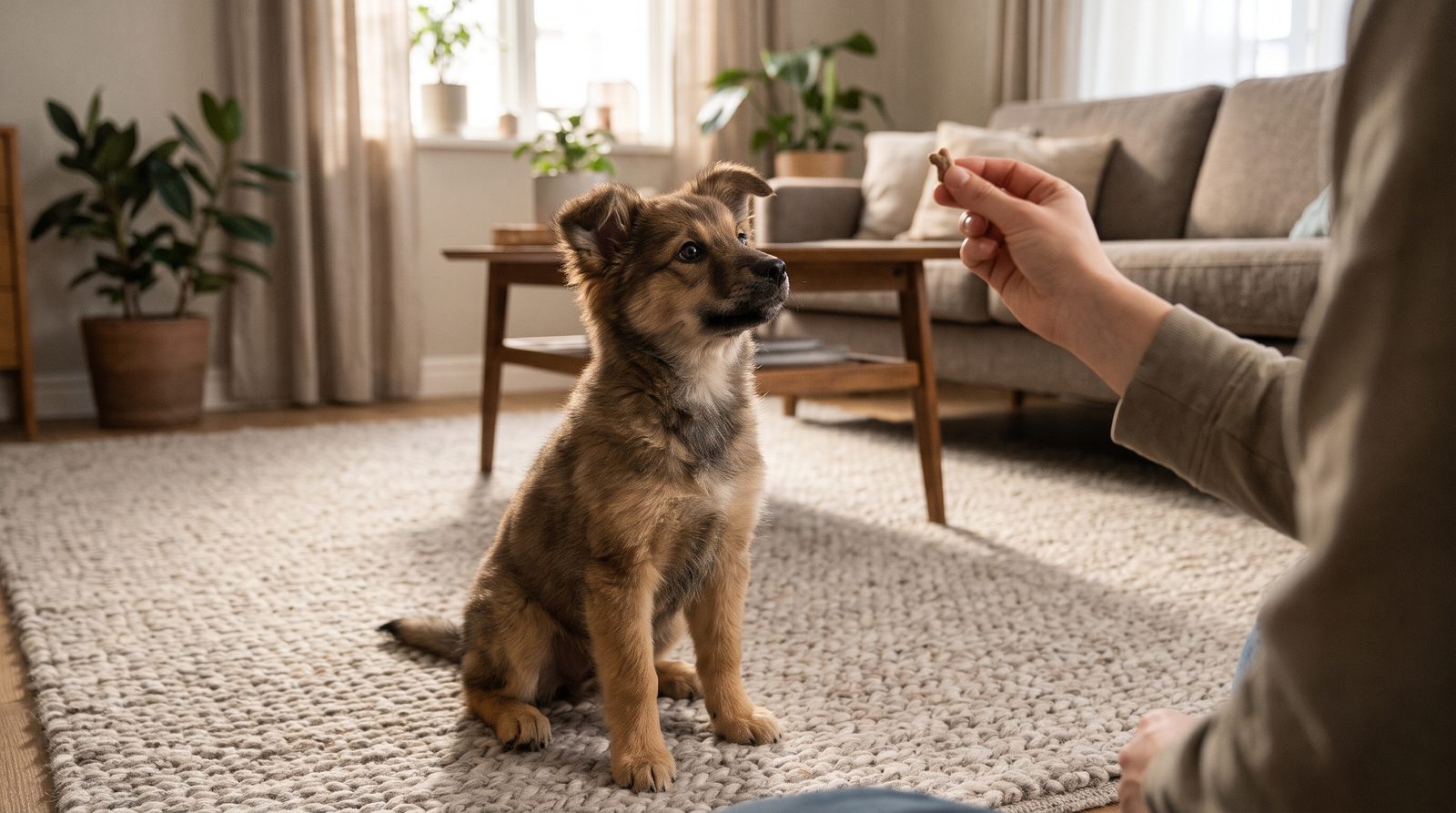
Structuring Effective Five-Minute Teaching Intervals
Young canines possess short attention spans, making brief, frequent lessons far more productive than lengthy, grueling sessions. Strive for two to three short practice windows of three to five minutes spread throughout the day. Brief intervals keep enthusiasm high and prevent the mental fatigue that often leads to nipping and restless wandering.
Integrate these micro-sessions into everyday routines. Ask for a polite sit before setting down the food bowl, practice a calm wait at the back doorway, or cue a gentle hand touch during commercial breaks while watching television. Weaving manners into regular life teaches your companion that polite behavior applies constantly, not just when treat bags appear.
Establish a predictable pattern for each session by beginning with an easy, familiar request to boost your dog’s confidence. Follow this with two minutes of gentle guidance on a newer skill, and close the exercise with another simple success. This positive sandwich method keeps motivation high and eliminates learning frustration.
Using Food Rewards to Shape Calm Indoor Behaviors
Rewarding voluntary calm behavior is one of the most effective yet overlooked strategies for indoor success. When you notice your puppy lying peacefully on their mat or chewing quietly on a toy, calmly place a kibble between their paws without making excited verbal fuss.
Capturing quiet moments reinforces relaxation as a rewarding lifestyle choice. Dogs naturally repeat actions that earn positive outcomes. By reinforcing serene stillness indoors, you systematically prevent demand barking, frantic running, and attention-seeking nudges.
Use part of your dog’s daily meal kibble as training currency throughout the day. Dispensing nutrition during calm moments teaches self-control and prevents obesity from excessive commercial high-calorie biscuits.
Essential Training Exercises for Living Room Practice
Managing Indoor Boundary Manners Around the Home
Unrestricted household freedom is the primary catalyst for indoor accidents and destructive habits. Implement clear physical boundaries using sturdy baby gates, exercise pens, and designated dog-safe zones. Confining your pup to areas with easily cleanable flooring protects your carpets while keeping them within direct eyesight during active wake windows.
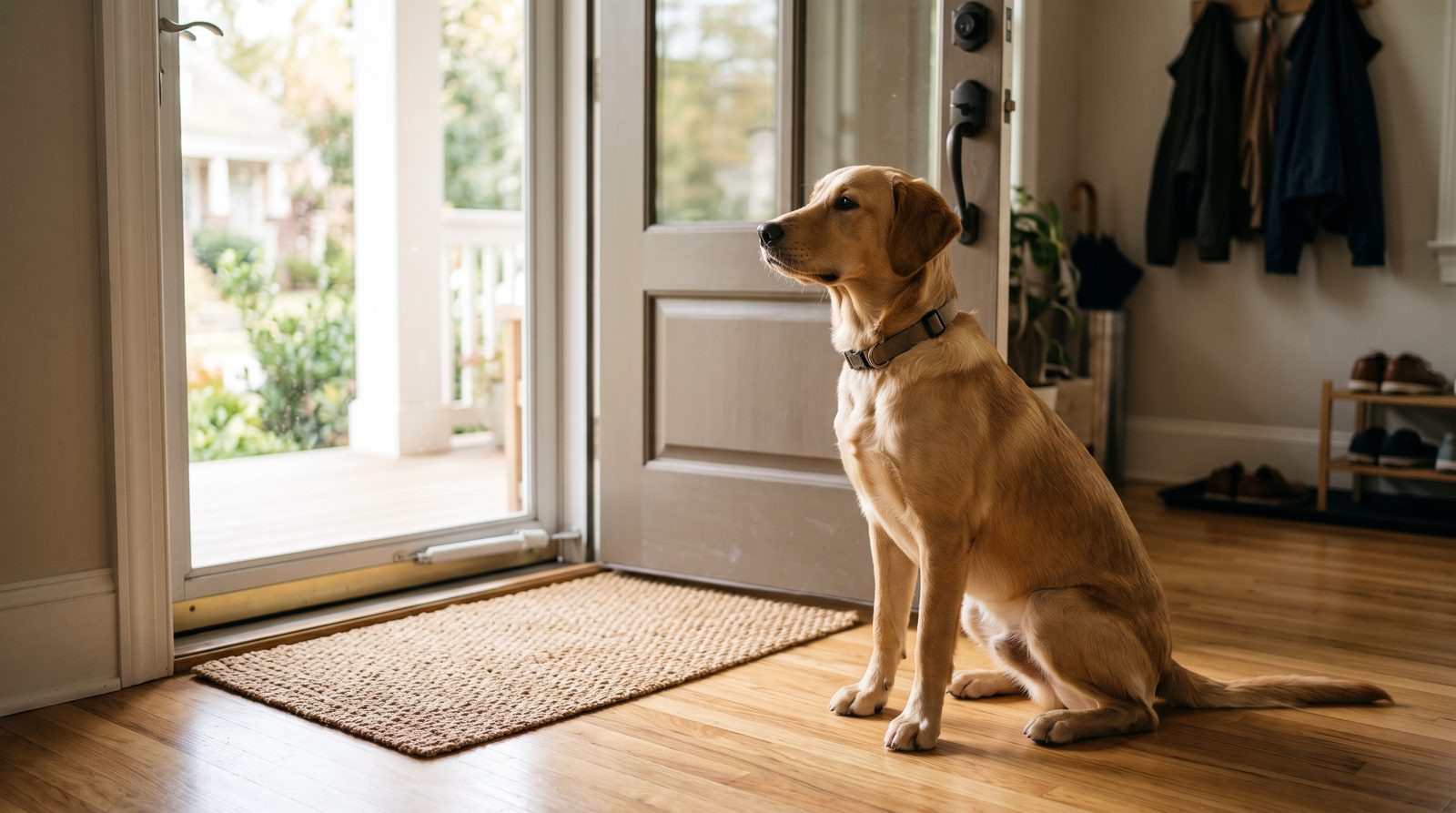
Establish doorway manners to prevent reckless darting when exterior doors open. Practice asking your companion to wait patiently a few feet back from the threshold, opening the door slightly, and rewarding calm stillness before granting permission to step through. This simple exercise builds lifetime impulse control and prevents dangerous outdoor escapes.
Introduce tethering exercises during family meal times or work-from-home hours. Securing a light six-foot leash to a heavy piece of furniture with a plush bed and a stuffed chew toy teaches your pet to self-soothe within arm’s reach of family members, only while you are actively supervising with the puppy wearing a flat collar or harness.
Balancing wakefulness with scheduled rest periods prevents the irritability typical of an overtired pet. Consulting our breakdown of a balanced puppy sleep schedule helps ensure your pet receives eighteen to twenty hours of essential daily sleep.
Preventing Household Accidents and Daily Puppy Chewing
Redirecting Unwanted Mouth Contact to Approved Toys
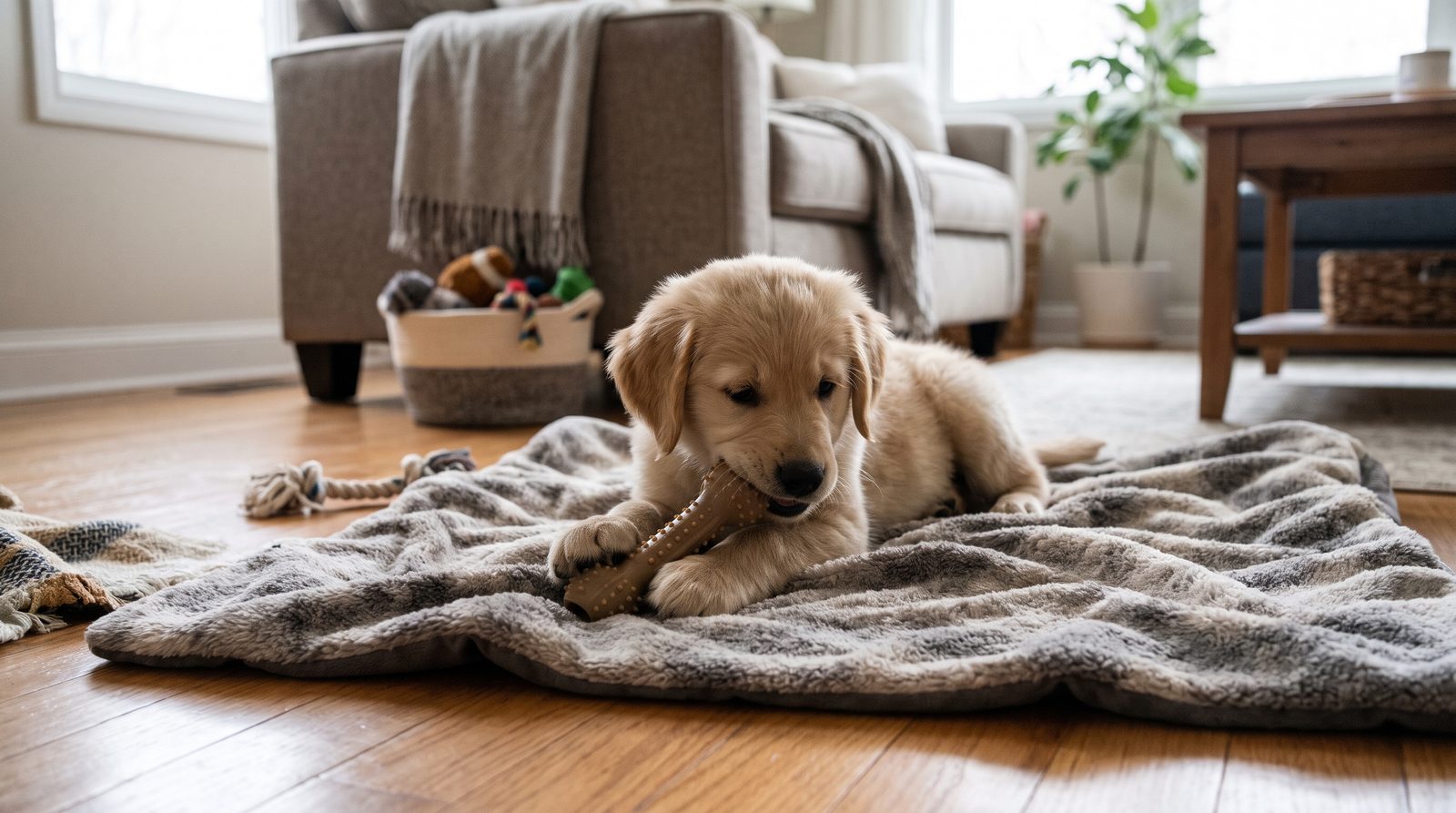
Teething is a natural biological process that drives young dogs to explore household surroundings with their mouths. If your puppy targets chair legs, electrical cords, or slippers, interrupt the action without shouting and immediately offer an appealing alternative such as a textured rubber chew toy or a chilled teething ring.
Praise your companion the moment their jaws engage with the approved toy. Keep a rotating assortment of durable rubber toys, rope braids, and hollow feeder toys readily available in every room so you can swap out forbidden items instantly.
Veterinary guidance from the Cornell University Riney Canine Health Center highlights that effective puppy-proofing, safety gates, and approved chew toys protect household property while safely satisfying natural chewing urges.
Keep high-risk personal items such as shoes, children’s toys, and laundry securely stored out of reach. Managing the physical environment reduces friction and eliminates opportunities for your companion to rehearse unwanted chewing habits.
Apply safe, taste-deterrent sprays to exposed furniture baseboards and wooden table legs if chewing persists. Never rely solely on deterrents without providing plenty of positive, satisfying chew outlets.
Transitioning Domestic Skills to Outdoor Environments
Once your companion executes foundational cues reliably in quiet indoor spaces, begin bridging the gap to outdoor environments. Step out onto a private patio, quiet driveway, or enclosed backyard to practice the exact same exercises with minimal outdoor distractions.
Expect a temporary drop in responsiveness when practicing outside due to competing scents, moving vehicles, and chirping birds. Be prepared to increase your reward value by swapping dry kibble for tiny pieces of roasted chicken or freeze-dried liver to maintain your dog’s attention.
Work at your dog’s pace and avoid advancing too quickly into bustling public areas. If your pet becomes overwhelmed by traffic or unfamiliar dogs, retreat to your quiet patio or front porch until composure and handler engagement return.
If your pet displays persistent training roadblocks, sudden behavioral changes, or signs of pain during daily routines, talk to your veterinarian to ensure there are no underlying physical concerns. Committing to regular puppy training at home establishes dependable domestic habits and enriches the lifelong bond between you and your canine companion.
Frequently Asked Questions
Can you successfully train a young dog entirely at home?
Yes, foundational training at home provides an ideal low-distraction setting for mastering manners, impulse control, and safety cues. However, once basic behaviors are solid, dogs must be gradually exposed to outdoor settings to generalize those skills in the real world.
How many daily practice sessions should you schedule indoors?
Aim for two to three short sessions per day, lasting between three and five minutes each. Distributing lessons throughout the day prevents fatigue and allows you to weave manners seamlessly into regular household routines.
What should you do if your pup loses focus inside?
If your puppy loses focus, evaluate whether the session has run too long or if the room contains too many distractions. End the exercise on an easy, successful repetition, grant a brief rest break, and reduce environmental stimuli before trying again.
When is the right moment to move exercises outdoors?
Transition to outdoor practice once your dog reliably responds to cues across multiple quiet rooms indoors. Begin in a calm backyard or quiet driveway, using higher-value rewards to help your companion handle new outdoor sights and smells.