Learning how to potty train puppy outside requires clear timing, close indoor management, and enthusiastic rewards every time your dog eliminates on the grass. Establishing a designated bathroom spot and taking your pup outdoors after key biological transitions speeds up clean household habits dramatically. With focused supervision and consistent routines, you can guide your new pet to prefer outdoor elimination naturally within their first few weeks at home.
Housebreaking relies on understanding canine biological patterns and setting up situations where outdoor success is virtually guaranteed. Young puppies possess limited bladder capacity and naturally follow biological impulses without recognizing human household boundaries. When you proactively direct their bathroom habits to natural outdoor substrates, you prevent indoor confusion and cultivate lifelong cleanliness.
Pairing outdoor trips with a structured puppy training schedule establishes reliable biological expectations throughout the day. Reviewing our comprehensive breakdown of how to potty train a puppy provides additional foundational insights, while consulting our hour-by-hour puppy potty training schedule helps you anticipate elimination windows with confidence.
According to clinical veterinary guidance from VCA Animal Hospitals, consistent scheduling, vigilant supervision, and immediate positive reinforcement are the essential pillars of successful outdoor house training.
Selecting and Conditioning a Designated Outside Bathroom Area
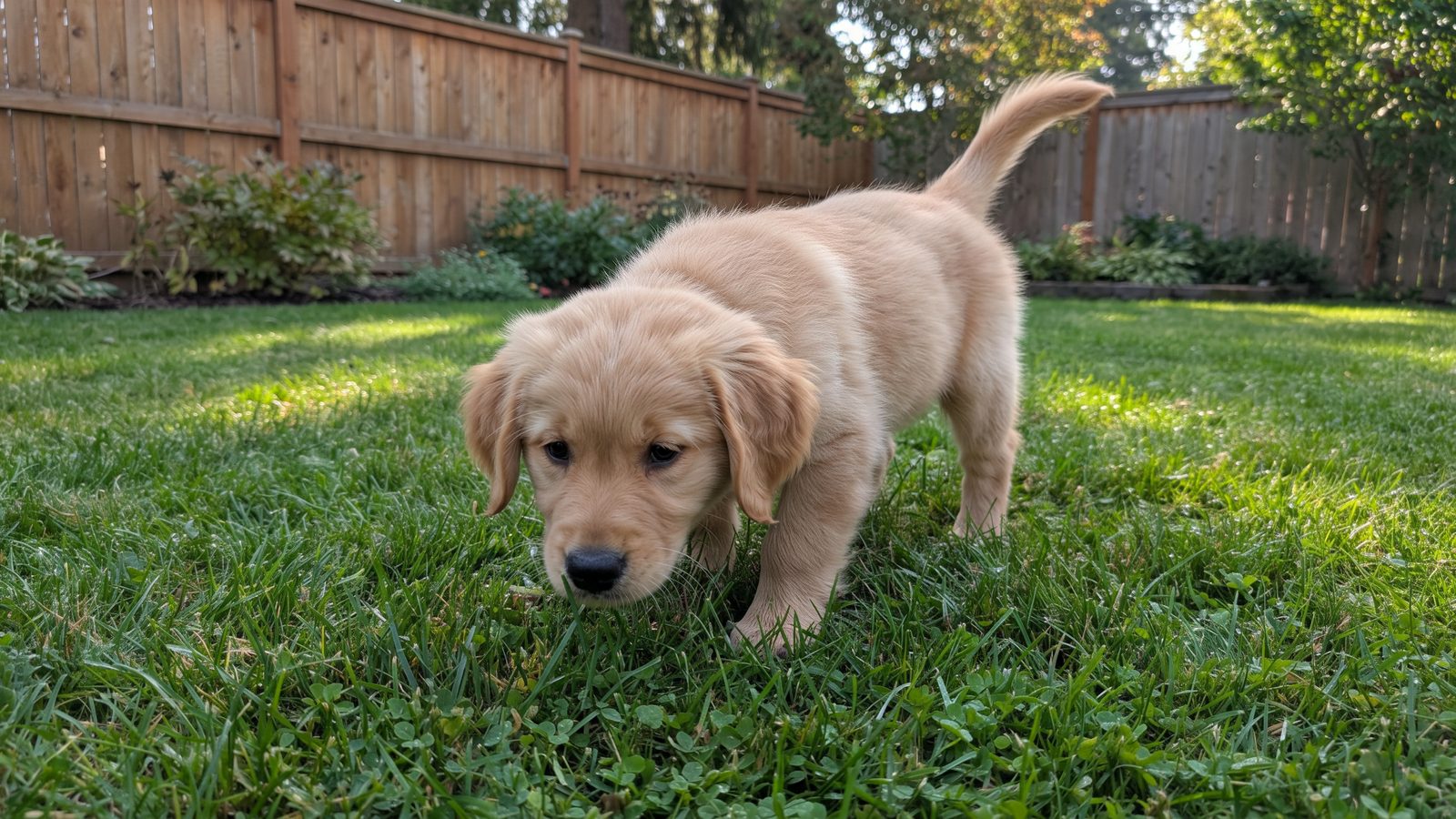
Leashing Your Dog for Immediate Bathroom Focus
Always take your puppy outdoors on a standard six-foot leash, even in a safely fenced backyard. Allowing a young dog to run freely encourages immediate romping, leaf chasing, and sniffing rather than bathroom business. Keeping your pet on a leash helps them focus on eliminating in a timely manner.
Lead your companion directly to the exact same quiet spot in your yard on every bathroom trip. Residual scent from previous eliminations acts as a powerful natural trigger, prompting your pup to relieve themselves quickly. Stand relatively still in the designated area, allowing your dog to sniff within leash radius without engaging in active play.
Avoid wandering across the yard while waiting for elimination. Remaining anchored in one spot communicates to your puppy that bathroom trips are purposeful routines rather than casual playtime adventures.
Choose a location that offers protection from heavy wind and rain, away from high-traffic walkways or noisy street corners. A calm, sheltered patch of grass or mulch helps sensitive young dogs feel secure enough to relax their bladder and bowels.
Ensure the chosen surface remains clean by picking up solid waste promptly after each outing. A heavily soiled elimination patch can cause fastidious puppies to avoid the area and seek out cleaner indoor surfaces instead.
Timing Elimination Trips Around Daily Puppy Rhythms
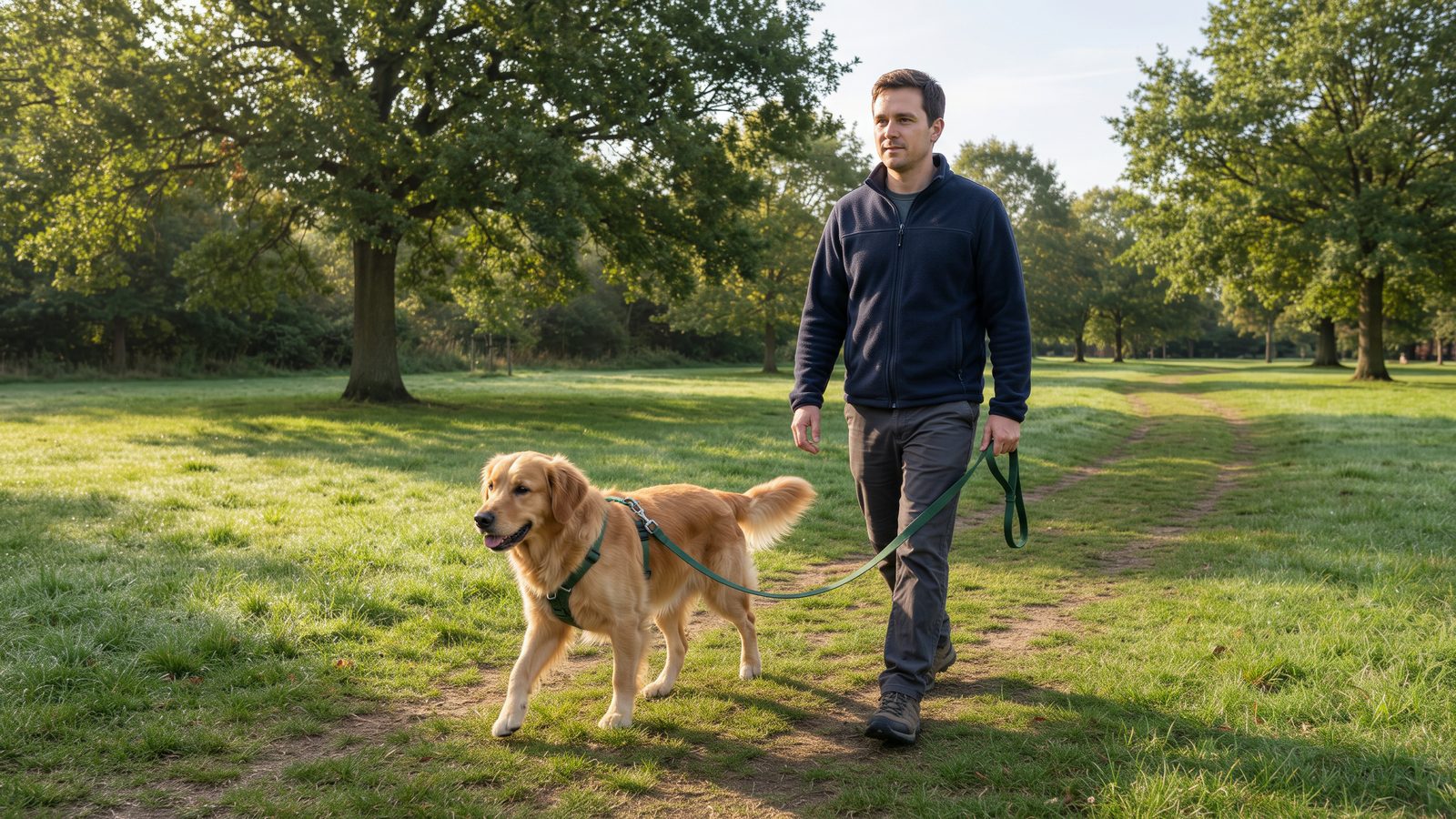
Recognizing Subtle Physical Pre-Elimination Cues
Dogs communicate their need to eliminate through distinct body language changes before accidents occur. Watch for sudden pacing, abrupt cessation of play, intense sniffing of the floor, circling, or drifting toward exterior doorways. If you observe any of these behaviors, calmly scoop up your puppy or guide them outside immediately.
Never wait for your puppy to ask to go outside during the early stages of housebreaking. Young dogs lack the cognitive maturity to signal reliably at the door. Proactively escort your pet outside upon waking, within fifteen minutes after meals, immediately after active indoor play, and after exiting their crate.
Keep track of your companion’s personal elimination intervals. While general guidelines exist, individual puppies vary based on water consumption, physical activity levels, and metabolic rate.
Guidance from the Ohio State University Indoor Pet Initiative emphasizes anticipating a puppy’s elimination needs by scheduling outdoor trips immediately after eating, waking from naps, or vigorous play.
Establish a consistent evening water routine by picking up water bowls before bedtime to reduce nighttime bladder pressure while ensuring adequate daytime hydration.
Managing Indoor Transitions Between Outdoor Potty Breaks
Supervision must be total whenever your young dog is loose indoors. Utilize active management strategies such as the umbilical cord method, where your pup’s leash is looped around your waist or held in your hand. This prevents your companion from wandering into quiet bedrooms or behind sofas to relieve themselves unnoticed.
When direct supervision is impossible, place your companion in an appropriately sized crate or secure exercise pen. The enclosure should offer just enough space for your dog to stand, turn around, and lie down comfortably. Excess room allows a pup to soil one corner while sleeping cleanly in another.
If an outdoor bathroom outing fails to produce results within five to ten minutes, do not permit free run of the house upon returning inside. Calmly place your dog in their crate for ten to fifteen minutes, then escort them back to the outdoor bathroom spot. Repeat this cycle until success occurs, preventing indoor accidents.
Clean any accidental indoor messes immediately with an enzymatic solution. Traditional scented detergents mask smells for human noses, whereas enzymatic cleaners break down organic waste residues to discourage repeat marking.
Using High-Value Food Treats to Reinforce Outdoor Habits
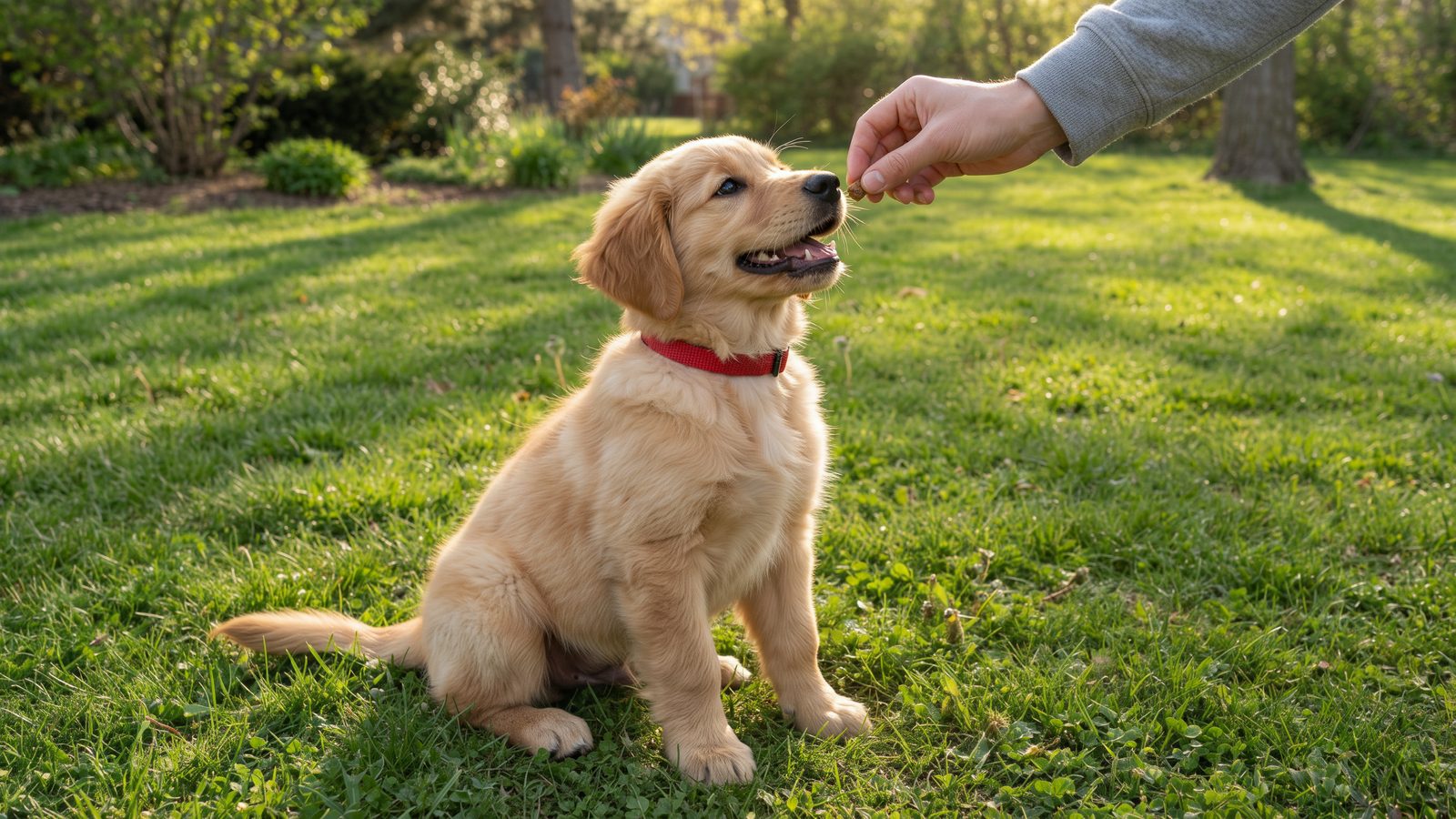
The moment your puppy finishes eliminating outdoors, deliver enthusiastic praise and a pea-sized piece of high-value food such as cooked chicken, cheese, or freeze-dried liver. Deliver the treat right at ground level in the potty area, not minutes later after walking back into the kitchen.
Training advice from the American Kennel Club notes that immediate rewards given outside solidify the connection between the outdoor grass substrate and positive outcomes, speeding up housebreaking significantly.
Attach a simple verbal cue such as ‘Go potty’ or ‘Do your business’ right as your dog begins eliminating. Over time, pairing the word with the action conditions your dog to relieve themselves promptly on command when traveling or facing bad weather.
Follow outdoor elimination with two to three minutes of joyful yard sniffing or light play. Ending an outing the exact second a puppy goes potty can unintentionally teach them to hold their bladder longer to prolong outdoor time.
Overcoming Distractions and Bad Weather During Outdoor Breaks
Handling Hesitation on Wet or Frozen Backyard Turf
Inclement weather frequently derails outdoor housebreaking routines. Cold rain, muddy soil, and winter snow can intimidate young animals, causing them to resist stepping outside. Clear a small pathway and a patch of grass in snowy conditions, or carry an umbrella over your puppy to protect them from pelting raindrops.
Keep outdoor weather breaks focused and efficient. Maintain an encouraging, upbeat tone, reward generously for quick results, and bring your companion inside promptly to dry their paws with a warm towel.
Outfit sensitive or short-coated puppies with a lightweight, water-resistant coat during winter outings. Protecting your dog from bitter drafts keeps them comfortable enough to relax and eliminate quickly.
If your young companion demonstrates sudden regression, frequent urination in tiny amounts, or discomfort while eliminating, talk to your veterinarian to rule out conditions such as urinary tract infections or bladder crystals. With patience and vigilant timing, learning to potty train puppy outside creates a trustworthy companion and helps prevent indoor accidents as clean habits develop.
Frequently Asked Questions
How frequently should you take a young pup outside?
Young puppies should be taken outside every one to two hours while awake, as well as immediately after waking, eating, drinking, or vigorous play. Anticipating their physical needs proactively prevents indoor accidents and accelerates housebreaking.
What should you do if your pup plays instead of eliminating?
Keep your dog on a short leash in your designated bathroom spot and avoid engaging in play. If they do not eliminate within five to ten minutes, return indoors, place them in a safe crate for ten minutes, and try again outdoors.
Why does a dog eliminate indoors immediately after returning inside?
This typically occurs when puppies become distracted outdoors and forget to relieve themselves, only to relax their bladders once back in the warm, familiar house. Using a leash outside and supervising closely after returning indoors resolves this problem.
How long does outdoor housebreaking typically take to master?
Puppies often make significant progress in a few weeks, though full outdoor house training typically takes several months of consistent management. Remaining patient and avoiding punishment ensures steady developmental progress.