Introducing core puppy training commands during early development establishes clear communication, builds cooperative manners, and prevents common behavioral frustrations before they start. Teaching foundational cues gives your young pet a reliable roadmap for understanding what you expect in everyday domestic situations.
Young dogs possess an incredible capacity to learn when training is structured around gentle guidance, fun interactions, and positive motivation. Rather than viewing obedience as rigid dominance, effective education focuses on rewarding desirable actions so that your dog naturally chooses polite household behavior over chaotic impulses.
Pairing these basic exercises with a predictable daily puppy training schedule provides the stability and repetition needed for long-term retention. In this comprehensive guide, we cover the essential verbal cues, teaching sequences, and practical handling routines every new caregiver needs for a polite family dog.
Foundational Puppy Commands for Safety and Manners
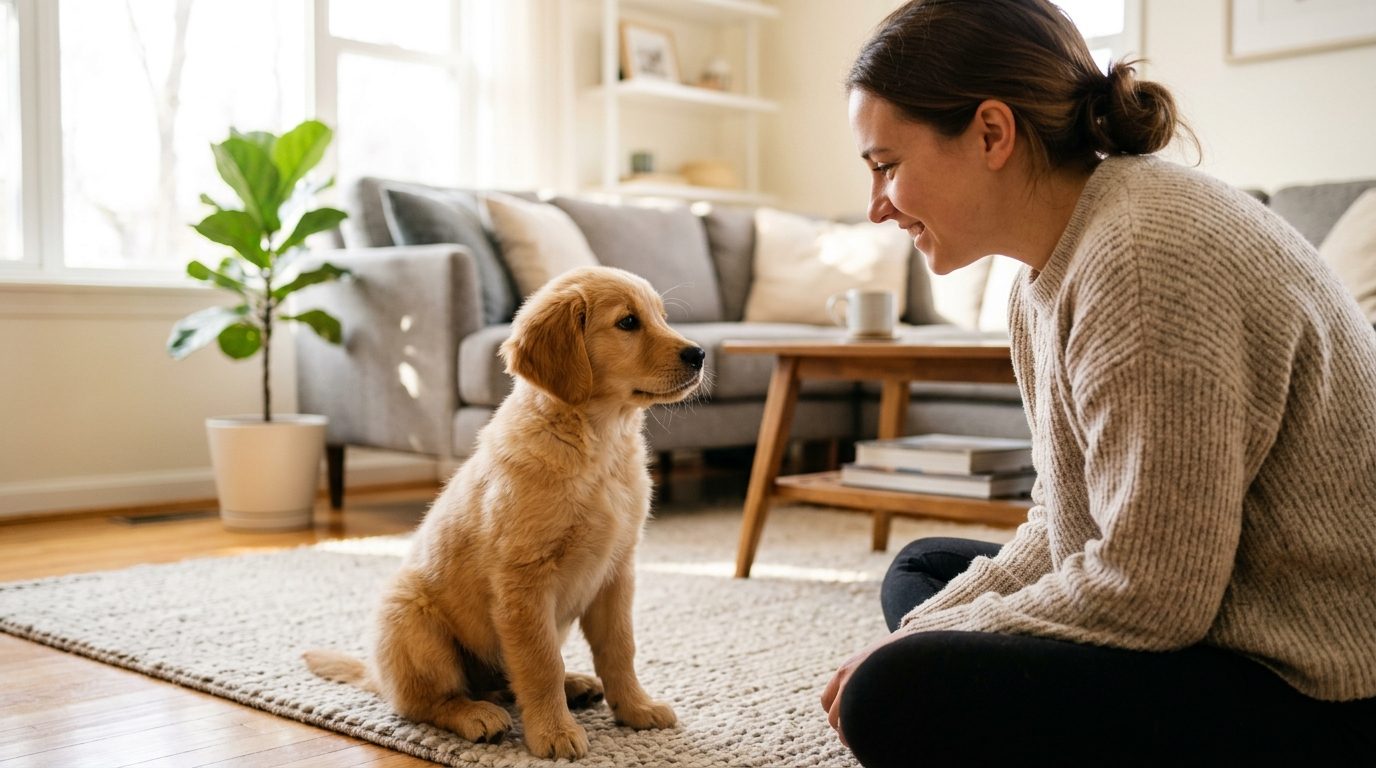
Every polite canine repertoire begins with simple cues that capture attention and create safety in unexpected situations. Before teaching complex postures, your young dog must learn that hearing their name means paying attention and making direct eye contact with you. Establishing focus forms the essential bridge between human verbal direction and canine cooperation.
Name recognition should always carry an intensely positive emotional association for your dog. Practice saying your pet’s name in a cheerful, upbeat tone while standing a few paces away. The instant your dog turns their head and makes eye contact, mark the behavior with a crisp verbal marker such as “yes” and immediately offer a delicious treat.
Early communication work also pairs naturally with teaching polite leash behavior and manners. Exploring our dedicated guide on leash training a puppy will help you apply these foundational focus cues during daily outdoor neighborhood walks without frustration.
Capturing Focus with Name Recognition
To solidify name recognition, avoid using your dog’s name when you are annoyed, frustrated, or about to administer medication. If your pet hears their name followed by scolding, they quickly learn to hesitate or look away rather than turning toward you with enthusiasm. Name recognition must reliably predict good things, play, and tasty rewards.
Begin training in a quiet, familiar room with minimal distractions. Repeat the name-and-reward sequence five to ten times in a row, several times daily. Once your puppy turns reliably indoors, gradually introduce mild background sounds, other family members, and outdoor patio settings.
Stationary Training with Sit and Down Positions
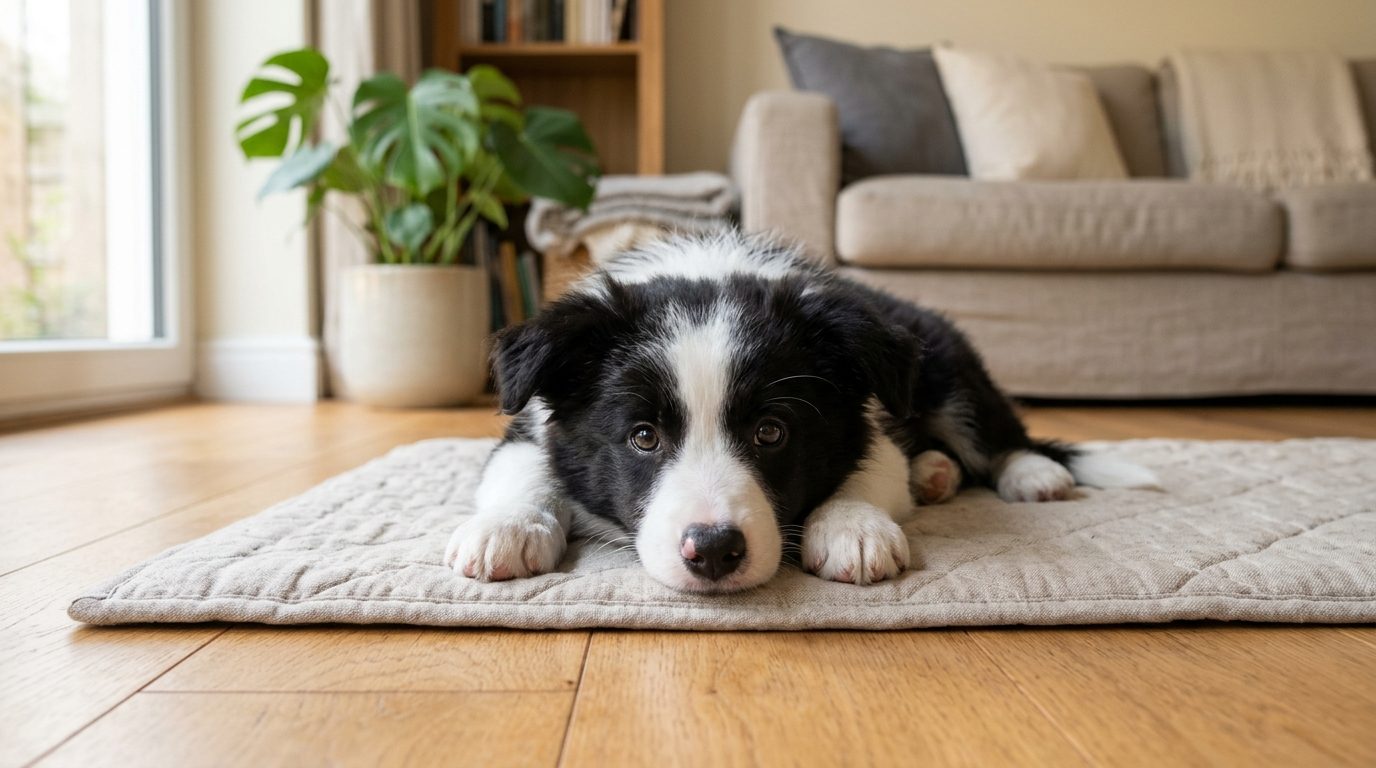
Stationary cues like sit and down provide your young pet with default polite postures whenever excitement threatens to overwhelm self-control. Teaching a dog to sit politely prevents unwanted greeting behaviors like jumping on guests or pawing at kitchen countertops. A sitting canine is physically incapable of jumping up at the same time.
Luring with a tiny piece of food is the most intuitive method for teaching the sit posture. Hold a small treat directly in front of your puppy’s nose, then slowly move your hand upward and backward over their forehead. As the puppy tilts their head back to track the treat, their hindquarters will naturally lower to the floor.
Similarly, teaching down lowers the canine center of gravity and fosters emotional relaxation. From a sitting position, lower a treat straight down to the floor between the puppy’s front paws, then slowly drag it along the ground. As your puppy follows the lure, their elbows touch the floor into a complete resting posture.
Teaching Sit Before Meals and Doorways
Incorporate the sit posture into practical daily household life rather than confining practice to isolated drills. Ask your puppy to sit before placing their food bowl on the floor, before clipping on a walking leash, and before opening exterior doors for bathroom breaks. This teaches the dog that polite patience unlocks the things they want.
Practicing foundational puppy training commands in short, upbeat sessions ensures learning remains a rewarding game rather than a stressful chore. When polite sitting becomes your pet’s automatic way of asking for attention, demanding behaviors diminish significantly.
Reliable Recall and Impulse Control Commands
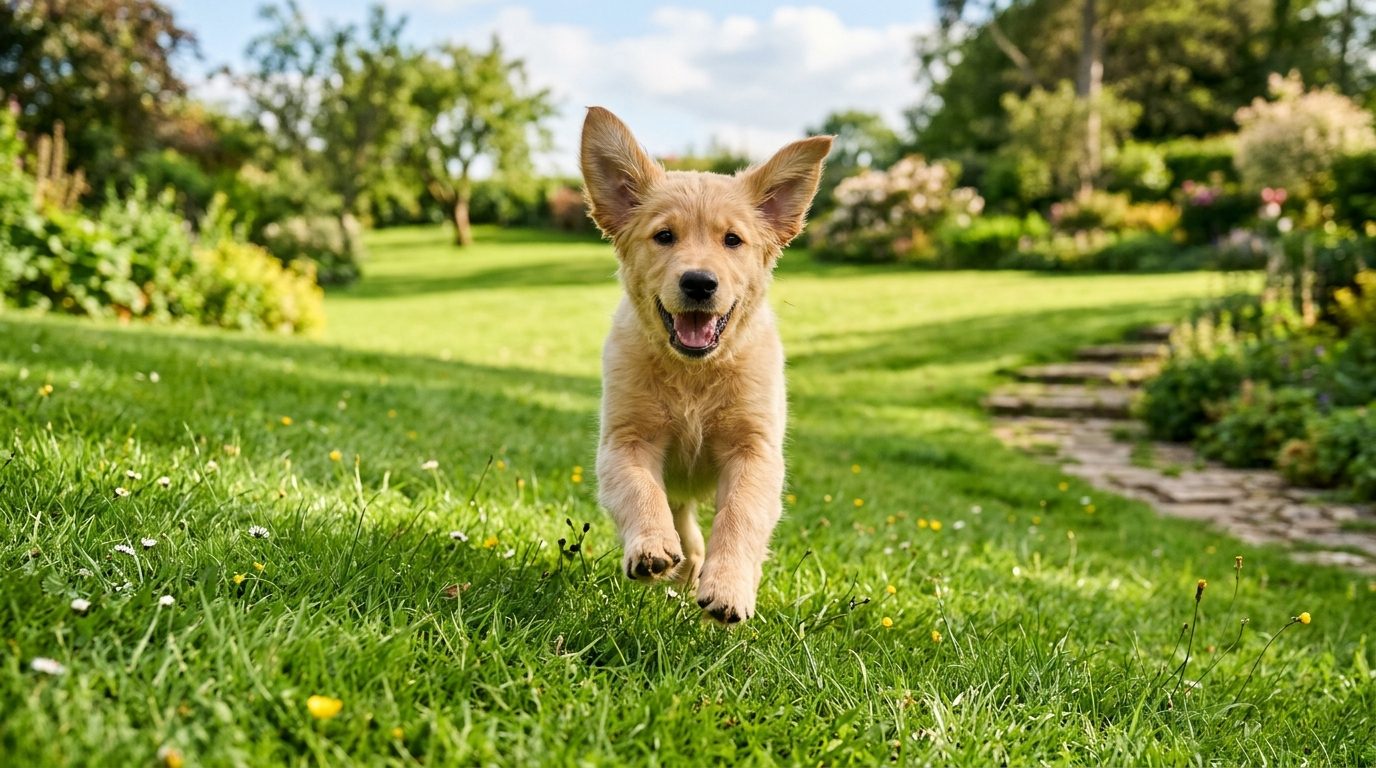
Among all verbal directions a canine can learn, a reliable recall cue is arguably the most vital for physical safety. Calling your dog to come back to you must become an irresistible invitation that overrides competing environmental distractions. A dependable recall can keep your pet safe around open doors, moving vehicles, and unfamiliar hazards.
Never call your puppy to come in order to deliver a bath, administer ear drops, or end a fun play session in the yard. If the recall cue frequently leads to unpleasant experiences or confinement, your pet will learn to stay just out of your physical reach. Recall should consistently yield enthusiastic praise, enthusiastic play, and high-value rewards.
Impulse control cues like leave it and drop it teach dogs to disengage politely from forbidden items.
Building the Foundation for Come and Leave It
Start practicing recall across short distances inside a hallway where your dog has few distractions. Crouch down, open your arms warmly, and call “come” in a joyful, encouraging voice. When your pet trots toward you, hold their collar gently with one hand and deliver a high-value treat with the other.
For leave it, hold a piece of low-value kibble in a firmly closed fist and present it to your dog. Let the puppy sniff and paw at your hand without opening your fingers. The moment your puppy stops trying and backs away, say “yes” and reward them with a superior high-value treat from your opposite hand.
Structuring Short Puppy Training Practice Sessions
Young canines possess short attention spans and fatigue rapidly when subjected to lengthy, repetitive drills. Veterinary educators at VCA Animal Hospitals puppy training basics emphasize keeping instructional sessions brief, engaging, and frequent. Short, enthusiastic practice sessions several times a day yield vastly superior results compared to a single long session.
Always end every training interaction on a triumphant, successful note before your dog becomes tired or frustrated. If your puppy struggles to grasp a new concept, temporarily drop back to an easier, previously mastered cue so you can reward them and finish on a high note. Ending with success leaves your dog eager for the next session.
Maintaining gentle mouth manners throughout daily training sessions is equally essential for young dogs. If your companion tends to nip your fingers during treat delivery, review our helpful advice on how to stop puppy biting to teach soft, gentle mouth manners during rewards.
Transitioning Cues from Indoors to Distracting Environments
A dog that responds flawlessly inside a peaceful living room will often appear to forget everything when taken outdoors. Canine learning is deeply contextual, meaning dogs associate cues with the specific environment where they learned them. To build reliable responsiveness, you must deliberately proof cues across progressively more challenging surroundings.
Behavior experts at the American Kennel Club puppy routine guidelines recommend establishing consistent daily routines to reinforce positive behavior and manners. When practicing new cues, start in a quiet room, move to a hallway, then the kitchen, the backyard, and finally the front sidewalk.
When you increase the distraction level of the training environment, temporarily lower your criteria for success. Reward quicker responses, use higher-value treats, and keep sessions extra brief. Gradually increasing environmental complexity builds a resilient, obedient pet capable of listening anywhere.
Frequently Asked Questions
At what age should you start teaching obedience cues?
You can begin teaching gentle, positive obedience cues as early as eight weeks of age as soon as your puppy arrives home. Early learning should focus on fun, playful games, name recognition, and basic lures rather than demanding drills. Keeping sessions brief and upbeat builds confidence and eager cooperation during early growth.
How long should a daily cue practice session last?
Individual training sessions should remain short and upbeat, repeated a few times throughout the day. Young puppies have limited mental endurance and can become overtired or frustrated during extended drills. Multiple micro-sessions sprinkled across the day provide optimal retention and enthusiasm.
Why do dogs sometimes ignore known verbal words?
Young dogs typically ignore cues when the surrounding environment is too exciting or distracting for their current level of training. If outdoor scents or moving objects overwhelm their focus, the distraction exceeds their impulse control. Move to a calmer area and practice with higher-value rewards to rebuild focus.
Should hand signals or verbal words be introduced first?
Present the verbal word clearly first, pause for a split second, and then display the physical lure or hand signal. Over time, your dog will anticipate the signal and respond directly to the spoken word.