Mastering potty training a puppy with bells gives your young dog an easy, non-destructive way to tell you whenever biological bathroom needs arise. Instead of relying on pacing, whimpering, scratching at doorways, or silent signals that family members might miss, a distinct chime provides a clear audible communication system for every household.
Many young dogs struggle during early house training because they do not understand how to communicate their internal elimination urgency to humans. While crates and tight schedules prevent indoor accidents, hanging chimes provide an active voice for your companion. When your dog realizes that ringing the bell reliably unlocks access to the relief area, housebreaking progression accelerates dramatically.
Integrating bell cues into your broader daily puppy training schedule and combining them with a predictable puppy potty training schedule transforms housebreaking into a cooperative partnership. In this step-by-step guide, we walk you through desensitizing your pet to door chimes, linking the sound with outdoor elimination, and preventing common nuisance ringing.
Introducing the Bell as an Acoustic Cue
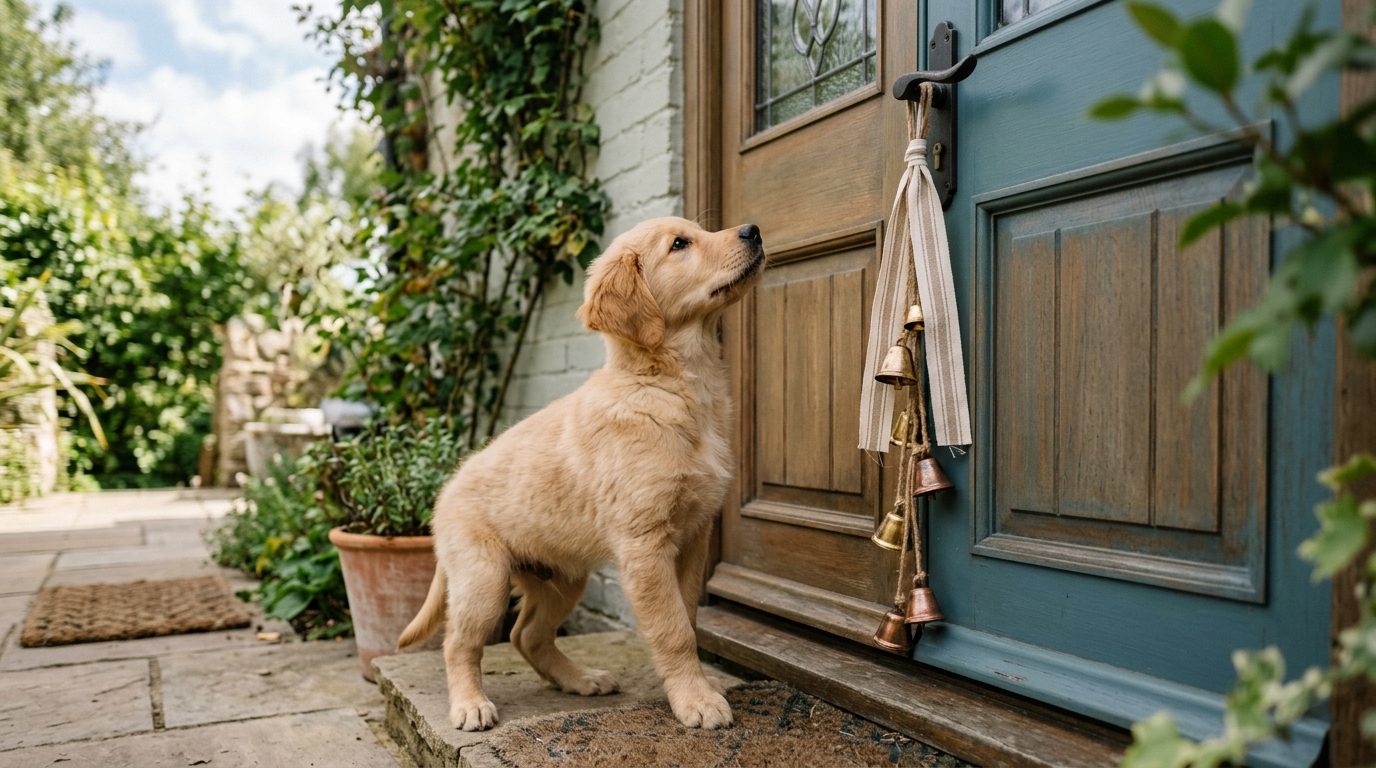
Before hanging bells next to an exit door, you must teach your young dog to touch the chime voluntarily without fear. Metallic jingles can sometimes startle sensitive young puppies if introduced abruptly. Introducing the bells as a fun, interactive target game builds positive emotional associations before door routines ever begin.
Begin by holding the bells in your hand in front of your puppy at nose level in a quiet room. Many puppies will naturally lean forward to sniff or explore the novel object. The exact millisecond your puppy’s nose makes physical contact with the metal, mark the action with a clear verbal “yes” and deliver a tasty treat from your other hand.
If your puppy hesitates to touch the bells, smear a tiny dab of wet food or xylitol-free peanut butter (as advised by the ASPCA) on the lowest bell to encourage exploration. Once your dog readily targets the bells in your hand five consecutive times, move the exercise closer to the exterior exit door where the permanent routine will take place.
Desensitizing Early Fears of Metallic Sounds
Some cautious or noise-sensitive dogs initially back away from the sharp chime of brass or metal bells. If your pet appears startled, begin by gently ringing the chime very softly while feeding high-value rewards from your opposite hand. Pairing the acoustic vibration with palatable food rapidly replaces mild concern with eager anticipation.
Never shove bells into your puppy’s face or shake them aggressively to force contact. Allow your puppy to approach at their own comfortable speed. Once the sound consistently triggers an expectant, tail-wagging response, hang the bells on the doorknob or adjacent wall at the dog’s nose height.
Pairing Chimes Directly with Outdoor Trips
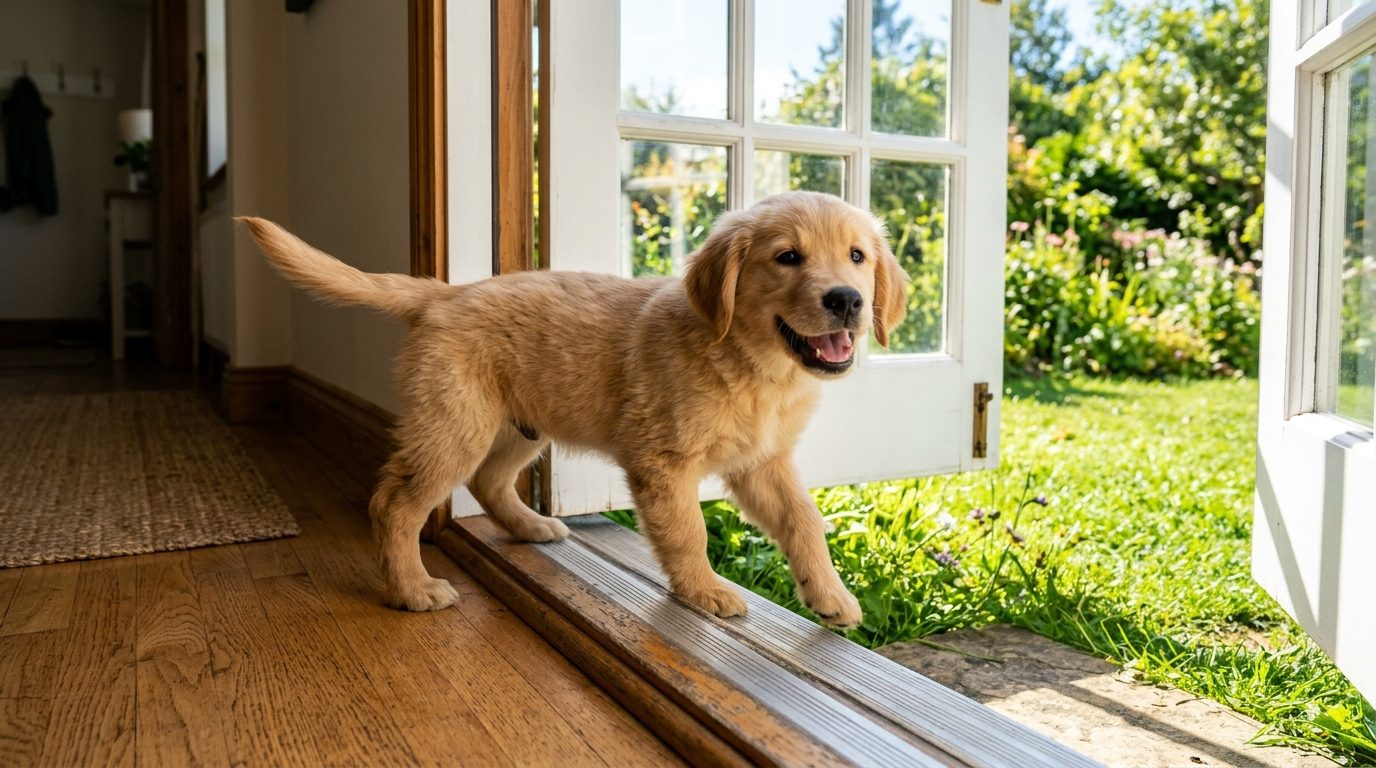
The core training sequence connects the ringing chime directly to the physical action of opening the exit door. Every single time you take your dog outside for a scheduled bathroom break, guide them to nudge the bells first. Consistency during this associative phase is paramount for building an unbreakable conditioned habit.
As you approach the door on leash, pause and encourage your puppy to touch the bells with their nose or paw. If needed, gently hold a treat behind the chime to prompt a light bump. As soon as the chime sounds, say “yes,” immediately swing the door wide open, and escort your puppy straight to their outdoor bathroom spot on the grass.
Guidance from VCA Animal Hospitals house training guidance notes that bell training provides a clear signal for outdoor trips, though some dogs may ring simply to play outside. Do not let your dog wander back into the living room without visiting the outdoor relief area once the chime sounds.
Establishing the Ring and Open Sequence
For the first week of training, you must facilitate the chime on every single outdoor trip without exception. If you open the door without the bell ringing, your puppy learns that the chime is optional rather than an essential household communication tool. Constant repetition cements the cause-and-effect relationship.
When done properly, potty training a puppy with bells bridges the communication gap before physical bladder control has matured completely. Your puppy quickly realizes that the chime is an active tool that summons a human to unlock the door for relief.
Preventing Play Rings and Door Shenanigans
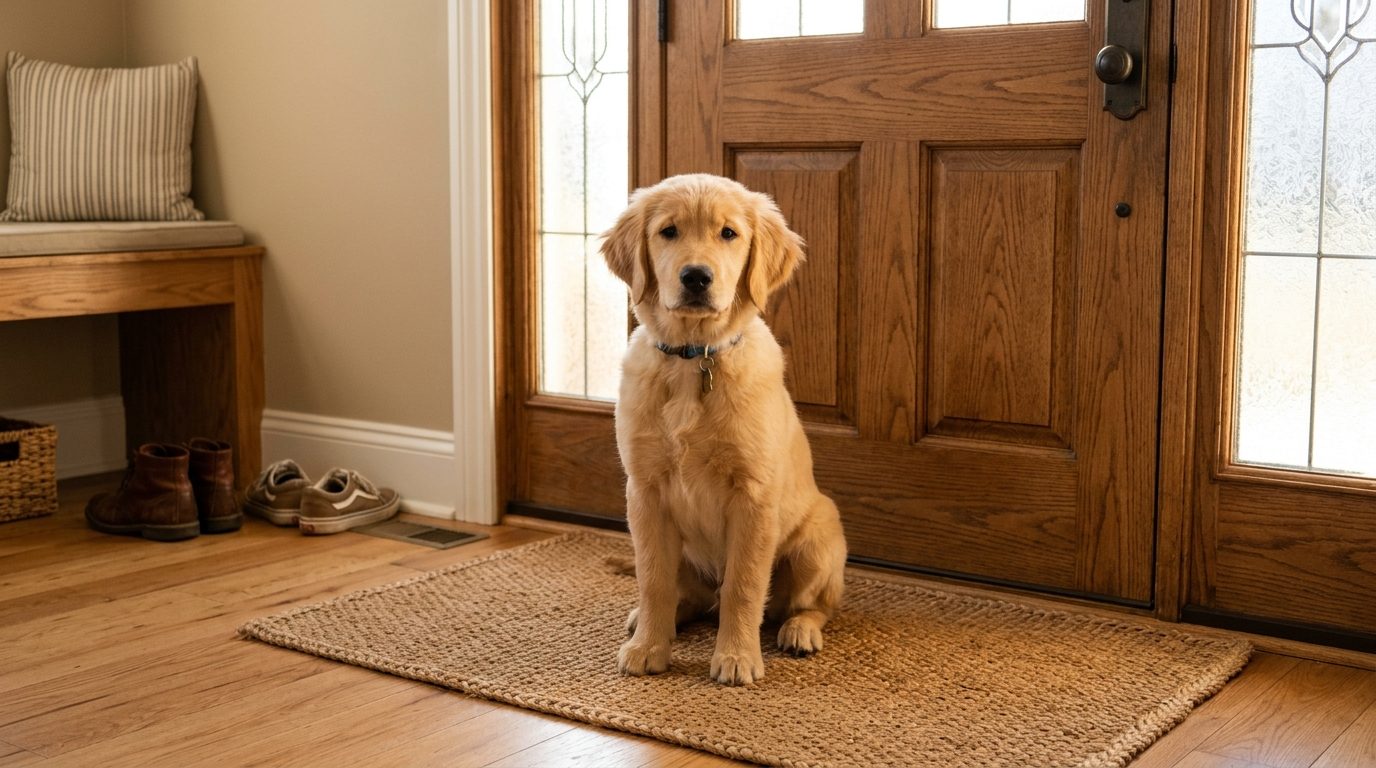
The most common frustration owners encounter with door bells is the clever dog who rings merely to explore, sniff garden flowers, or chase passing butterflies. Once puppies discover that hitting the chime opens the door to an exciting outdoor playground, they may begin ringing every fifteen minutes. You can easily prevent this nuisance behavior by keeping post-bell excursions strictly functional.
Whenever the bell rings, clip your puppy onto a six-foot walking leash and lead them directly to their designated elimination spot. Stand quietly in that location for a few minutes without playing, tossing toys, or embarking on an adventurous walk. The outdoor excursion must remain calm, quiet, and focused entirely on biological relief.
If your pet eliminates, celebrate with enthusiastic praise, a delicious treat, and an optional few minutes of playtime. If your pet merely sniffs leaves or loafs around without eliminating, calmly escort them back indoors and resume standard supervision. Keeping bathroom trips business-like teaches your pet that bells unlock potty breaks, not recreational outdoor entertainment.
Keeping Post-Ring Trips Boring and Functional
If your puppy rings the bell repeatedly just to loaf on the patio, temporarily restrict their indoor freedom right after unproductive trips. Escort your pet back inside and place them in an exercise pen or tether them nearby for ten to fifteen minutes before offering another chance. This structure discourages frivolous ringing while preserving the communication link for real bathroom needs.
Establishing clear boundaries ensures that the acoustic signal retains its specific functional meaning. Consistency from all household members prevents conflicting signals that confuse young learners.
Troubleshooting Timid or Overzealous Ringers
Every dog approaches door chimes with a unique personality and energy level. Overzealous dogs may paw at the bells with excessive force, tangling ribbon or scratching wall trim. If your pet paws aggressively, shift the training criterion to require a gentle nose nudge instead of a frantic paw swipe by luring their muzzle forward.
Securing bells to the wall or using a stable floor-based bell prevents unexpected swinging motions that might startle a sensitive pet.
If you live in a multi-story residence or apartment where outdoor access takes longer, pairing bell training with indoor management requires extra diligence. Reviewing our foundational guide on how to potty train a puppy provides additional management routines to ensure accidents do not happen during transit.
Transitioning from Bell Guidance to Lifelong Habits
With steady practice and consistent repetition, most young canines begin ringing the door chime completely independently whenever they experience biological pressure. At this stage, your role shifts to honoring their signals promptly so their developing trust in human responsiveness remains strong.
A young dog’s elimination needs can shift rapidly, and ignoring an honest signal can lead to indoor accidents and behavioral regression. Trusting your pet’s communication reinforces their growing sense of agency.
Guidance from VCA Animal Hospitals house training protocols emphasizes maintaining a predictable feeding routine so outdoor elimination needs occur on a regular schedule. With patience and consistent enforcement, door chimes become a reliable lifelong habit that protects your home.
Frequently Asked Questions
Can bell cues cause dogs to ring just to play outside?
Yes, dogs can easily learn to ring bells for recreational play if trips outdoors turn into fun games and adventures. You can prevent this nuisance habit by keeping every post-bell trip strictly on a leash, boring, and focused solely on elimination for a few minutes. Fun playtime should only happen after successful outdoor elimination occurs.
How long does it take for young dogs to grasp the chime?
Most puppies learn to target and ring bells within a few days of guided practice, and will begin using them independently for bathroom needs with consistent repetition. Maintaining rigorous supervision and taking your pet out on a leash after every ring builds reliable independence.
Where should door bells be hung for easiest access?
Bells should be hung directly on the exterior door handle or mounted to the adjacent door frame at your puppy’s nose or shoulder level. Hanging the bells securely prevents excessive swinging and ensures that your pet can reach them comfortably without jumping or scratching at delicate woodwork.
What should you do if your pet is frightened by the sound?
If your puppy is noise-sensitive, remove the bells from the door and place them flat on a carpeted floor to muffle the sharp metallic vibration. Pair gentle, muted chimes with high-value treats to build positive emotional associations before gradually re-introducing hanging chimes near the exterior door.