If you want to know how to potty train puppy fast, the secret lies in strict supervision, proactive timing, and immediate praise rather than rushing biological development. Young dogs learn clean indoor habits rapidly when their human caregivers eliminate confusion, establish a predictable routine, and prevent accidents before they occur.
Every young canine possesses an instinct to keep their sleeping area clean, but translating that natural tendency to an entire home requires consistent guidance. When you structure each day around natural biological rhythms, your companion progressively learns where elimination belongs. Quick progress does not mean skipping developmental steps; rather, it means organizing your environment so that mistakes become virtually impossible.
By establishing a clear puppy training schedule and adhering to proactive outdoor trips, you provide the repetition needed for reliable housebreaking. Let us examine the practical steps and daily management strategies that speed up house training while maintaining a calm, positive relationship with your pet.
Proactive Schedules for Rapid Housebreaking
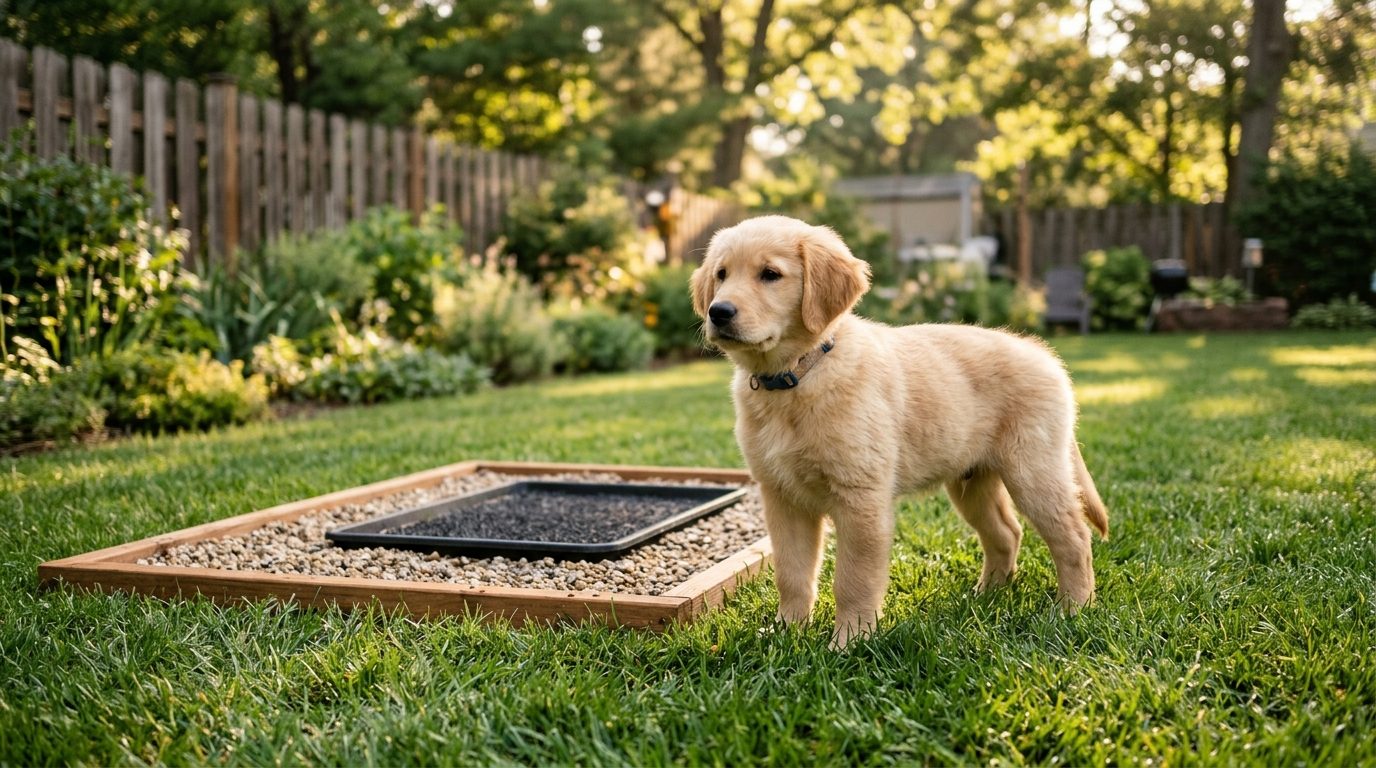
The single most powerful accelerator in house training is anticipating when elimination needs to happen rather than reacting after an indoor mistake. A young canine bladder and bowel operate on predictable biological triggers that occur throughout the day. Taking your pet to their outdoor relief area proactively ensures that virtually all elimination happens on grass where it can be reinforced.
Key moments requiring an immediate outdoor trip include waking up in the morning, waking from any daytime nap, shortly after completing a meal, immediately following a drink of water, and after any bout of active physical play or excitement. In addition to these predictable moments, taking young dogs outdoors on a steady rhythm prevents bladder pressure from reaching an emergency threshold.
During these early weeks, sticking to a structured puppy potty training schedule eliminates guesswork for both handler and canine. When your pet realizes that opportunities to relieve themselves occur reliably, the urgency to eliminate indoors diminishes rapidly.
Anticipating Natural Elimination Windows
Young dogs show subtle behavioral signs when they feel the urge to eliminate. These physical cues include sudden sniffing of the floor, abrupt cessation of play, pacing in tight circles, wandering toward doorways, or acting unusually restless. Learning to recognize these pre-elimination signals allows you to intervene gently and escort your pet outside before an indoor puddle occurs.
Whenever you observe any of these warning signs, avoid hesitating or waiting to see what happens. Calmly clip on a leash and guide your dog straight to their designated bathroom spot. Prompt intervention turns a potential household accident into a successful outdoor training victory.
Indoor Management and Constant Supervision
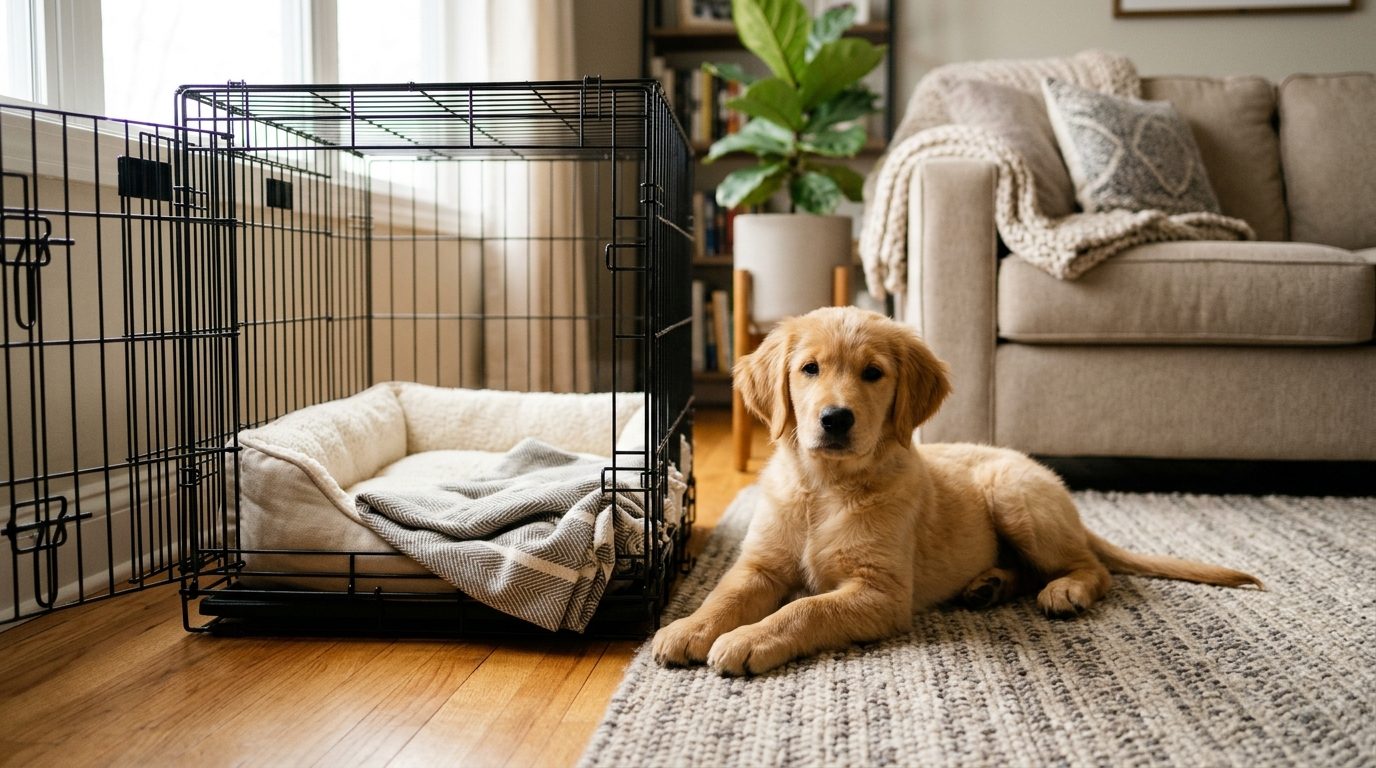
Speed in housebreaking depends heavily on accident prevention, because every indoor mistake reinforces the habit of relieving bladder pressure on flooring. When puppies are allowed free, unsupervised access to multiple rooms, they naturally seek quiet corners or rugs when nature calls. Preventing this requires diligent indoor confinement and eyes-on supervision at all times.
When you cannot give your dog your complete, undivided attention, they should rest inside an appropriately sized enclosure or exercise pen. Dogs possess a natural den instinct that discourages them from soiling their immediate sleeping space. Using proper crate training a puppy techniques creates a safe management tool that protects both your carpets and your pet.
Understanding how to potty train puppy fast requires recognizing that speed comes from eliminating confusion, not from forcing longer bladder holds. If your pet is not sleeping in their crate or under your direct active gaze, keep them attached to your belt with a lightweight house leash. This umbilical cord method prevents your pet from wandering into another room to eliminate unnoticed.
Using Crate Confinement and Tethering
Crate confinement must always remain a comfortable, positive sanctuary rather than a space for punishment. The enclosure should only provide enough room for the canine to stand up, turn around comfortably, and lie down fully stretched out. If a crate is excessively spacious, a dog may eliminate in one far corner and sleep comfortably in the other, undermining the den instinct.
Tethering your puppy to your waist or furniture nearby keeps them within your peripheral vision during work hours or quiet family time. The moment your dog stands up, circles, or sniffs, you will immediately notice the movement and lead them outdoors to their relief station without delay.
High-Value Rewards and Immediate Reinforcement
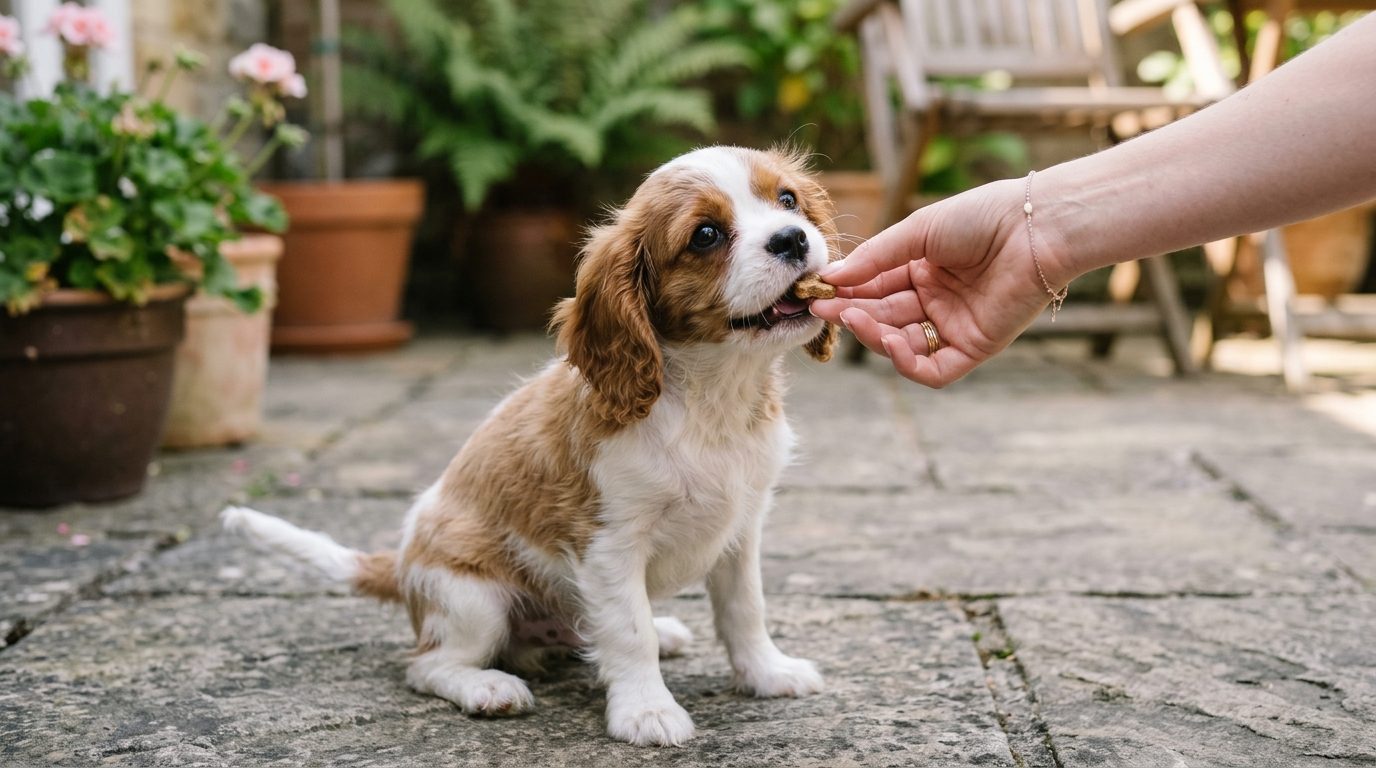
Positive reinforcement is the primary engine of swift canine learning. When a dog discovers that relieving themselves outdoors yields an exceptional reward, they actively seek opportunities to repeat the behavior. The quality, enthusiasm, and timing of your reinforcement directly determine how quickly your pet connects outdoor elimination with immense satisfaction.
Standard dry kibble is rarely enticing enough to create an unforgettable association during initial house training. Instead, reserve tiny bites of moist, high-value treats such as plain cooked chicken, freeze-dried liver, or low-fat string cheese exclusively for successful outdoor elimination. Keeping these high-value rewards in your pocket ensures you are always prepared to deliver them the second business concludes.
Reputable guidance from the American Kennel Club puppy training resources emphasizes rewarding your puppy immediately in the correct spot. Waiting until your pet walks back into the kitchen before giving a treat rewards them for crossing the threshold, not for eliminating on the grass.
Timing Treats Within Seconds
Always deliver verbal praise and a delicious treat the moment your dog finishes their elimination squat outdoors. Handing over the reward immediately cements the clear link between voiding outdoors and receiving praise.
Remain quiet and motionless while your pet is in the middle of relieving themselves so you do not interrupt their concentration mid-stream. As soon as they complete their posture and stand up, immediately offer a warm verbal marker such as “yes” followed by enthusiastic petting and the special treat.
Common Pitfalls That Slow Down Progress
Many common well-intentioned practices inadvertently derail or slow down housebreaking progress. One frequent mistake is scolding, yelling, or punishing a dog after an indoor accident has occurred. According to the Ohio State University Indoor Pet Initiative, dogs punished for indoor elimination in their owner’s presence may avoid eliminating when anyone is present.
When an owner reacts with anger, the dog does not learn that indoor elimination is incorrect. Instead, the dog learns that eliminating in the presence of humans is dangerous. As a result, the pet begins hiding behind sofas, under beds, or in unoccupied rooms to relieve themselves in secret, making supervision far more difficult.
Another major pitfall is leaving food and water out continuously throughout the day and night. Feeding measured meals at exact times creates predictable digestive transit times that make outdoor timing straightforward.
Cleaning Indoor Accidents and Odor Removal
Even with careful management, occasional indoor accidents can happen during the early learning phase. How you handle these cleanups plays an enormous role in preventing repeat mistakes in the exact same spot. Dogs navigate their world primarily through their acute sense of smell and naturally return to areas marked with past elimination scents.
Standard household detergents, ammonia-based sprays, and fragranced surface cleaners are insufficient for pet waste odors. Veterinary experts at VCA Animal Hospitals house training guidance emphasize using an enzymatic cleaner on indoor accident areas.
Soak the soiled carpet or floor thoroughly with an enzymatic solution and allow it to air-dry completely according to package instructions. Eliminating microscopic scent markers removes chemical cues that prompt the animal to soil that location again, keeping your house training progression on track.
Frequently Asked Questions
Can you potty train a puppy in 3 days?
While intensive three-day routines can teach dogs the fundamental concept of eliminating outdoors, true reliable housebreaking requires several weeks of consistent management. Young canines still lack mature physical muscle control over their bladders during early development. Consistent scheduling and positive reinforcement yield dependable habits over time.
What is the quickest way to potty train puppy indoors?
The fastest indoor method combines strict crate confinement when unattended with frequent, proactive outdoor trips on a fixed schedule. Keeping your pet tethered on a leash prevents wandering and lets you catch elimination cues immediately. Rewarding every outdoor success with high-value treats rapidly reinforces the desired bathroom habit.
Why does my puppy pee immediately after coming inside?
This problem typically occurs when outdoor trips are too brief, overly exciting, or distracting for a young dog. If a puppy forgets to finish eliminating because of outdoor sights and smells, they relax upon re-entering the quiet house and void on the carpet. Keep outdoor bathroom trips calm and functional until business is finished.
What should I do if my puppy has frequent accidents?
If accidents happen frequently despite careful scheduling, tighten your supervision and take your pet outside twice as often. Thoroughly clean past accident sites with an enzymatic formula to eliminate lingering scent cues that encourage repeat mistakes. If sudden frequent urination persists, consult your veterinarian to rule out medical issues such as urinary tract discomfort.