Bringing a large breed puppy into your home brings tremendous joy, but successfully mastering potty training large breed puppies is vital during their earliest weeks. Because large puppies produce significantly higher volumes of physical waste and grow at astonishing rates, establishing a disciplined outdoor routine right away prevents destructive indoor accidents and builds lasting household hygiene. With structured supervision, appropriately sized management areas, and clear positive reinforcement, you can guide your large puppy to complete housebreaking reliability.
Housebreaking any young dog relies on establishing predictable biological rhythms and habituating them to designated elimination areas. Even though large breed puppies look physically imposing compared to toy breeds, they mature at similar developmental rates to other young canines. They do not arrive with an instinctive understanding of human floor plans, making patient guidance essential.
Following an organized puppy training schedule provides the daily structure needed to eliminate human guesswork and keep bathroom routines consistent. Rather than waiting for a large pup to pace toward a carpeted corner, a structured timetable ensures they are escorted outdoors before physiological urgency peaks. Understanding foundational principles from our guide on how to potty train a puppy accelerates this entire learning process.
According to veterinary guidance published by the Ohio State University College of Veterinary Medicine, a useful rule of thumb for canine bladder capacity is roughly one hour per month of age, give or take an hour. Establishing realistic expectations based on developmental age protects new owners from frustration during early weeks.
Understanding Large Puppy Bladder Physiology
Growth Rates and Bladder Development
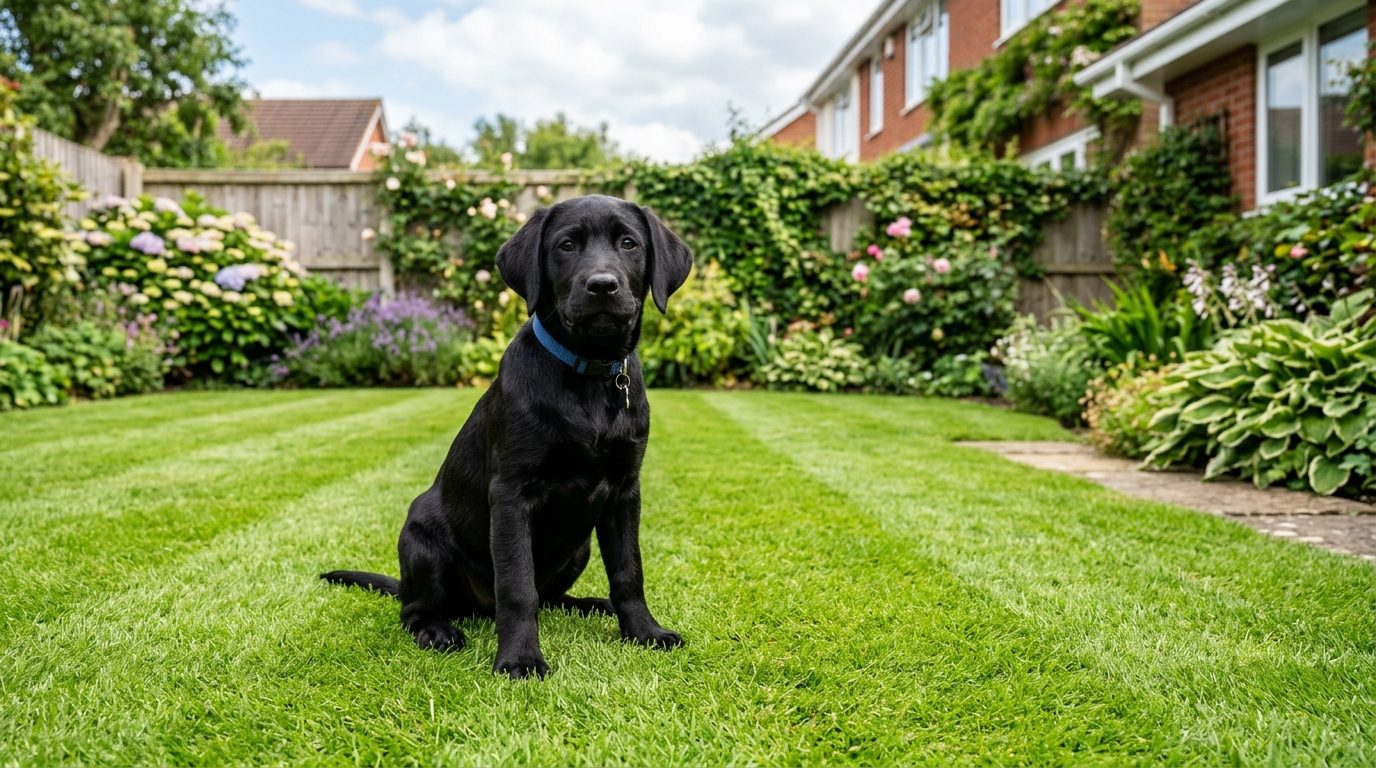
Large and giant breed puppies experience rapid skeletal and muscular development during their first year of life. However, physical body mass should not be confused with neurological maturity. A ten-week-old retriever puppy may weigh twenty pounds, yet bladder control develops with age rather than physical size alone. Assuming a larger puppy can automatically hold their bladder longer than a smaller companion is a widespread misconception that frequently causes housebreaking setbacks.
Puppies process food and water quickly because of high metabolic demands. Digestion stimulates gastrointestinal activity, prompting bowel elimination promptly after eating or drinking. Tracking when meals and water bowls are offered enables owners to anticipate elimination cycles with remarkable precision.
Comparing Large Breeds to Smaller Dogs
The physical consequences of an indoor accident with a large breed dog are considerably challenging to manage. Diligent outdoor escorting prevents heavy carpet soaking and protects household flooring during vulnerable early development.
According to housetraining resources from the American Kennel Club, consistency and supervision form the foundation of successful canine housebreaking. Rewarding elimination on outdoor grass immediately after the puppy finishes cements the association between outdoor surfaces and bathroom relief.
Crate Sizing and Den Management for Growing Dogs
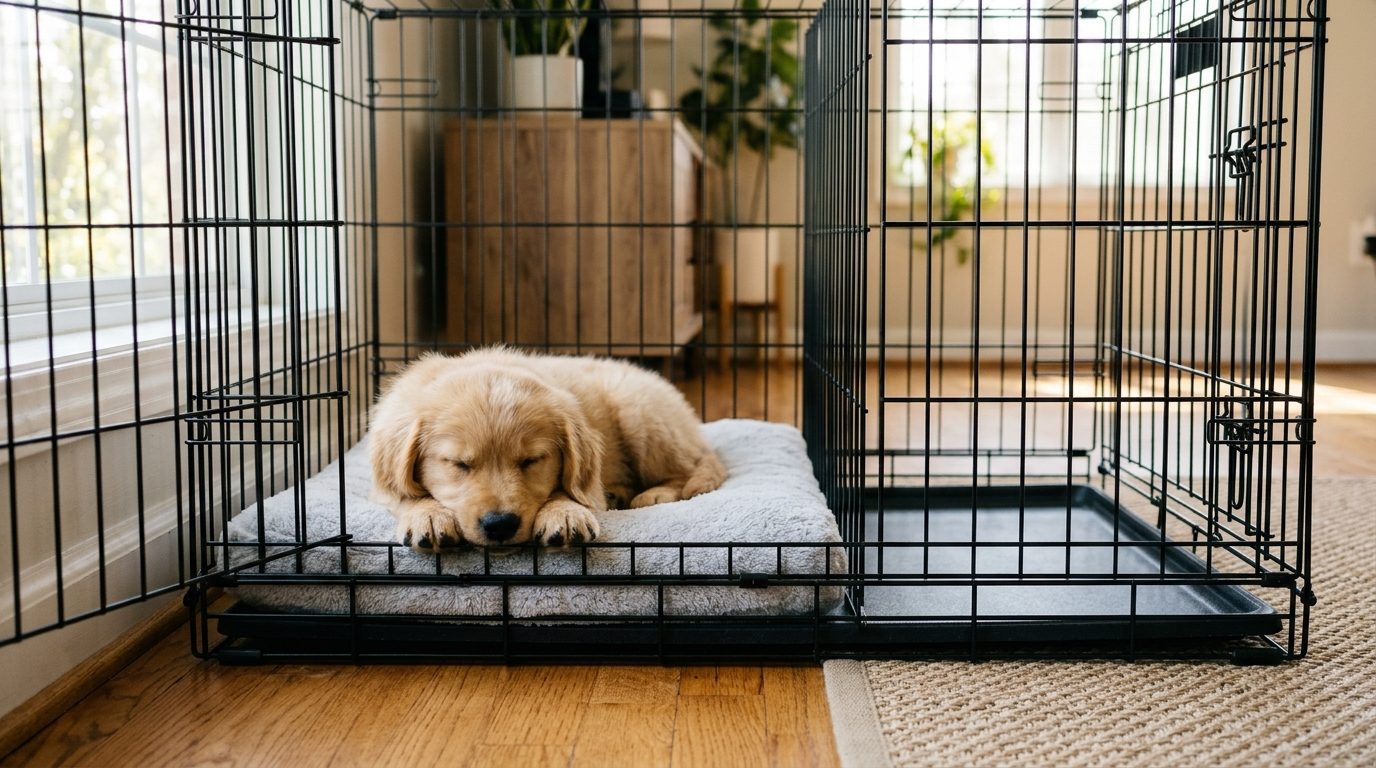
Utilizing a properly configured crate is one of the most effective management tools for early housebreaking. Because dogs possess a natural instinct to keep their sleeping quarters clean, a comfortable enclosure encourages young dogs to hold their bladders for age-appropriate intervals. Our in-depth tutorial on crate training a puppy outlines the step-by-step introduction methods required for positive crate acclimation.
For large breed puppies, purchasing a crate that accommodates their full adult dimensions is standard practice. However, placing an eight-week-old puppy inside a giant forty-two-inch wire enclosure without modification will cause immediate housebreaking failure. When given excessive floor space, a puppy will simply eliminate in one far corner and curl up comfortably to sleep on the dry side.
Using Divider Panels During Rapid Growth
To prevent crate accidents, install an adjustable divider panel to limit usable space. The enclosed area should only provide enough room for the puppy to stand up comfortably, turn completely around without hunching, and lie flat on their side. As your puppy gains height and length week by week, move the divider back to maintain this exact spatial balance.
Guidance from VCA Animal Hospitals recommends taking puppies out every one to two hours while awake and avoiding leaving a young puppy crated alone for more than about three hours during the day. Strict adherence to daytime limits prevents confinement distress and preserves the natural cleanliness instinct.
Daily Outdoor Schedules and Elimination Routines
Consistency in timing is the single most important element in housebreaking success. Establishing a rigid routine transforms unpredictable biological needs into scheduled outdoor habits. Reviewing our comprehensive puppy potty training schedule provides hour-by-hour timetables designed specifically for working households and busy families.
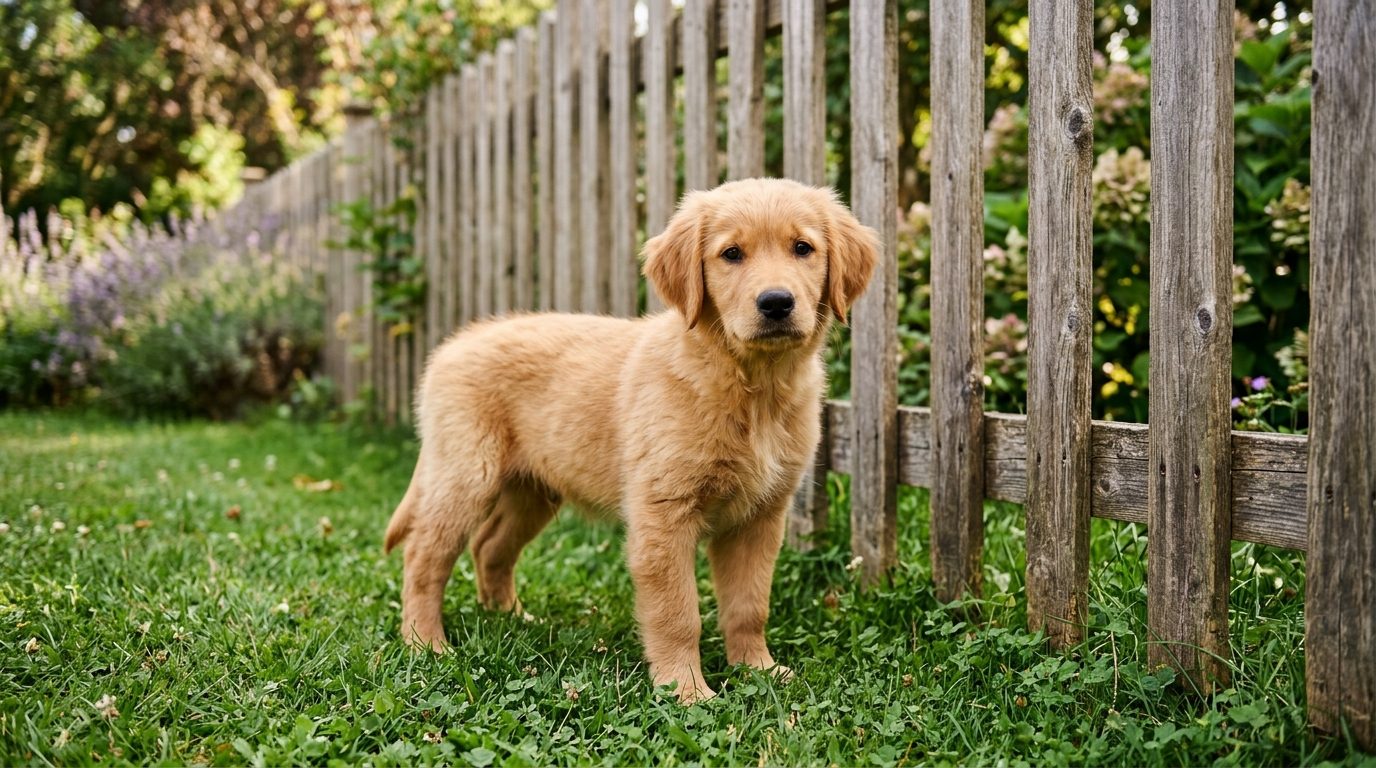
Designate one specific outdoor elimination spot in your yard. Dogs are heavily influenced by olfactory cues and substrate textures. Escorting your puppy directly to the same grass patch on a six-foot leash encourages prompt elimination, as previous scents signal the location purpose. Keep interactions calm and quiet until your puppy finishes their business.
High-Risk Timing for Bathroom Trips
Certain moments during the day carry exceptionally high probabilities of elimination urgency. Schedule mandatory outdoor bathroom trips at these specific transitional times:
- Immediately upon waking in the morning or following any daytime crate nap.
- Promptly after completing a meal or taking a long drink of water.
- Directly after vigorous indoor playtime, training games, or family excitement.
- Immediately before settling down into the crate for evening sleep.
Never wait inside the house while your puppy roams the yard alone. Step outside alongside them holding the leash, observe the elimination directly, and offer immediate verbal praise paired with a pea-sized training treat within three seconds of completion. Delivering rewards outdoors ensures the puppy connects the prize with the outdoor grass rather than returning indoors.
Breed-Specific Considerations for Active Working Companions
Different large breeds exhibit distinctive behavioral temperaments and physical growth rates that can influence the housetraining journey. Working breeds possess high intelligence and energetic drives that require thoughtful mental stimulation alongside basic bathroom routines.
Working Dog Drives and Daily Focus
When you potty train labrador puppy companions, their eagerness for treats makes reward delivery straightforward, yet their energetic nature requires attentive outdoor supervision so they do not become distracted. Similarly, owners learning how to potty train a puppy german shepherd benefit from consistent daily routines and clear household boundaries.
Families working to potty train boxer puppy youngsters often navigate exuberant jumping and energetic distractions that require calm handler patience. In contrast, those preparing to potty train husky puppy additions must account for high environmental curiosity, where securing the puppy on leash prevents wandering off before elimination occurs.
Regardless of breed heritage, every large companion responds best to calm reinforcement rather than intimidation. Avoid scolding or raising your voice during outdoor trips, as anxious puppies often become hesitant to eliminate in human presence.
Cleaning Accidents and Preventing Training Setbacks
Indoor accidents are an inevitable part of the early learning curve. When managing potty training large breed puppies, responding constructively to occasional mistakes ensures training momentum remains positive and productive. Never punish, yell at, or physically reprimand a young puppy for eliminating indoors.
According to behavioral health resources from the Ohio State University College of Veterinary Medicine, punishment can cause puppies to fear eliminating in front of their owners, leading them to hide behind furniture to relieve themselves. If you catch your puppy mid-accident, calmly interrupt them with a gentle verbal sound, usher them outdoors to the grass, and reward them if they finish outside.
Enzymatic Cleaners and Odor Elimination
Clean indoor soiled areas immediately with a dedicated enzymatic cleaner designed specifically for pet waste. Standard household detergents and ammonia-based cleaners fail to break down microscopic uric acid crystals, leaving behind scent markers that draw the puppy back to the same spot. Thoroughly soaking the flooring with enzymatic solution neutralizes these biological cues completely.
If your puppy suddenly shows unexpected housebreaking regression after weeks of steady success, consult your veterinarian to evaluate possible underlying physical conditions, such as urinary tract irritation. Once medical causes are cleared, temporarily tightening indoor supervision and increasing outdoor trip frequency will swiftly restore reliable household habits.
Frequently Asked Questions
How often should large breed puppies go outside to eliminate?
Young large breed puppies should go outside every one to two hours while awake, following a general rule of thumb of roughly one hour per month of age. In addition, puppies should be taken out immediately after waking, eating, or playing. Daytime crating should not exceed about three hours for young puppies without a bathroom break.
What size crate should you buy for a large breed puppy?
Buy an adult-sized wire crate equipped with an adjustable divider panel so the space can expand as your dog grows. The interior compartment should only allow the puppy to stand up, turn around comfortably, and lie flat on their side. Providing excessive room allows a puppy to soil one corner and sleep on the clean side.
How do you stop a large puppy from having accidents indoors?
Maintain continuous direct supervision or secure the puppy in an appropriately sized crate or pen when you cannot watch them. Escort them outdoors on a leash directly to a designated grass area at predictable times, and reward elimination immediately on the spot with treats. Clean indoor accidents thoroughly with an enzymatic cleaner without using physical punishment.
Why does a large puppy suddenly regress in their housebreaking?
Sudden regression often stems from premature household freedom, inconsistent schedules, or underlying medical issues such as a urinary tract infection. Consulting a veterinarian is recommended to rule out physical discomfort before assuming the issue is behavioral. If health is clear, temporarily tightening supervision and increasing outdoor trips restores clean habits.