Discovering how to stop puppy biting leash habits transforms chaotic daily walks into calm, enjoyable strolls for both you and your developing pet. During early months, young dogs naturally explore the world with their mouths, often mistaking a moving nylon walking lead for an exciting game of tug-of-war. By understanding canine developmental motivations, redirecting mouthing onto appropriate toys, and removing the thrill of tug games, you can easily teach polite leash manners.
Leash chewing is a remarkably common behavior among young puppies as they explore new textures and experience teething discomfort. A dangling fabric strap floating right at eye level moves enticingly whenever a handler walks, triggering innate prey drive and predatory play instincts. If an owner reacts by yanking the lead back, the sudden resistance confirms to the puppy that the game is on, turning a simple walk into an energetic wrestling match.
Establishing a structured daily puppy training schedule dramatically curbs overstimulation before you even step out your front door. Puppies that receive balanced nap times, scheduled meals, and regular mental enrichment are far less prone to frantic arousal on walks. A calm, well-rested companion approaches outdoor excursions with relaxed curiosity rather than frantic biting behaviors.
Guidance published by the American Kennel Club on teaching puppies to walk on leash highlights the importance of introducing walking gear indoors with positive rewards. In addition, behavioral insights from VCA Animal Hospitals on puppy teething and chewing note that providing appropriate chew alternatives helps relieve oral discomfort during developmental teething phases.
Why Puppies Chew and Grab Their Walking Gear
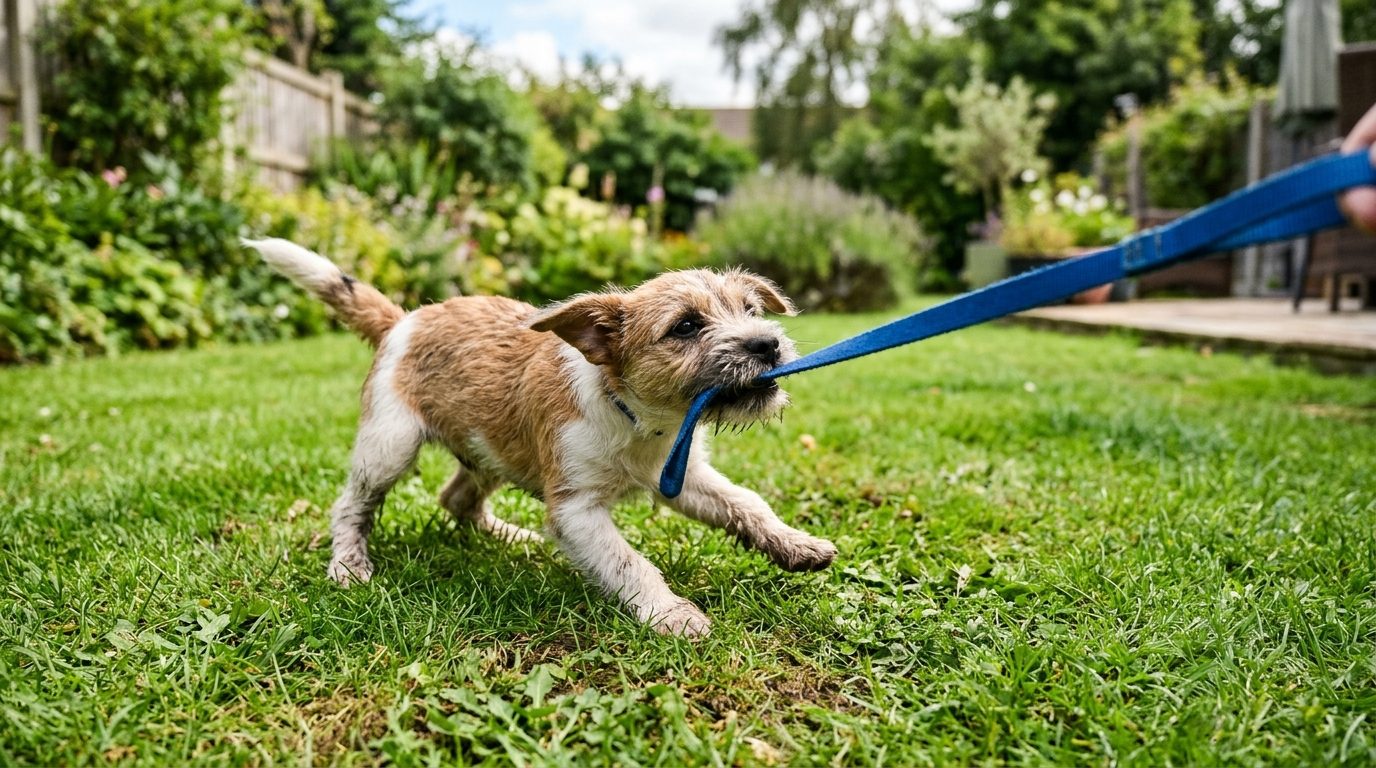
Teething Discomfort and Oral Exploration
Between three and six months of age, deciduous teeth loosen and adult teeth begin erupting through sensitive canine gums. This teething process creates acute oral soreness, driving puppies to chew persistently on whatever textured surfaces they can grasp, which often makes a dangling walking lead an enticing teething target.
Understanding that oral fixation is a biological need helps handlers respond with empathy rather than frustration. Rather than punishing a teething animal, pet parents must supply appropriate outlets that satisfy the need to gnaw. For additional techniques on curbing mouthing across daily life, explore our practical guide on how to stop puppy biting to address general mouthiness effectively.
Frustration, Barrier Agitation, and Play Drive
In addition to physical teething, leash grabbing often stems from emotional frustration or sudden overstimulation. When a puppy is restrained by a lead, their natural desire to sprint, sniff, or greet passersby is physically restricted. This barrier restriction can generate barrier frustration, which young dogs frequently redirect onto the nearest accessible object: the walking lead itself.
Similarly, an energetic puppy overwhelmed by outdoor sights and sounds can experience sudden bursts of frantic arousal. When sensory stimulation spikes, excitable puppies may react through frantic behaviors like growling, leaping, and biting the lead. Recognizing these emotional triggers allows handlers to pause, step back from overwhelming stimuli, and help their pet regain emotional composure.
Redirection Techniques Using Toys and Carrying Items
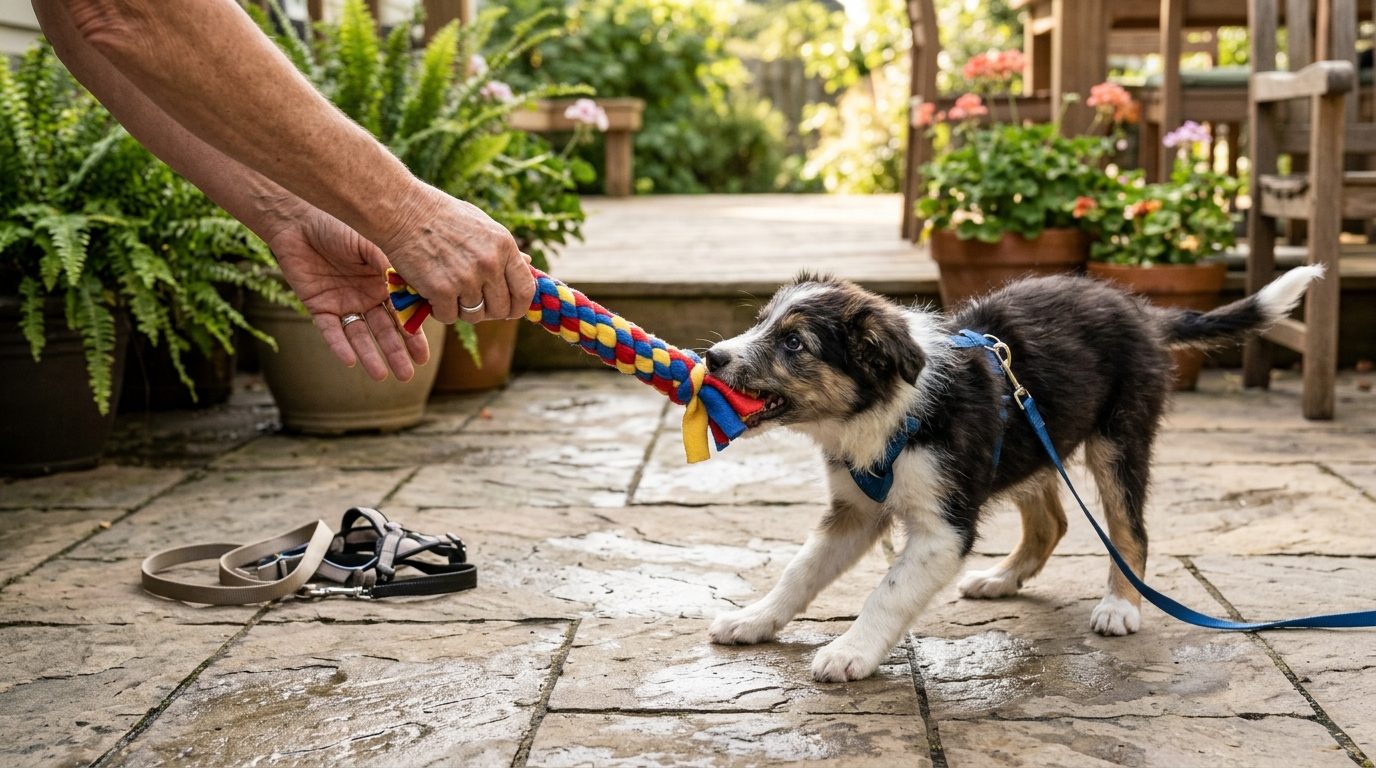
The Two-Toy Swap Method During Walks
The most reliable way to prevent unwanted chewing is giving your puppy an authorized job for their mouth. Before clipping on the walking lead, hand your puppy a lightweight rubber toy, a tennis ball, or a durable chew stick to carry in their jaws. Many young dogs enjoy carrying an object, which helps occupy their mouth during walks.
If your puppy drops their carrying toy and targets the walking lead, execute a calm toy swap. Pull a braided fleece tug toy or soft squeaky toy from your walking pouch and wave it gently at ground level. As your puppy releases the lead to grab the exciting toy, reward them with a short, controlled game of tug. This teaches your pet that toys are designed for biting and tugging, while walking straps are strictly for communication.
Reinforcing basic verbal cues alongside toy swaps makes walking equipment far easier to manage. Practicing the core cues outlined in our guide to puppy training commands gives you clear verbal tools like “drop it” and “leave it” to resolve mouthiness peacefully.
The Two-Leash Management Technique
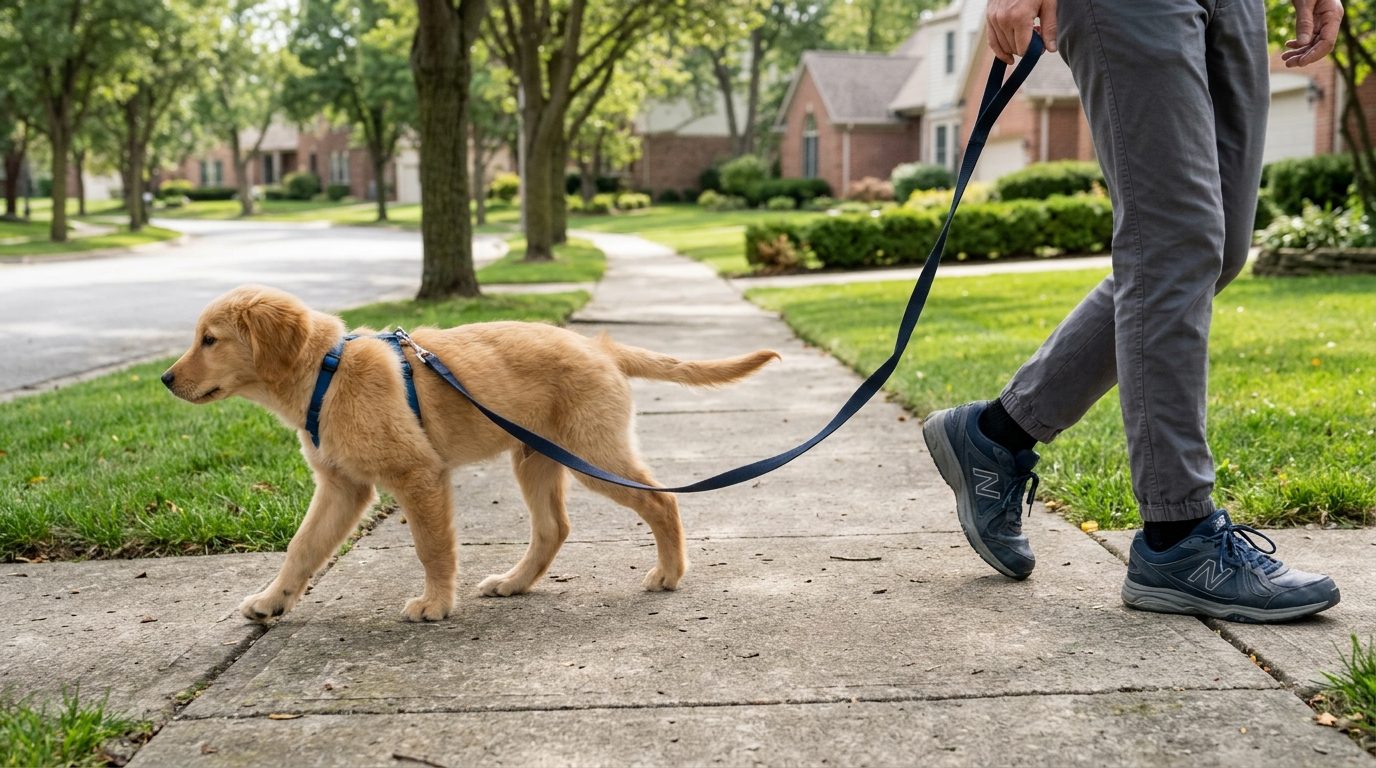
Dropping Tension to Extinguish Tug Games
When an excitable puppy clamps their jaws onto a lead, human instinct urges handlers to pull the strap away. However, physical pulling often prompts the puppy to grip harder and shake their head with excitement. Pulling back turns your walking gear into an interactive tug toy, inadvertently reinforcing the exact behavior you want to eliminate.
To break this self-reinforcing cycle, utilize the two-leash technique. Attach two lightweight leashes to your puppy’s harness before stepping outside. When your puppy grabs Leash A with their teeth, immediately release your grip on Leash A, allowing it to fall completely slack on the ground, while holding onto Leash B. Without human resistance or tension to fight against, Leash A instantly loses all entertainment value.
As soon as your puppy realizes the limp strap is boring and drops it, praise them calmly and continue your walk. If they pivot and bite Leash B, release Leash B and take up Leash A. Within a few repetitions, puppies learn that biting walking equipment instantly extinguishes the game, causing them to abandon the habit altogether.
Rewarding Calm Loose-Lead Walking Manners
Delivering High-Value Treats at Handler Heel
The long-term antidote to leash chewing is building an overwhelmingly strong habit of calm, loose-lead walking. Puppies cannot bite their walking lead when their heads are positioned forward and their attention is focused on walking politely beside their handler. By reinforcing proper positioning with high-value treats, you replace unwanted biting with polite walking manners.
Carry a waist pouch stocked with pea-sized training treats such as cooked chicken or string cheese. As you walk along a quiet sidewalk, deliver a treat right beside your knee every few paces while your lead hangs loose in a gentle J-curve. Consistent reinforcement teaches your puppy that keeping their head forward and walking politely pays massive dividends.
General training resources from the American Kennel Club guide to stopping puppy biting note that yelling can reward biting and recommend rewarding calm behavior instead. Over time, your companion will happily choose polite heel positioning over playful gear chewing.
Common Handler Mistakes That Fuel Chewing Habits
Avoiding Leash Pulling Contests and Yelling
When dealing with persistent gear chewing, avoiding common human mistakes is just as vital as practicing correct techniques. Handlers often turn to chemical deterrents, but mechanical redirection and positive reinforcement produce much more reliable results without relying on unpleasant tasting sprays.
Avoid yelling, stamping feet, or physically wrestling a strap from your dog’s mouth. High emotional energy from owners fuels canine excitement, making the puppy believe that their antics have successfully engaged the human in play. Stay completely silent, drop physical tension from the grabbed strap, and calmly offer an approved chew alternative.
Consistently applying these redirection methods on daily walks is how to stop puppy biting leash behaviors permanently while building polite walking habits. With patience, predictable structure, and generous positive reinforcement, your young companion will quickly develop into a trustworthy, well-mannered walking partner on every neighborhood adventure.
For more detailed step-by-step progressions on walking gear introduction and outdoor manners, explore our complete resource on leash training a puppy to build confidence and loose-leash reliability from the very beginning.
Frequently Asked Questions
Why does my puppy constantly bite the leash while walking?
Puppies bite the leash due to natural teething discomfort, predatory play drive triggered by a moving strap, and barrier frustration from physical restraint. A dangling nylon lead moves like prey, tempting young dogs to grab and tug. When owners yank back, the resistance turns the strap into a fun game of tug-of-war.
Should I use a chain leash or bitter spray to stop chewing?
Neither chain leashes nor deterrent sprays teach positive walking manners. Guidance from the American Kennel Club suggests using a treat to reward a drop cue when a dog grabs the lead, while redirecting attention to approved chew toys provides a safe and effective long-term solution.
How does carrying a toy stop a puppy from grabbing the lead?
Carrying a toy gives a mouthy puppy a designated, satisfying job that completely occupies their jaws during walks. Many young dogs experience natural oral fixation, especially teething breeds with strong retrieving instincts. Providing a soft ball or fleece tug satisfies their natural need to carry items, preventing them from targeting the walking strap.
What should you do when a puppy refuses to let go of the strap?
Never yank or pull on the strap, as physical resistance encourages the puppy to grip tighter and shake their head. Instead, drop tension completely by letting the bitten lead go slack while holding a second lead, or place a high-value treat directly in front of your puppy’s nose. The moment they open their jaws to accept the treat, praise them and redirect their focus forward.