Starting off leash puppy training early helps young dogs learn that staying close to their handler and responding to recall cues is far more rewarding than wandering away. While the prospect of granting complete freedom in open spaces sounds appealing, true reliability requires systematic practice with long lines, proofed attention, and generous positive reinforcement in secure environments. By building strong communication habits from early puppyhood, you can develop trustworthy recall and safe off-lead manners.
Many new owners mistakenly believe that off-lead reliability happens naturally as a dog matures, or that obedience indoors translates immediately to outdoor freedom. In reality, the great outdoors is saturated with intense competing motivators, including fluttering birds, darting squirrels, enticing scent trails, and unfamiliar dogs. Without methodical boundary conditioning, an adolescent dog will easily ignore verbal cues in favor of chasing distractions.
Structuring your daily routine with a predictable puppy training schedule accelerates your training progress. When exercise, mental stimulation, and training games occur at consistent intervals, puppies are far more attentive and eager to learn. A well-exercised and mentally engaged puppy focuses on their handler instead of looking for autonomous excitement in the environment.
According to obedience resources from the American Kennel Club, teaching a dependable recall cue is one of five basic commands every young dog should learn. In addition, behavioral guidance from VCA Animal Hospitals emphasizes using positive reinforcement, high-value food rewards, and short, upbeat training sessions to foster eager cooperation.
Foundations of Reliable Off-Lead Manners
Building the Value of Human Engagement
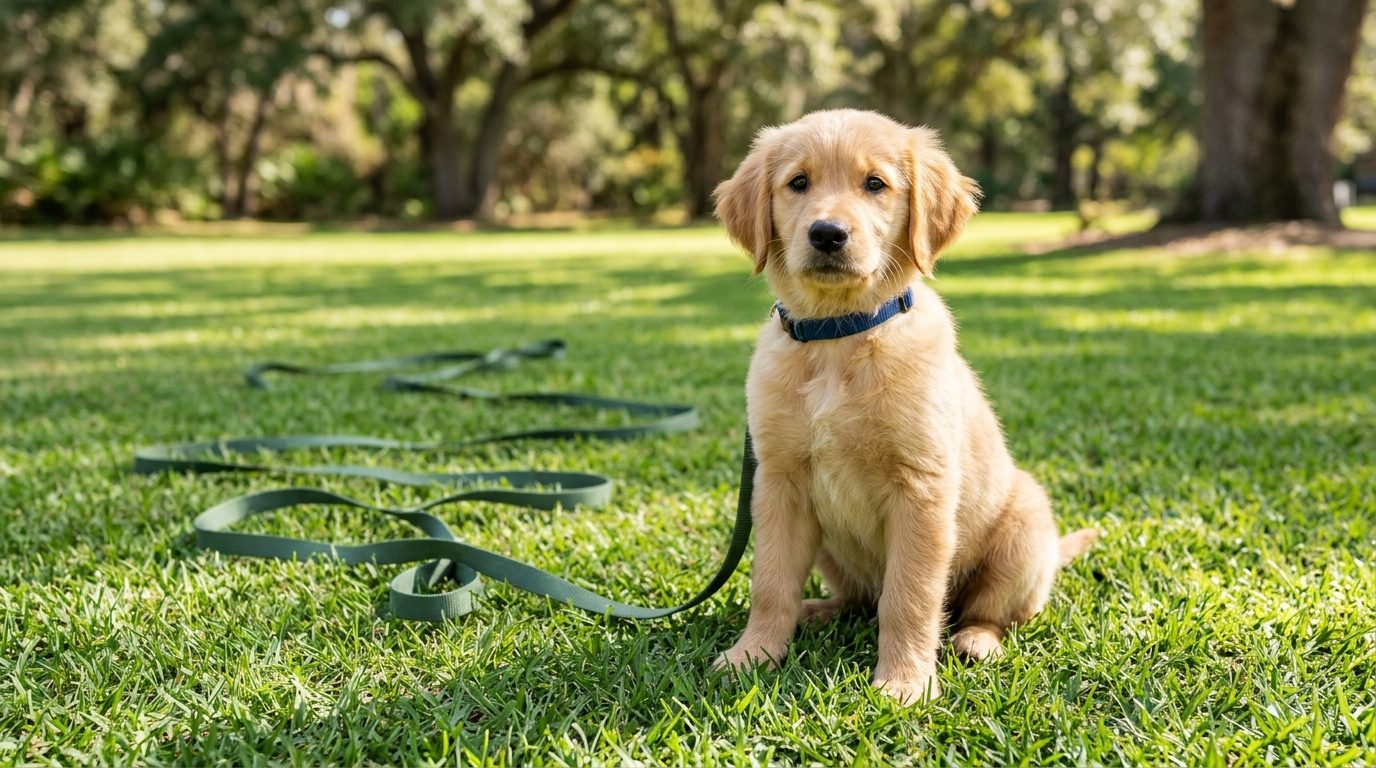
The foundation of off-tether responsiveness begins with engagement. Before you can expect a dog to stay nearby without physical restraint, you must become the most interesting and rewarding presence in their world. If you only interact with your puppy when it is time to snap on a leash or end outdoor fun, your companion will naturally view you as a barrier to enjoyment rather than a source of adventure.
Practice spontaneous attention games both inside your home and in quiet outdoor spaces. Whenever your puppy looks at you without being asked, immediately mark the behavior with an enthusiastic verbal word like “yes” and deliver a high-value treat. This simple exercise teaches your puppy to check in voluntarily, laying the groundwork for automatic check-ins when moving together through open spaces.
Why Early Freedom Without Training Fails
Allowing an untrained puppy off-tether in an unfenced, public area is a recipe for dangerous setbacks. Young dogs lack the impulse control required to ignore sudden environmental triggers. If a puppy discovers that running away from their owner leads to exhilarating games of keep-away or chasing rabbits, self-rewarding behaviors take root that are difficult to extinguish later.
Furthermore, early off-tether scares can create traumatic experiences if your pet encounters aggressive neighborhood animals, moving bicycles, or vehicular traffic. To preserve safety while teaching loose walking habits, review our step-by-step tutorial on leash training a puppy to build foundational walking manners before granting unrestricted freedom.
The Long Line Bridge to Unrestricted Freedom
Managing Fifteen to Thirty Foot Training Lines
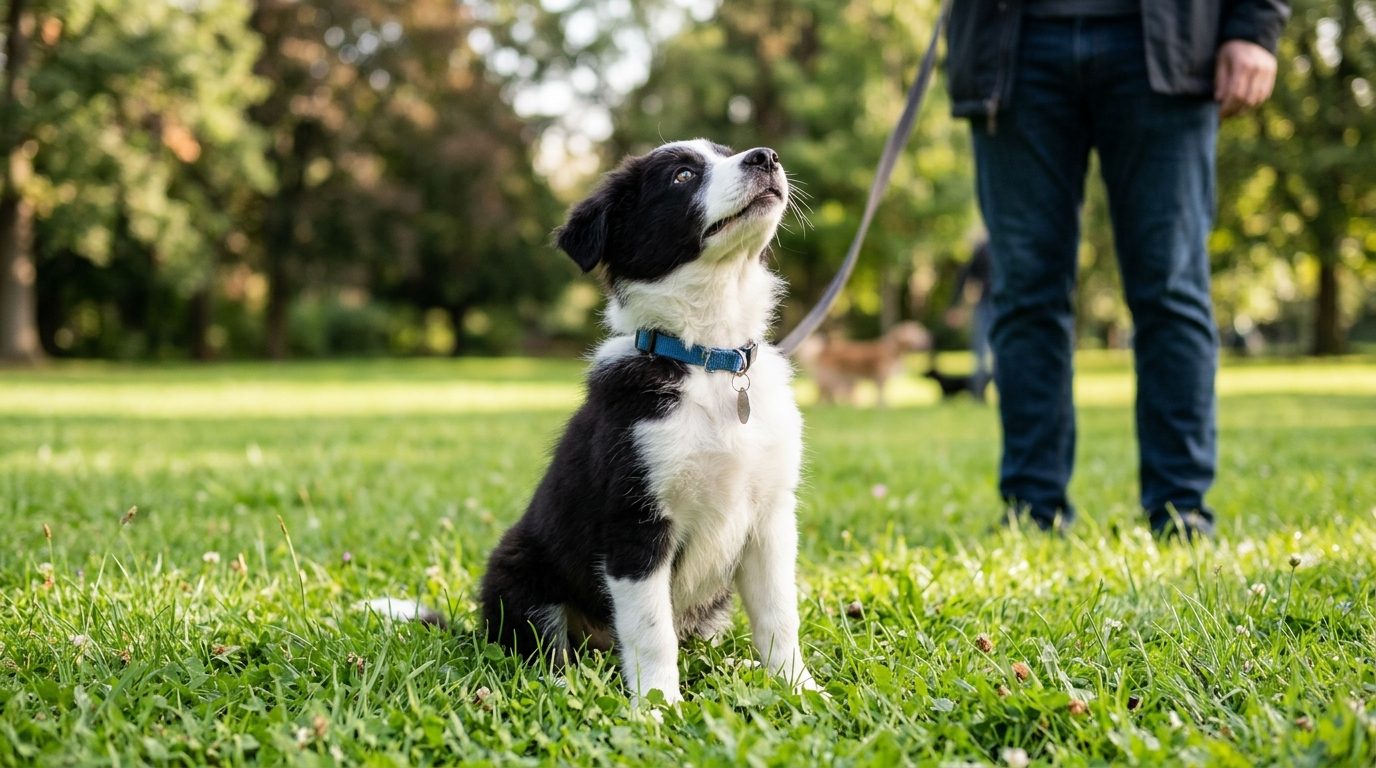
A long training line serves as the indispensable bridge between a standard six-foot walking leash and complete off-tether liberty. Crafted from lightweight nylon webbing or biothane, long lines range from fifteen to thirty feet in length, giving your puppy the feeling of total freedom while allowing you to maintain safe physical control.
Always attach a long training line to a well-fitted back-clip harness rather than a neck collar. If your puppy reaches full running speed and hits the end of the line, a collar can put abrupt pressure on the neck. A padded chest harness distributes force safely across the ribcage, protecting your pet from physical injury during enthusiastic outdoor sprints.
Let the long line drag loosely across the grass as you walk together through open fields or parks. If your puppy begins drifting too far or fails to respond to a recall cue, you can calmly step on the trailing line with your shoe, gently halting their forward momentum without engaging in a frantic chasing match.
Teaching an Unshakeable Recall Cue

Rewarding Rapid Returns with High-Value Treats
A reliable recall cue requires building an overwhelmingly positive association. Choose a distinct cue word, such as “come” or “here,” and reserve your highest-value food rewards—such as roasted chicken, freeze-dried liver, or real cheese—exclusively for recall practice. Never use your recall cue to call a puppy for unpleasant activities like bath time, ear cleaning, or nail trims.
Mastering core cues from our comprehensive overview of puppy training commands ensures your dog understands the verbal mechanics of coming when called. Start at close range indoors, call your puppy in an upbeat, joyful voice, and shower them with treats and affection when they reach your hands. Gradually increase distance across rooms before taking the game outdoors on your long line.
If your puppy hesitates to turn toward you when called outside, turn your body and run away a few paces in the opposite direction while clapping your hands. Canines are instinctively wired to chase moving targets; running away triggers their natural chase drive, encouraging them to gallop toward you with enthusiasm rather than wandering in search of other scents.
Proofing Focus Around Outdoor Distractions
Gradual Exposure to Wildlife and Other Dogs
Once your puppy responds reliably in quiet spaces, systematically proof their responsiveness around real-world distractions. Follow the rule of the three Ds of dog training: Distance, Duration, and Distraction. Introduce one difficulty variable at a time rather than testing your young companion against all three simultaneously.
Begin training sessions at a generous distance from environmental distractions, such as sixty feet away from a quiet walking trail or dog park fence. Reward your pet generously for maintaining eye contact and responding to basic cues despite the distant activity. As their focus strengthens, gradually decrease the distance over multiple weeks, building rock-solid focus under increasingly exciting conditions.
General pet care guidelines published by the ASPCA note that regular exercise helps dogs avoid boredom that can lead to destructive behavior.
Safe Environments for Early Off-Tether Practice
Securely Fenced Yards and Sniff Spots
Before unclipping your puppy completely in public spaces, practice in fully enclosed, secure environments. Private fenced backyards, tennis courts during off-hours, and rented private canine pastures (often called sniff spots) provide ideal testing grounds where physical barriers guarantee safety even if focus slips temporarily.
Through structured progressions and patient repetition, off leash puppy training fosters mutual trust, sharp responsiveness, and safe outdoor adventures for years to come. Practice releasing your puppy to explore, calling them back for a quick treat, and immediately releasing them back to play. This crucial pattern teaches your dog that returning to you does not mean the end of fun, but rather represents a rewarding checkpoint during their outdoor adventures.
For young puppies still working on house rules and bathroom manners, maintaining foundational routines is essential. Review our complete guide on how to potty train a puppy to keep housebreaking reliable alongside your off-lead obedience exercises.
Frequently Asked Questions
At what age can a puppy begin practicing off-lead manners?
Puppies can begin practicing foundational engagement and recall games indoors as early as eight weeks of age. Young puppies naturally follow humans closely due to instinct, providing an ideal window to build positive associations with checking in. Structured outdoor practice in public areas should begin only after your veterinarian confirms vaccinations are complete, while secure private areas can be used in the meantime.
What is the biggest mistake owners make during recall training?
The most common mistake is calling a puppy only to end their fun, such as clipping on a leash to leave the park or calling them for a bath. If coming when called always results in confinement or unpleasant tasks, puppies learn to avoid their owner. Always reward your puppy and frequently release them back to explore so they associate returning with positive outcomes.
How does a long training line help teach off-lead reliability?
A long training line spanning fifteen to thirty feet provides the freedom of off-tether movement while allowing owners to prevent self-rewarding runaway behavior. By stepping on the trailing line if a puppy ignores a cue, handlers gently prevent the dog from chasing distractions. This ensures your recall command is never ignored during the critical learning phase.
When is it truly safe to let your dog roam without a leash?
It is only safe to grant complete off-lead freedom when your dog demonstrates a near-flawless recall response across diverse environments with high distractions. Furthermore, off-lead exercise should only occur in legally designated off-leash zones or securely fenced private areas. Never allow an off-lead dog near roadways, wildlife corridors, or busy urban streets regardless of training level.