Learning how to potty train puppy in apartment buildings requires careful logistical planning, strict supervision, and proactive timing to navigate elevators, hallways, and multi-floor distances. Because urban living lacks immediate backyard access, pet owners must establish reliable routes and designated relief stations to prevent indoor accidents. With consistent routines and clear communication, raising a cleanly housebroken dog in a high-rise home is completely achievable.
Urban pet parents face unique challenges that suburban households rarely encounter. Waking up at dawn and walking down three flights of stairs or waiting for a slow elevator creates critical delays for a young puppy holding a full bladder. A puppy that could easily make it ten feet into a private yard may struggle to hold urine during a four-minute journey through residential corridors. Understanding these environmental realities helps you create realistic strategies that ensure success.
Implementing a structured daily puppy training schedule is your most effective management tool in multi-unit buildings. By aligning outdoor bathroom trips with biological rhythms like waking, feeding, and playing, you stay ahead of your puppy’s physical elimination needs. Rather than responding to accidents on your living room rug, you escort your pet outside before urgency becomes unmanageable.
Guidance published by the American Kennel Club underscores that successful housebreaking depends upon consistency, constant vigilance, and positive reinforcement. In addition, clinical advice from the Ohio State University College of Veterinary Medicine emphasizes that taking young puppies out immediately after waking and meals prevents accidents and builds strong bathroom associations.
Urban Challenges and Distance to Outdoor Relief
Navigating Corridors, Stairs, and Elevators
The journey from your apartment front door to street level presents multiple opportunities for housebreaking mishaps. When a young dog wakes from a nap with a full bladder, the physical motion of trotting along carpeted hallways often triggers elimination before reaching the lobby. Long shared hallways also carry foreign scents from neighboring pets, which can stimulate marking or sudden squatting.
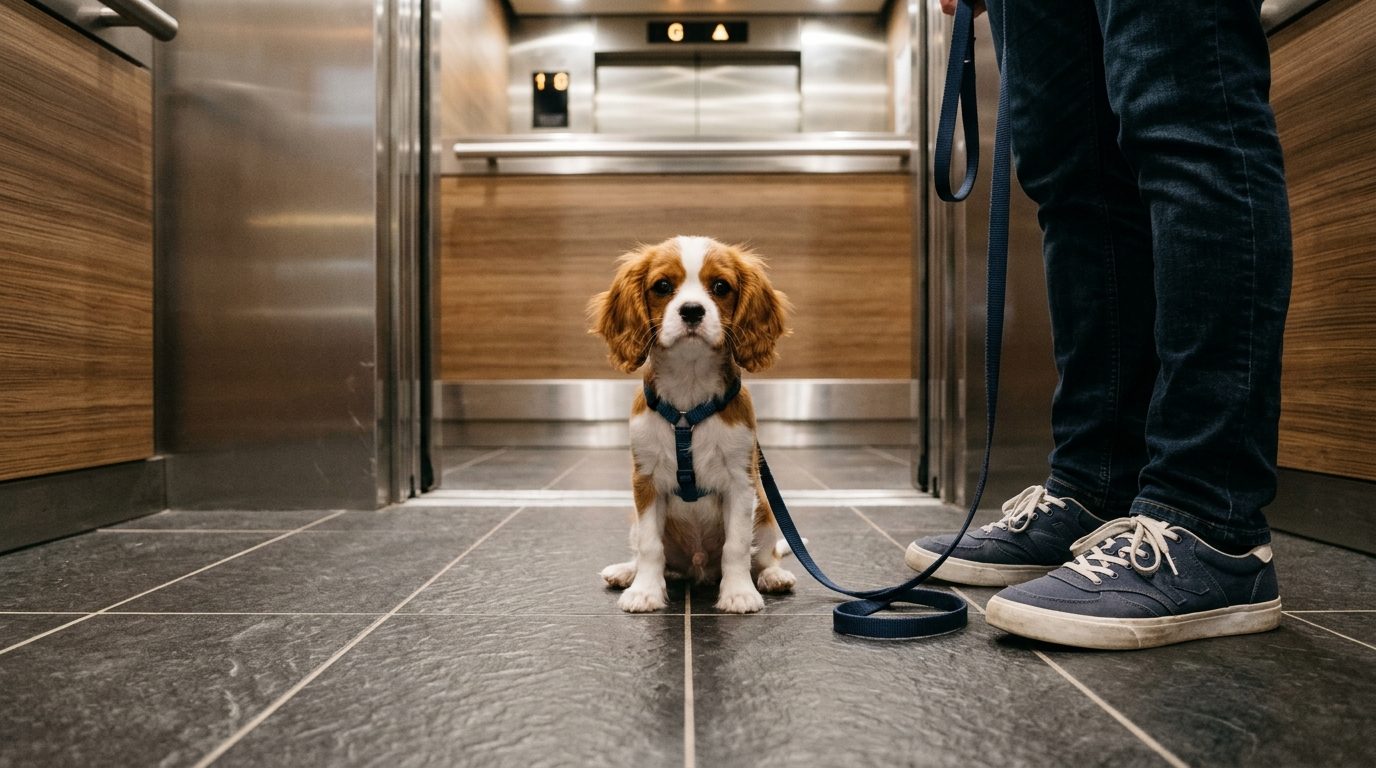
Elevator delays add another layer of unpredictability. Waiting for an elevator during morning rush hour tests an eight-week-old puppy’s bladder capacity beyond its developmental limits. If an elevator stops on several floors before reaching the ground level, a puppy may lose bowel or bladder control inside the cab. Recognizing these pressure points allows apartment owners to take proactive measures before stepping out their apartment door.
The Carry Method to Prevent Hallway Accidents
One of the simplest and most effective techniques for high-rise living is carrying your puppy through all indoor common areas. By scooping up your puppy directly from their bed or crate and carrying them down the hallway and through the elevator, you eliminate the risk of carpet accidents along the route.
Set your puppy down on their paws only when you reach the outdoor grass or designated street-level elimination zone. Once their paws touch the grass, deliver your chosen verbal cue and allow them to sniff and eliminate. This simple habit protects shared residential spaces while teaching your companion that bathroom relief happens exclusively outdoors on natural surfaces.
Balcony Potty Stations and Fresh Grass Boxes
Setting Up Safe Outdoor Balcony Enclosures
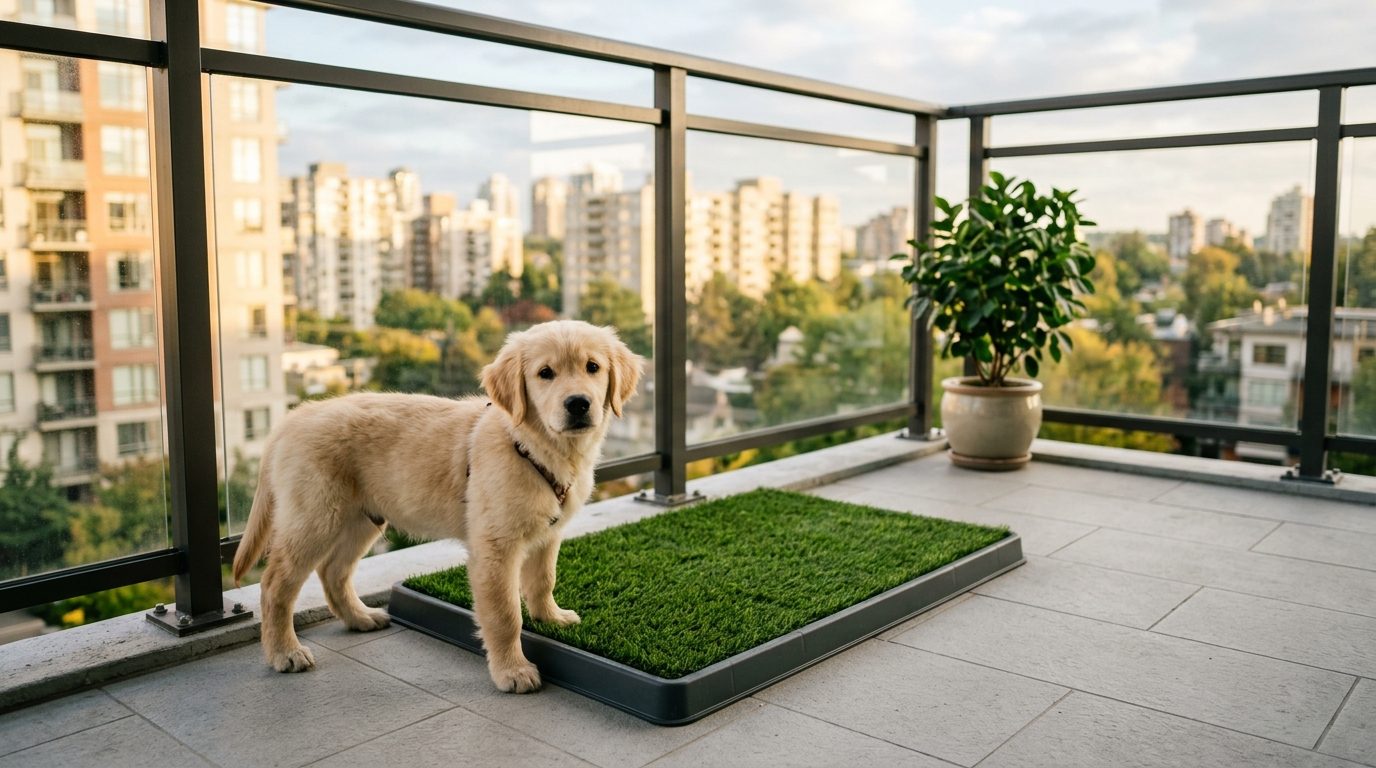
For residents living on upper floors where reaching ground level takes five to ten minutes, a balcony potty station serves as a lifesaver. Using real-grass delivery subscription boxes or artificial turf trays on a private balcony provides immediate outdoor access during early morning hours and late-night breaks. Because real grass carries natural earth scents, puppies transition easily between balcony boxes and ground-level park lawns.
Safety is paramount when utilizing high-rise balconies. Ensure balcony railings are completely secured with durable clear plastic mesh guards or pet-safe netting to prevent a small puppy from slipping through the bars. Always supervise your pet on a leash while on the balcony, and never leave an animal unattended outside. Treat the balcony box exactly like a lawn: accompany your pet, wait quietly until they eliminate, and reward them immediately with praise and treats.
To master the foundational principles of indoor housebreaking before introducing outdoor routines, review our detailed guide on how to potty train a puppy to build consistent daily habits. Consistent routines bridge the gap between apartment convenience and long-term outdoor reliability.
Indoor Pad Management in High-Rise Living
Dedicated Sanitary Zones in Living Spaces
While exclusive outdoor housebreaking is ideal, indoor sanitary pads can provide a practical intermediate option for city dwellers. If you live in an apartment where bad weather or elevator maintenance makes frequent outdoor trips difficult, setting up an indoor station prevents distress. Reviewing the ins and outs of potty training puppy with pads will help you maintain clean indoor boundaries without creating bathroom confusion.
According to the American Kennel Club guide to potty pad training, absorbent pads offer convenience, and keeping pads in a consistent spot helps puppies learn where to eliminate. Place indoor pads inside an easy-to-clean exercise pen or utility area with tile flooring, far away from sleeping and feeding areas.
If you plan to transition fully to outdoor elimination later, keep indoor pad use to a minimum. Dogs naturally develop substrate preferences during early development. If a puppy learns that soft fabric and paper textures are acceptable toilet surfaces, retraining them to prefer outdoor grass requires extra patience and gradual pad repositioning toward exterior doors.
Daily Scheduling for Apartment Dwellers and Commuters
Aligning Bathroom Outings with Feeding Times
Maintaining a rigid daily schedule is the cornerstone of urban housebreaking success. Young puppies operate on predictable biological clocks, routinely needing to eliminate shortly after finishing a meal. By feeding meals at consistent hours each day, you can accurately predict when digestion will trigger elimination urgency.
Mastering how to potty train puppy in apartment environments transforms high-rise living from a chaotic obstacle into a smooth, rewarding routine for both dog and owner. Incorporate frequent bathroom breaks into your schedule: immediately upon waking, after every meal, following indoor play sessions, and right before bedtime. Structured routines ensure that elimination occurs during planned outdoor trips rather than as unexpected indoor surprises.
Pairing your schedule with cozy den confinement speeds up the learning curve significantly. Utilizing crate training a puppy taps into natural instincts to keep sleeping areas clean, helping young dogs hold their bladder during necessary indoor downtime between scheduled walks.
Preventing Noise and Corridor Distractions
Calm Exits and Leash Focus in Shared Areas
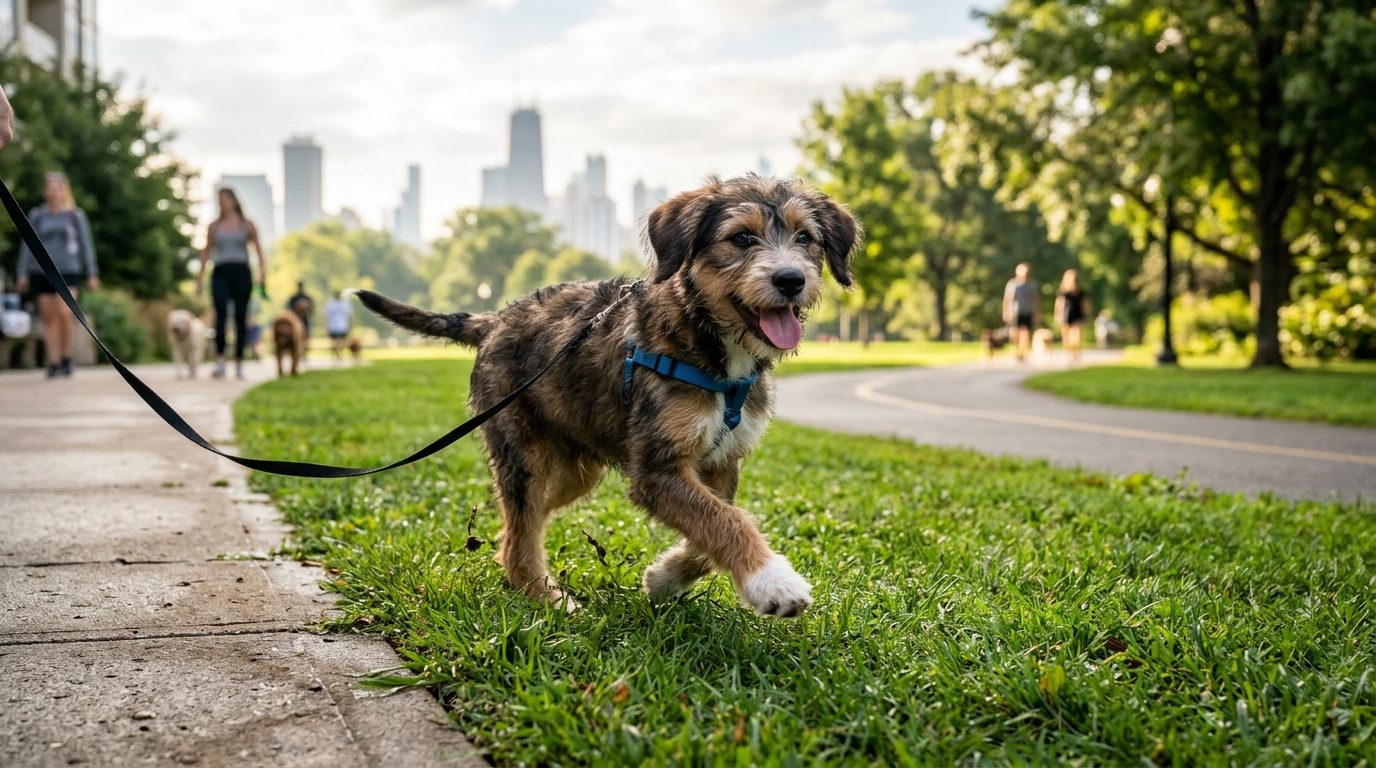
Apartment hallways and lobbies are bustling environments filled with delivery drivers, neighbor greetings, and barking dogs. High excitement levels can distract a young puppy, causing them to forget their bathroom urgency until they return back inside your apartment. Teaching your puppy to walk calmly on a leash through common corridors preserves focus for the outdoor destination.
When walking through shared spaces, keep greetings brief and encourage your dog to keep moving. If your puppy becomes overly stimulated by hallway noises, gently redirect their attention with a small treat held at your hip. Maintaining calm composure through the lobby ensures your puppy arrives at the outdoor grass focused and ready to eliminate promptly.
Always carry dog waste bags and an enzymatic cleaning spray in your walking bag. If an accident occurs in a shared corridor or elevator, clean the area thoroughly and inform building maintenance immediately. Responsible apartment etiquette fosters a welcoming environment for pets while keeping communal spaces spotless and hygienic.
Frequently Asked Questions
How do you get a puppy down the elevator without an accident?
The most effective strategy is carrying your puppy in your arms from the moment you leave your apartment door until you step onto outdoor grass. Carrying your puppy prevents squatting in hallways or elevator cabs. Once outside, place the puppy on their paws and immediately give your elimination cue.
Is a balcony grass patch safe for an apartment puppy?
Yes, a balcony grass patch is safe provided your balcony has secure safety railings covered with protective clear mesh to prevent falls or slips. Balcony grass boxes using real turf offer a convenient, sanitary relief station during early morning hours and stormy weather. Always supervise your pet on a short leash while on the balcony and never leave them unattended outside.
How long does apartment housebreaking usually take?
Apartment housebreaking typically takes four to six months up to a year of consistent scheduling, though full reliability depends on age, breed, and human consistency. Navigating stairs, corridors, and elevators introduces logistical hurdles that require extra management. By maintaining strict supervision and proactive schedules, puppies develop dependable outdoor bathroom habits that last a lifetime.
What should you do if your puppy has an accident in the hallway?
Calmly clean up the accident immediately using absorbent paper towels and an enzymatic cleaner to eliminate lingering odor molecules. Avoid scolding or yelling at your puppy, as punishment creates fear and anxiety without teaching proper behavior. Instead, scoop up your pet, carry them directly outside to their designated grass area, and reward any outdoor elimination that follows.