Bringing a young dog home during cold months presents unique challenges, and navigating potty training puppy in the winter requires practical preparation, cold-weather routines, and extra patience. Freezing outdoor temperatures, deep snowdrifts, and howling winds can cause young dogs to hesitate, shudder, and refuse to eliminate outside, leading to frustrating accidents on warm indoor carpets. By creating cleared bathroom pathways, teaching rapid outdoor elimination cues, and protecting delicate paws from ice and salt, you can keep your housebreaking progress moving forward despite harsh weather.
Winter housebreaking requires understanding the physical vulnerability of young canines. Puppies lack the dense double coats, insulating body fat, and metabolic stamina of mature adult dogs. When a small puppy steps from a seventy-degree heated home onto freezing ice, the shock to their tiny paw pads and bare abdomen can be intensely distressing. Rather than relaxing their sphincter muscles to eliminate, cold puppies contract their muscles, shiver uncontrollably, and plead to dart back inside to safety.
Maintaining a dependable puppy training schedule is vital during the cold season because rigid timing prevents guesswork and minimizes time spent shivering in the snow. When you anticipate exact elimination needs based on feeding and sleep intervals, outdoor excursions become brief and productive. Combining structured outdoor breaks with our hour-by-hour puppy potty training schedule helps you align outings with biological readiness.
Cold weather safety resources published by the ASPCA emphasize a general rule of thumb: if it is too cold outside for you, it is probably too cold for your pet. Owners must take active steps to keep puppies warm, protect their feet from chemical de-icers, and keep outdoor bathroom breaks strictly focused on business.
Understanding How Freezing Weather Affects Young Canines
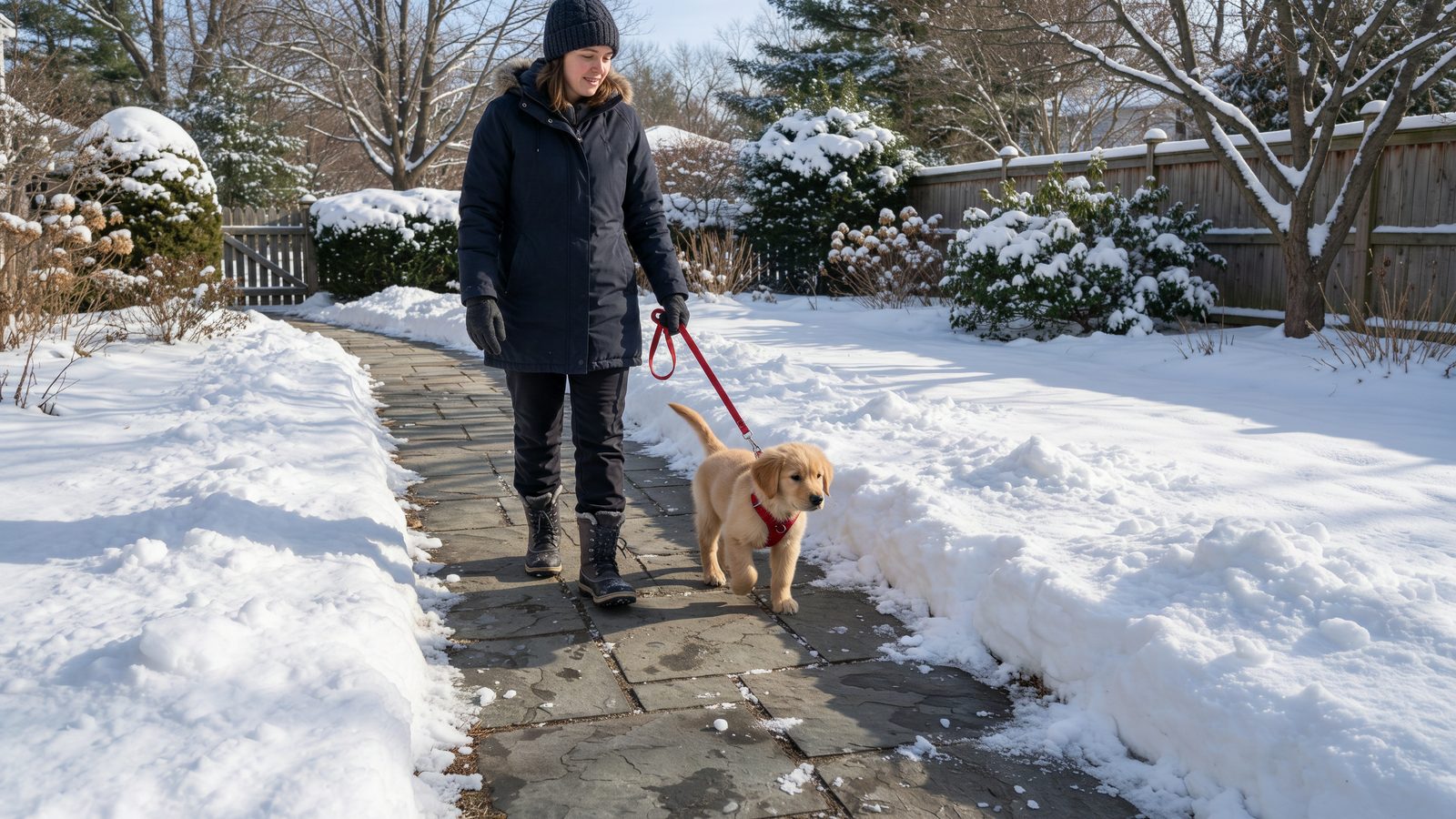
Young puppies have high surface-area-to-body-mass ratios, which means they lose body heat rapidly when exposed to freezing air and cold ground. When owners attempt to potty train puppy in winter conditions without proper preparation, puppies often sit down, tuck their tails, or lift their paws off the snow one by one in painful discomfort.
Shorter Outdoor Outings for Vulnerable Small Breeds
Toy breeds, short-coated puppies, and young infants should never be left outside unattended or expected to endure lengthy outdoor training sessions in subfreezing temperatures. Guidance from the Ohio State University College of Veterinary Medicine highlights that puppies learn best with consistent routines and positive rewards, rather than uncomfortable conditions that create negative associations with outdoor elimination.
Dress your puppy appropriately before stepping out the door. Introduce a snug, water-resistant fleece coat or dog sweater that covers their chest and belly without impeding bathroom posture. Put your own warm winter boots, heavy jacket, gloves, and treat bag on before lifting your puppy from their crate. Stepping outside immediately without hesitation prevents accidents at the doorway and keeps the entire outdoor trip focused and swift.
Clearing Dedicated Winter Snow Paths and Bathroom Areas
Navigating knee-deep snowdrifts is intimidating for an eight-week-old puppy whose belly drags across the icy crust. Taking the time to shovel and prepare a dedicated elimination area makes a monumental difference in your housebreaking success.
After every snowfall, shovel a clear walking path directly from your exterior doorway to a sheltered toilet area in your yard. Clear a patch of ground down to the turf or soil, approximately six feet by six feet in size. Exposing the underlying grass allows residual scent cues from previous eliminations to waft up, signaling to your puppy’s sensitive nose that this exact spot is their designated bathroom zone.
If you live in an area prone to severe blizzard conditions or heavy freezing rain, consider setting up a temporary canopy, beach umbrella, or tarp over your designated bathroom spot. Keeping a small patch of ground free of falling sleet and drifting snow provides your puppy with a sheltered sanctuary where they can eliminate comfortably without icy wind whipping against their face.
Teaching Rapid Elimination Cues for Cold Outings
Lingering outdoors for twenty minutes hoping a puppy will wander into the yard and go is neither humane nor practical in January. Teaching your companion a reliable verbal elimination cue is essential for successful potty training puppy winter routines.
Keep your puppy on a six-foot leash and walk them directly to the cleared elimination spot. Stand stationary and avoid wandering around the yard, throwing snowballs, or allowing the puppy to pounce in snow piles. The moment your puppy begins sniffing and adopts an elimination posture, speak your chosen verbal marker softly, such as hurry up or go potty. Right as they finish, deliver generous praise and offer an irresistible treat like a warm piece of cooked chicken right on the snow, then immediately escort them inside to warm up.
If your puppy does not eliminate within three to five minutes, do not stay outside shivering. Bring your puppy back indoors, keep them leashed to your belt or comfortably settled in their crate for ten to fifteen minutes, and then try the outdoor trip again. This firm management prevents accidents indoors while teaching your dog that outdoor winter excursions are exclusively for quick bathroom relief.
Protecting Sensitive Paws and Managing Winter Salt Hazards
Winter conditions pose serious physical hazards to canine paws. Ice shards can cut delicate skin between toes, while snow accumulation between paw pads causes discomfort and painful irritation.
Wiping Feet and Belly to Prevent Salt Ingestion
Public sidewalks and driveways are frequently coated with chemical de-icing salts. According to cold weather safety recommendations from the ASPCA, owners should wash and dry their dog’s paws and towel-dry them upon returning inside. De-icing salts and chemicals can irritate paws, and puppies who lick salt from their feet risk gastrointestinal upset.
To safeguard tender paws before heading outdoors, apply a thin layer of protective pet-safe paw wax or food-grade petroleum jelly across pad surfaces and between toes. Paw wax creates a waterproof barrier that repels ice accumulation and shields skin from chemical contact. For small or sensitive breeds, acclimating your pup to lightweight rubber dog booties provides complete protection during neighborhood sidewalk walks.
Indoor Training Strategies for Extreme Storms and Freezes
During catastrophic polar vortex freezes, severe ice storms, or dangerous blizzards, taking a tiny puppy outside may be unsafe or physically impossible. Having a planned indoor management strategy prevents developmental setbacks during extreme weather events.
Utilizing Indoor Exercise Pens and Temporary Sanitary Pads
When subzero windchills threaten hypothermia, establishing a clean indoor relief station provides a humane backup. As outlined in our complete guide on potty training puppy with pads, setting up an absorbent training pad or artificial turf tray inside a contained exercise pen on hard flooring prevents household accidents during severe storms. If you must potty train puppy winter days indoors, keeping the station confined to an exercise pen helps preserve your foundational housebreaking rules.
Veterinary resources from VCA Animal Hospitals emphasize that consistency is the foundation of house training, noting that options like indoor pads or puppy litter boxes can provide alternative relief stations when needed. Use indoor pads strictly as an emergency protocol during severe weather, and transition your puppy back to cleared outdoor grass as soon as storm conditions subside. Reviewing our foundational principles on how to potty train a puppy provides the framework to transition smoothly back outdoors.
Successfully managing potty training puppy in the winter comes down to anticipating cold weather discomfort and keeping outdoor excursions short and purposeful. By clearing snow paths, dressing your young dog for warmth, wiping paws diligently, and reinforcing every outdoor success with high-value treats, your companion will master clean housebreaking habits even during the coldest winter months.
Frequently Asked Questions
Why does a young dog refuse to eliminate outside in the snow?
Puppies frequently refuse to eliminate in snow because the abrupt contrast between warm indoor air and freezing outdoor moisture shocks their sensitive paw pads and bare bellies. Instead of relaxing to urinate, cold canines instinctively tense their muscles and shiver. Shoveling a clear path down to grass and dressing your pup in a warm coat helps them feel comfortable enough to go.
How long should a puppy stay outside in freezing weather?
During freezing weather, outdoor bathroom excursions should be capped at three to five minutes. Young puppies lack the insulation and body mass to regulate temperature effectively in subfreezing conditions. If your dog does not eliminate within five minutes, bring them inside to warm up under supervision for ten minutes before trying again.
How do you protect puppy paws from ice melt chemicals and salt?
Protect delicate paws by applying a coat of dog-safe paw wax or petroleum jelly before heading outdoors, or by using fitted winter booties. Always wash and dry your puppy’s paws with a towel immediately upon returning inside to remove chemical de-icing salts before your dog can lick and ingest them.
Is it acceptable to use indoor pads during severe winter storms?
Using indoor sanitary pads or real-grass turf boxes is an acceptable temporary option during dangerous winter storms, blizzards, or subzero polar vortex conditions. Set the pad up inside an exercise pen on hard flooring to preserve routine. Once severe weather passes, promptly transition your puppy back to leashed outdoor elimination breaks on shoveled grass.