Adopting a new dog while balancing employment demands can feel overwhelming, but achieving consistent potty training puppy while working full time is entirely possible with proactive planning, proper containment, and midday support. Young puppies possess limited bladder capacity and cannot physically hold their urine for eight or nine hours while an owner is away at the office. By establishing an organized morning routine, arranging dependable midday bathroom visits, and utilizing safe exercise pen setups with clean indoor stations, you can successfully housebreak your young dog without compromising your work schedule.
The primary hurdle facing working dog owners is managing canine digestive and urinary physiology during long workdays. An eight-week-old puppy processes fluids rapidly and typically needs to eliminate every two to three hours while awake. Expecting a young puppy to stay confined in a crate all day without soiling their bed leads to accidents and distress. When confined in dirty conditions for too long, dogs struggle to maintain their natural instinct to keep their sleeping area clean, making house training significantly harder.
Anchoring your household to a structured puppy training schedule transforms unpredictable workdays into manageable, repeatable habits. Coordinating your alarm clock, morning feeding, midday breaks, and evening walks ensures that your puppy receives consistent opportunities for outdoor success. Following the hour-by-hour intervals outlined in our detailed puppy potty training schedule provides working households with a clear blueprint for success.
According to practical care guidance published by the American Kennel Club, daily structure helps puppies feel secure, while consistent feeding schedules support regular digestion and house training.
Canine Bladder Capacity and Daytime Confinement Limits
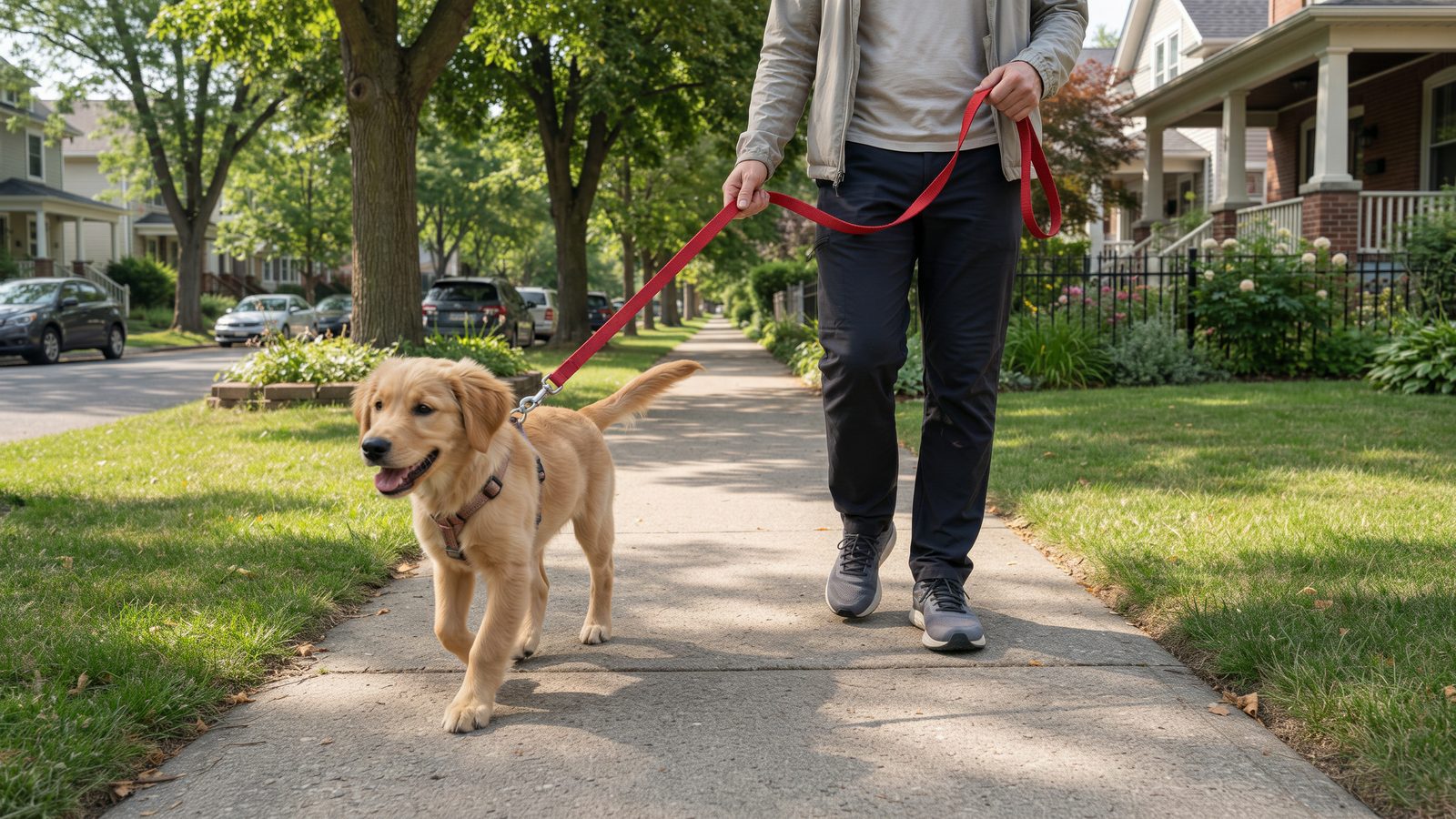
Understanding chronological holding limits prevents unrealistic expectations. Owner guidance from the Ohio State University College of Veterinary Medicine suggests a rule of thumb for daytime holding capacity of roughly one hour per month of age, give or take. Under this biological reality, an eight-week-old puppy can hold their bladder for roughly two hours during active waking hours, while a three-month-old pup can manage approximately three hours.
Veterinary guidance from VCA Animal Hospitals advises that puppies left alone for no more than three hours can usually be crated, while longer absences require a pet sitter or an exercise pen with a piddle pad. Leaving a young dog crated beyond their physical holding limit inevitably results in crate accidents, forcing the animal to soil their sleeping quarters and causing distress.
If you are exploring how to potty train puppy when you work outside the home, accepting these developmental limits is vital. Working full-time hours does not mean you cannot raise a dog, but it does mandate that you provide physical relief solutions during your workday absences.
Structuring the Early Morning Puppy Routine
Successful housebreaking starts long before you commute to the office. Cultivating a calm, unhurried morning routine ensures your companion eliminates fully before being settled for your workday absence.
Set your morning alarm thirty to forty-five minutes earlier than usual. The moment your feet touch the floor, lift your puppy out of their crate and carry them directly outside to their designated elimination spot. After overnight rest, bladder urgency is high, setting up an immediate opportunity to reward outdoor elimination with praise and high-value treats.
Serve breakfast promptly after the first morning bathroom trip. Feeding breakfast at least two hours before you depart for work stimulates morning digestion, allowing the puppy to eliminate stool outdoors during a second walk before you leave. Engage in twenty minutes of gentle mental play or basic obedience training to expend youthful energy. A satisfied, well-exercised puppy with an empty bladder will settle down to sleep peacefully as you head out the door.
Organizing Dependable Midday Support and Care Visits
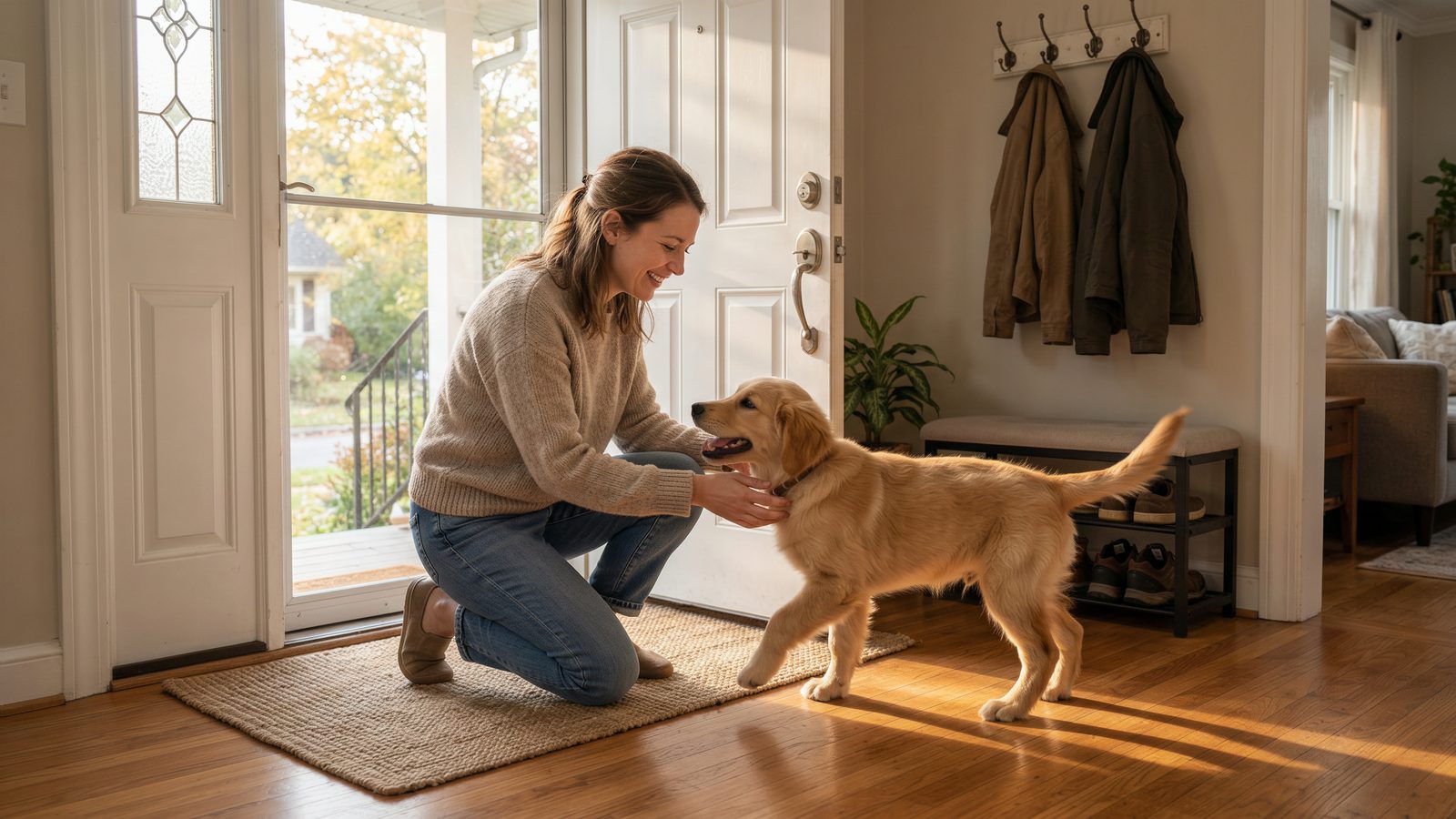
Navigating potty training puppy when you work full time requires securing reliable daytime coverage. Unless you can return home midday during your lunch break, arranging a pet sitter or setting up a safe indoor pen is essential for puppies under six months of age.
Arranging Dog Sitters or Drop-In Puppy Services
Hire a licensed, insured professional pet sitter or enlist a trusted neighbor or family member to visit your home midday. A standard thirty-minute drop-in visit should include taking the puppy outside on a leash to eliminate, offering fresh water, providing companionship, and rotating clean chew toys. For very young eight-week-old puppies, arranging two brief visits per day—one mid-morning and one early afternoon—bridges the gap until the puppy reaches four or five months of age.
If your budget allows, consider structured puppy daycare programs, but always consult your veterinarian and check the facility’s sanitation protocols and vaccination policy before enrolling an incompletely vaccinated pup. Reputable puppy programs structure naps, provide individual potty breaks, and enforce calm behavioral management throughout the day.
Setting Up an Indoor Confinement Pen for Working Hours
If arranging midday drop-in coverage is impossible on certain days, or if your pup cannot reliably hold their bladder between visits, a standard closed crate is not appropriate. You must provide a safe, sanitary indoor confinement area that accommodates natural biological elimination without ruining household carpets.
Safe Exercise Pen Layouts on Clean Hard Flooring
Set up an adjustable metal exercise pen in a puppy-proofed room with waterproof flooring, such as a kitchen, laundry room, or bathroom with tile or vinyl. Place your puppy’s crate with the door propped open at one end of the pen, lined with comfortable bedding, creating a distinct sleeping zone. Place fresh water and durable chew toys in the middle of the pen.
At the opposite end of the pen, furthest from the bed, set up an indoor relief station. As detailed in our comprehensive guide on potty training puppy with pads, an absorbent training pad or indoor grass turf box provides an acceptable toilet zone during long absences. Understanding how to manage confinement effectively through our guide on crate potty training a puppy preserves your companion’s den instinct while preventing distress.
Transitioning Between Indoor Stations and Outdoor Grass
When you potty train puppy while working full time using indoor pens, pads can provide a daytime relief option during long workdays, though transitioning fully outdoors later may require dedicated training. Whenever you are present in the mornings, evenings, and weekends, manage your dog with direct supervision and escort them outdoors exclusively, reserving the indoor pen strictly for working hours.
Maximizing Evening and Weekend Training Practice
Your non-working hours are when foundational housebreaking habits are cemented. When you arrive home in the evening, make greeting and escorting your puppy outside your immediate priority.
Do not stop to change clothes, open mail, or prepare dinner before taking your puppy out. Leash your dog and escort them directly to their outdoor bathroom spot. When they eliminate, celebrate with joyful praise and a special treat. Throughout the evening, maintain active supervision, taking your puppy outside every thirty to sixty minutes during active play, after dinner, and immediately before bedtime.
Dedicate your weekends to intensive outdoor housebreaking practice. With your constant presence over Saturday and Sunday, you can anticipate elimination needs perfectly, reinforce dozens of outdoor successes, and accelerate your young companion’s understanding of clean household living.
With realistic planning and dependable midday support, potty training puppy while working full time builds a reliable lifetime routine for your companion. By structuring your mornings, arranging midday care visits, and setting up a humane confinement pen, your puppy will grow into a confident, housebroken adult dog while you maintain a thriving professional career.
Frequently Asked Questions
How long can an eight-week-old puppy stay home alone?
An eight-week-old puppy can physically hold their bladder for roughly two hours while awake, following the guideline of roughly one hour per month of age. Expecting an infant puppy to stay alone for a full eight-hour workday without bathroom relief is biologically impossible and causes severe distress. Working owners must arrange midday drop-in visits or provide an exercise pen with an indoor sanitary station.
Can a puppy be left in a crate for an entire eight-hour workday?
No, a young puppy should never be left inside a closed crate for an entire eight-hour workday. Veterinary guidance advises that puppies left alone should not be crated for more than three hours, requiring a pet sitter or a pen with a pad for longer periods. Forcing a puppy to remain crated all day leads to inevitable bed soiling, degrades natural cleanliness instincts, and can cause chronic distress.
What is the best indoor containment setup during working hours?
The best setup is a spacious exercise pen placed on an easy-to-clean floor such as tile or vinyl. Position an open crate with bedding at one end for sleeping, place water and safe chew toys in the center, and locate an absorbent training pad or turf tray at the far opposite end. This setup allows the puppy to relieve themselves away from their bed without soiling living areas.
How many midday breaks does an employed owner need to arrange?
For puppies between eight and twelve weeks of age, arranging two daytime drop-in visits—such as mid-morning and early afternoon—is ideal. For older puppies approaching six months, a single midday break provided by a dog walker or neighbor may suffice, while younger pups between three and four months typically still need more frequent relief. As bladder capacity expands past six months, healthy dogs can gradually adapt to standard workday schedules.