Bringing a canine companion into your household marks the start of an exciting journey, but dog training for first time owners can easily feel daunting without a clear roadmap. New dog guardians often face a confusing array of conflicting opinions on house rules, discipline, and daily care. Understanding that successful early education relies on patient guidance, predictable routines, and reward-based instruction allows you to establish mutual trust and reliable communication from your very first afternoon together.
Canine cognition thrives on clarity and consistency rather than intimidation or physical dominance. Modern animal behavioral science demonstrates that dogs learn best when desirable actions produce immediate, valuable outcomes such as food rewards, verbal encouragement, and gentle affection. By establishing clear expectations early, you help your young dog understand how to navigate human domestic life safely and confidently.
Integrating structured practice into an organized puppy training schedule helps ensure that your dog receives regular mental stimulation without becoming overtired. Equipping your home with practical essentials from our new puppy checklist ensures you have treat pouches, appropriate leashes, and comfortable containment areas ready before teaching begins.
According to behavioral research published by VCA Animal Hospitals, early training should emphasize positive reinforcement, as rewarding desired behaviors encourages dogs to repeat them willingly while strengthening the human-animal bond.
Core Training Principles of Positive Reinforcement
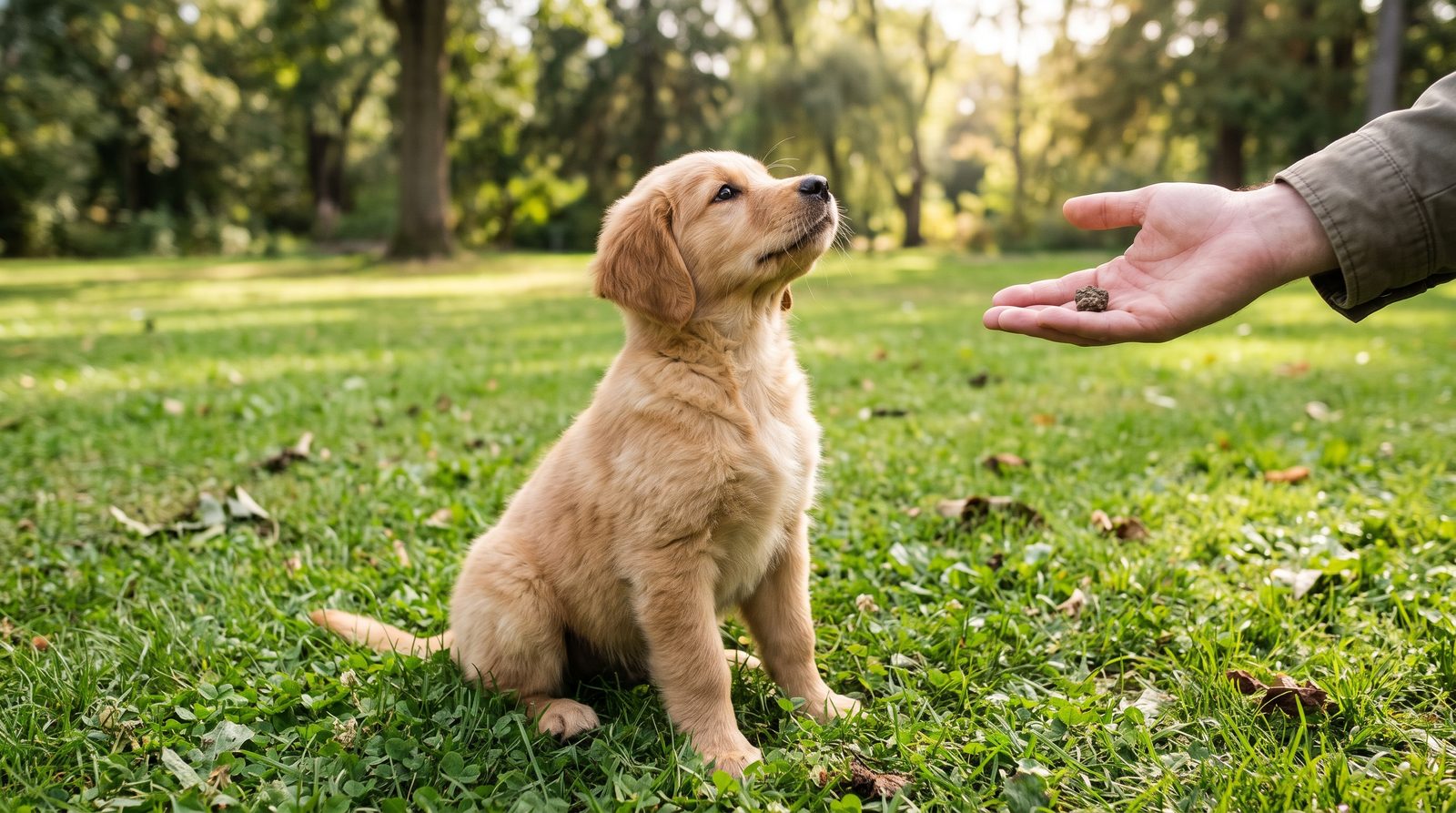
Marking Desired Actions with Immediate Rewards
Timing is the cornerstone of effective canine learning. A dog connects a reward with the exact behavior they were performing at the precise moment the reward is delivered. Using a distinct verbal marker such as a crisp ‘Yes!’ or a mechanical training clicker bridges the small gap between the correct action and the delivery of a treat.
Deliver food rewards within one to two seconds of the marker word to reinforce the precise behavior you want to cultivate. For example, mark the exact second your dog’s rear touches the floor during a sit request. Practicing precise timing accelerates learning speed and prevents confusing accidental rewards for jumping up or stepping away.
Keep treats easily accessible in a waist pouch or shallow dish placed high on a shelf. Fumbling through tight pockets delays reward delivery and breaks your dog’s focus during key learning moments.
Managing Common Puppy Distractions and Focus
Novice guardians often expect young animals to perform complex commands in busy public spaces before mastering them in quiet settings. When introducing any new skill, begin in a sterile, low-distraction room such as an uncluttered hallway or quiet bedroom. Minimize background noise, put away distracting toys, and keep early training sessions between three and five minutes in duration.
Once your dog responds reliably in a quiet environment, systematically introduce mild distractions. Practice across different rooms, out on a quiet patio, and eventually on suburban sidewalks. If your companion struggles to focus or ignores a familiar request, increase your distance from the distraction and offer higher-value rewards to rebuild engagement.
Establishing Predictable Daily Routines for Your Dog
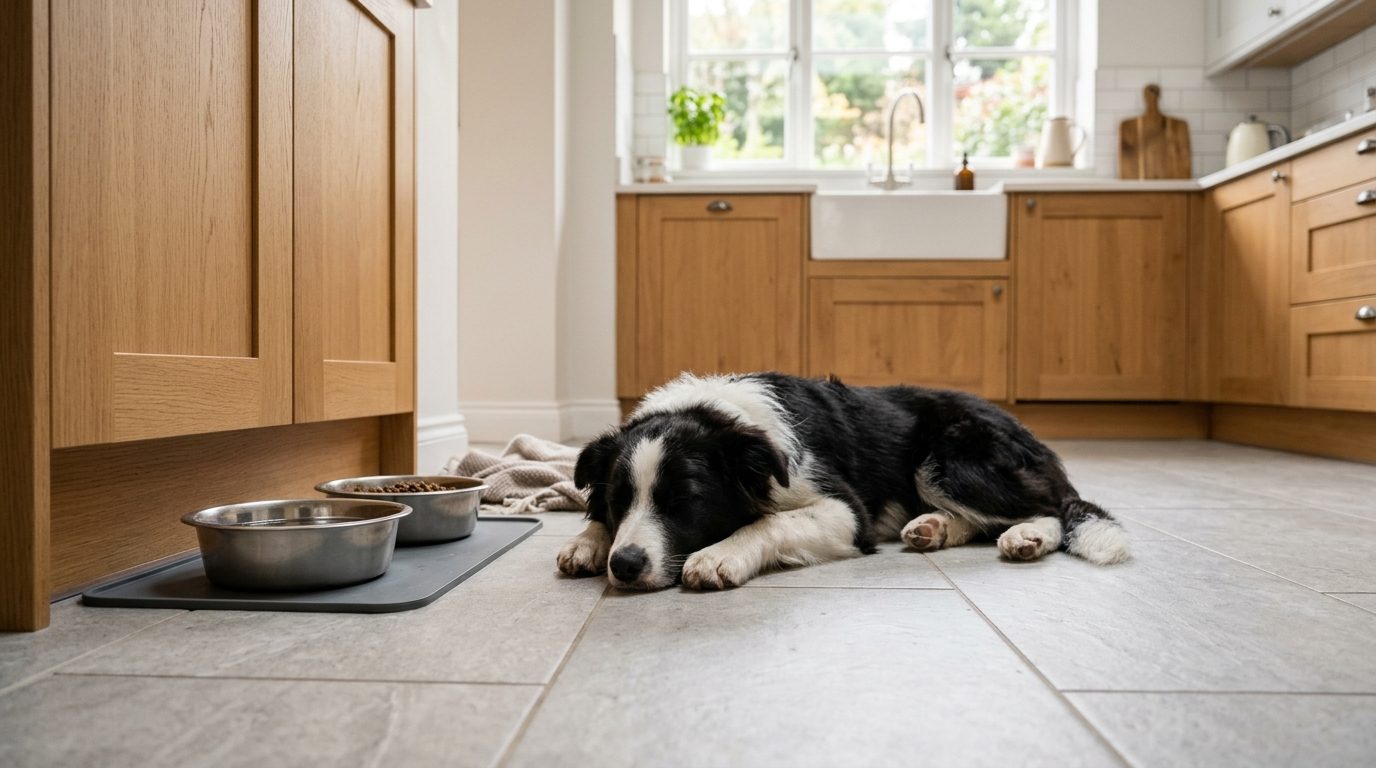
Synchronizing Feeding and Bathroom Breaks
Canine biology operates on a predictable internal clock, making daily schedule management essential for preventing household chaos. Establishing set feeding times rather than free-feeding kibble allows you to anticipate when your dog will need to eliminate. Most young dogs need an immediate outdoor bathroom visit after waking, finishing a meal, or completing an energetic play session.
Puppy behavioral resources from the Ohio State University Veterinary Medical Center recommend frequent outdoor toilet trips and using a crate as a safe resting space during house training.
Balancing activity periods with mandatory downtime prevents the frantic behavior typical of an overtired animal. Young dogs require substantial sleep each day to process cognitive learning and support physical growth. Structuring predictable nap windows inside a comfortable crate or playpen prevents destructive chewing and supports emotional stability throughout the household.
Teaching Foundational Manners and Early Commands
Before attempting advanced obedience tricks, concentrate on foundational safety manners that protect your companion in daily living. Core cues such as come, loose-leash walking, sit, down, and stay establish reliable impulse control and prevent dangerous habits like darting through exterior doorways.
Educational guidance from the American Kennel Club outlines foundational commands that every family pet should master, noting that short, joyful practice sessions build dependable responsiveness without causing mental fatigue. For detailed steps on teaching each individual verbal cue, explore our comprehensive guide on puppy training commands.
Keep daily practice playful and positive. End every training session on a successful repetition, followed by an enthusiastic verbal release and a brief game of tug or gentle petting. Ending on a high note leaves your canine partner eager to participate in future lessons.
Preventing Common First-Time Owner Mistakes
One of the most frequent missteps among new dog owners is using punishment or physical corrections when a pet makes a mistake. Harsh scolding, leash yanking, or rubbing a dog’s nose in a bathroom accident does not teach appropriate behavior; instead, it generates fear, erodes trust, and encourages sneaky elimination behind furniture.
Another common pitfall is repeating verbal commands multiple times without following through. Repeating ‘Sit, sit, sit!’ conditions a dog to ignore the first word until your voice escalates. Say a cue once clearly. If your dog does not respond, pause, simplify the environment, lure the behavior with a treat if necessary, and mark the correct motion immediately.
Inconsistent household rules also create deep confusion. If one family member permits the dog to jump up on the sofa while another scolds them for the same action, the dog cannot understand what is expected. Gather all household members to establish unified vocabulary, boundary lines, and feeding responsibilities before bringing your new companion home.
Structuring Controlled Socialization and Outdoor Exposure
Socialization is often misunderstood as allowing a dog to greet every unfamiliar person and animal they encounter. Genuine canine socialization is about teaching your pet to remain calm, neutral, and confident in the presence of novel environmental stimuli. Introducing varied sights, surfaces, and mechanical noises in a controlled manner helps reduce the risk of adult reactivity.
When encountering new people or dogs on walks, reward your companion for maintaining eye contact with you rather than pulling toward the novelty. Fostering handler focus ensures your dog looks to you for guidance whenever unfamiliar situations arise in the neighborhood.
If your dog exhibits signs of distress, severe anxiety, or persistent fear during daily handling, talk to your veterinarian to rule out underlying health discomfort and seek personalized guidance. Approaching dog training for first time owners with realistic expectations and patience turns everyday challenges into rewarding milestones.
Frequently Asked Questions
What is the most effective training approach for a novice owner?
The most effective approach is positive reinforcement training, where desired behaviors are rewarded immediately with food, praise, or play. This science-based methodology encourages dogs to repeat polite habits willingly while building a deep bond of trust with their guardians.
How many minutes should each daily practice session last?
Daily practice sessions should remain brief, ideally lasting between three and five minutes per session. Keeping lessons short prevents mental fatigue and frustration, allowing young dogs to finish each exercise enthusiastically on a positive note.
What should I do when my young dog ignores a command?
If your dog fails to respond, avoid repeating the cue repeatedly in frustration. Instead, pause, reduce distracting environmental stimuli, verify that you have high-value rewards, and gently guide the dog through the motion before marking the correct response.
When should a beginner seek professional canine guidance?
You should seek professional guidance if your dog exhibits signs of severe fear, distress, or persistent aggression, or if you feel overwhelmed by training challenges. Consult your veterinarian first to rule out medical issues, then connect with a certified humane trainer.