Bringing a young dog home is an exciting milestone, but establishing a reliable routine for potty training puppy at night is one of the most critical challenges facing new owners. During their initial weeks in a new home, puppies lack the physiological capacity to sleep through eight hours without needing bladder relief, resulting in midnight whining and disrupted sleep. By setting up a peaceful sleeping environment, managing evening hydration, and keeping middle-of-the-night trips calm and quiet, you can guide your puppy toward clean sleeping habits and restful nights.
Nighttime housebreaking is fundamentally distinct from daytime training routines. While daytime management emphasizes active outdoor exploration, continuous supervision, and vigorous playtime, overnight care focuses entirely on biological necessity and swift return to slumber. Helping your young companion understand that nighttime is exclusively for sleeping requires patient management and consistent human calm.
Integrating your evening habits with an established puppy training schedule eliminates nighttime guesswork and aligns physical needs with household sleep patterns. When meals, evening play, and outdoor bathroom trips follow a dependable structure, your puppy’s digestive system naturally settles down before bed. Reviewing our foundational guide on how to potty train a puppy provides the underlying housebreaking principles needed for round-the-clock consistency.
According to veterinary care resources from VCA Animal Hospitals, many young puppies continue to require a nighttime outing until approximately five months of age. Expecting a small eight-week-old puppy to hold their bladder from ten at night until seven in the morning is biologically unrealistic and often results in avoidable crate accidents.
Nighttime Bladder Physiology and Developmental Limits
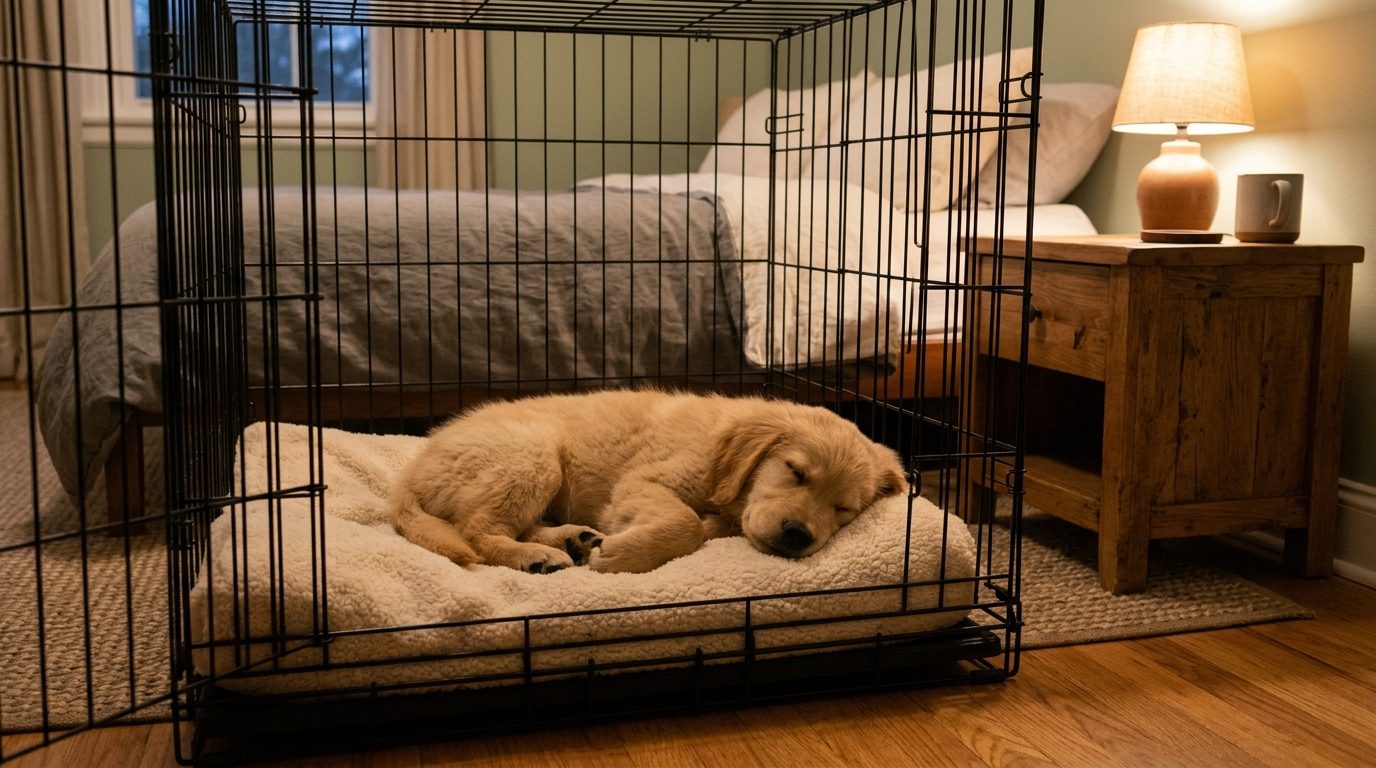
Age and Nighttime Bladder Capacity
A puppy’s physical bladder capacity is tightly correlated with chronological age and biological development. Research and clinical guidelines from the Ohio State University College of Veterinary Medicine suggest a rule of thumb of roughly one hour per month of age for daytime bladder retention. At night, while a resting metabolic rate and reduced urine production extend this window somewhat, a two-month-old puppy still typically needs at least one or two bathroom breaks throughout the night.
Small and toy breed puppies often have smaller bladder capacities and may need more frequent midnight outings. Even with larger breed puppies, nighttime vigilance is still necessary during their initial weeks at home as bladder control develops with age.
Sleep Cycles and Biological Rhythms
Young dogs experience rapid shifts between light REM sleep and brief waking periods throughout the night. During light waking moments, even mild bladder sensation can prompt a puppy to stir and whine. If an owner ignores these cues, the discomfort becomes unbearable, forcing the puppy to eliminate inside their bedding. Learning how sleep patterns operate through our guide on the puppy sleep schedule helps owners anticipate waking cycles accurately.
Setting Up the Sleeping Environment for Quiet Nights
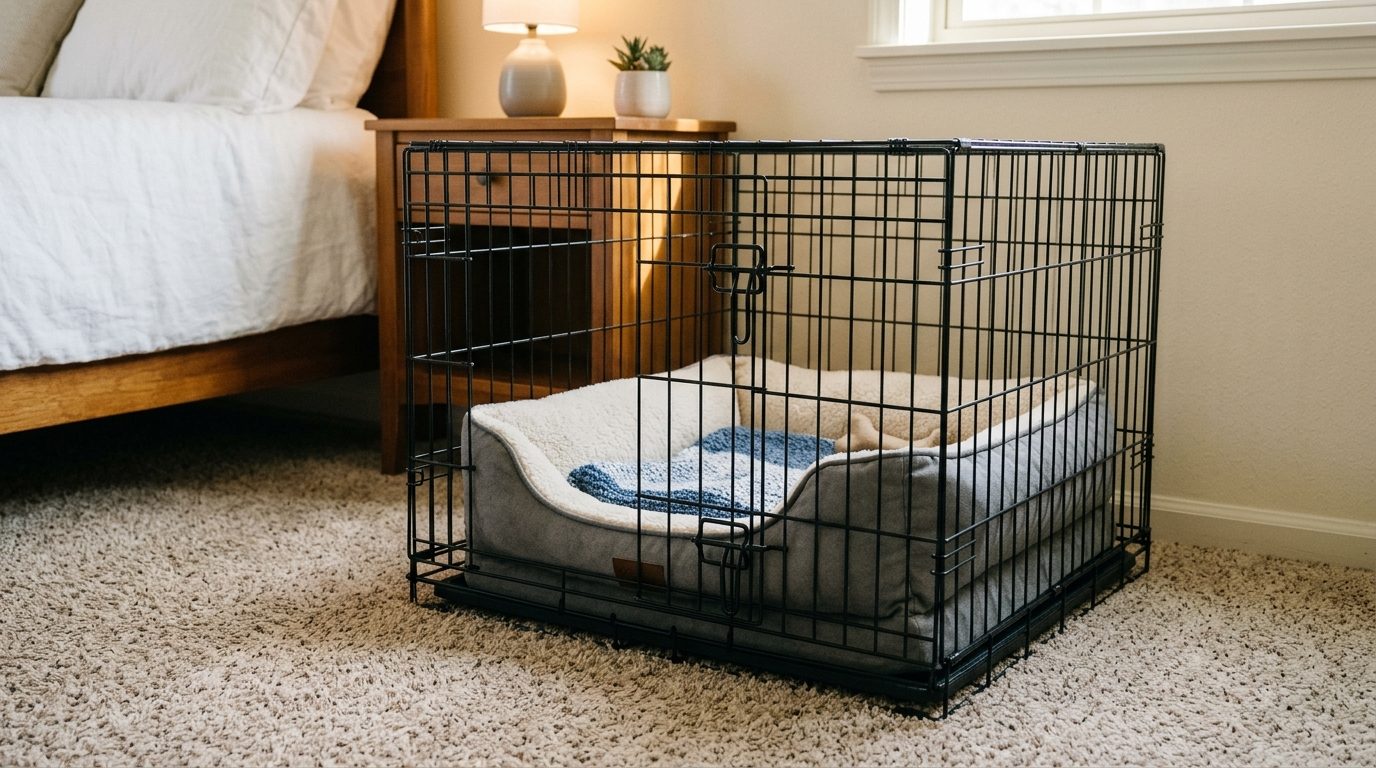
The location and layout of your puppy’s sleeping area play a decisive role in overnight housebreaking success. Creating a snug, secure sleeping den encourages the puppy to settle quietly without persistent distress.
Bedroom Crate Placement Benefits
During the first month at home, placing the puppy’s crate directly inside your bedroom, within arm’s reach of your bed, provides substantial behavioral advantages. Puppies are social animals who are accustomed to sleeping snuggled tightly beside their mother and littermates. Being isolated in a dark, unfamiliar laundry room or basement triggers deep panic and persistent crying.
Keeping the crate in your bedroom provides comforting reassurance while enabling you to hear soft whines when a bathroom break is needed. According to crate training guidance from the American Kennel Club, owners should let a crated puppy out at night when they whine or fuss, as they most likely need to use the bathroom. If your puppy struggles with evening vocalization, our guide on puppy crying in crate at night offers proven techniques to calm separation worries.
Ensure the crate is properly sized. It should only be large enough for your puppy to stand up, turn around easily, and lie flat on their side. If the crate is excessively spacious, the puppy may choose to soil one corner and sleep on the opposite side, defeating the natural instinct to avoid soiling their bed.
Structuring the Evening Routine Before Bedtime
A peaceful night begins several hours before human bedtime. Thoughtfully orchestrating your puppy’s late evening activities prevents digestive urgency and hyperactivity during sleeping hours.
Managing Late Evening Water Intake
Schedule your puppy’s final meal of the day approximately three to four hours before bedtime. This window allows the gastrocolic reflex to stimulate bowel elimination during early evening outdoor trips, ensuring the colon is relatively empty before the puppy settles for the night.
Similarly, discuss with your veterinarian about taking up the water bowl in the late evening before bedtime, provided your climate is moderate and your puppy has stayed well-hydrated throughout the day. While puppies should never be deprived of fresh water during warm weather or after exercise, limiting late access helps prevent the bladder from filling rapidly while sleeping.
Always take your puppy outside for a final elimination trip immediately before lights out. Stand quietly on the grass for five to ten minutes, softly reward any elimination, and escort your puppy directly into their crate without engaging in stimulating indoor games.
Executing Calm and Boring Midnight Bathroom Trips
How you handle midnight awakenings determines how quickly your puppy returns to sleep. When learning how to potty train puppy at night, trips to the backyard between midnight and dawn must be kept strictly business.
Keeping Midnight Trips Strictly Business
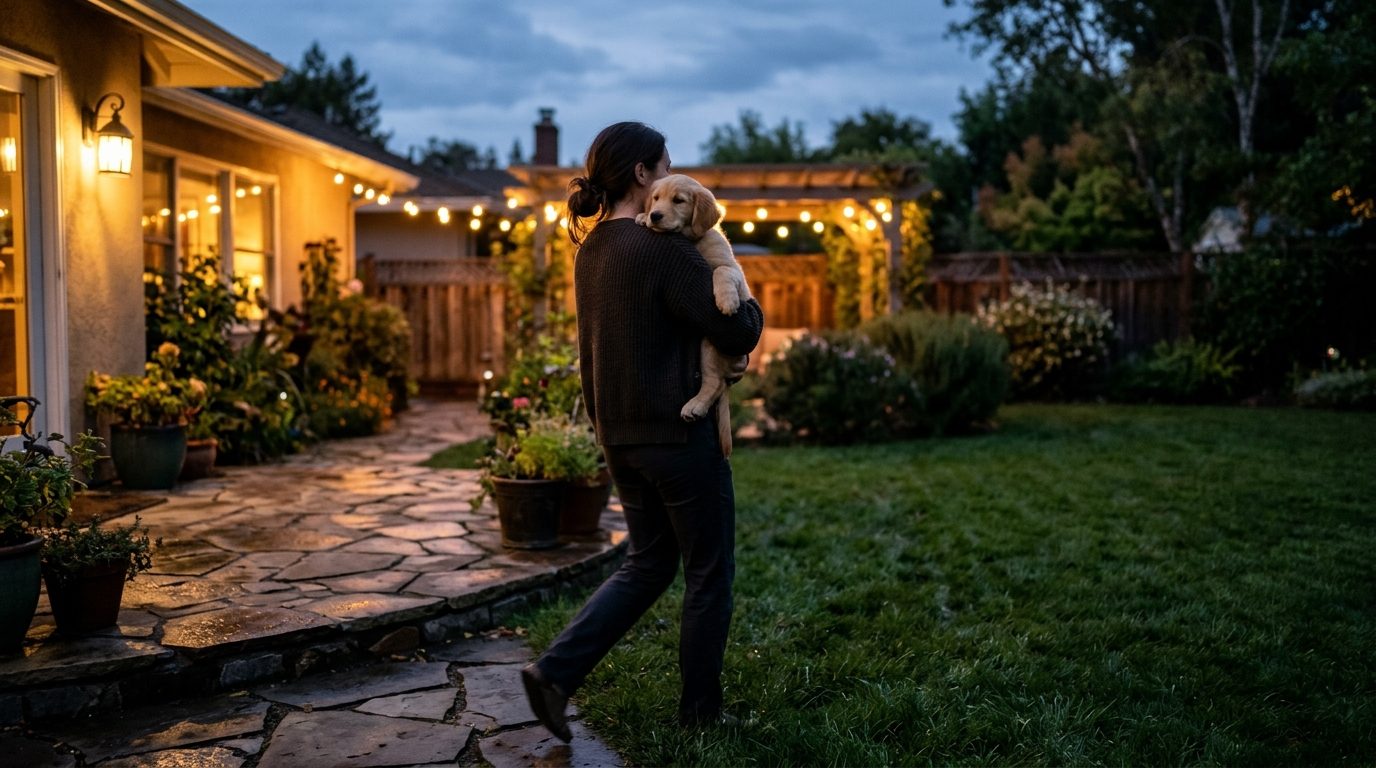
When you hear your puppy stirring or giving a soft distress whine during the night, respond quickly but calmly. Do not turn on bright overhead lights, baby-talk to your puppy, or initiate cuddling sessions. Slip on your shoes, quietly clip a leash onto your puppy’s collar, and carry or walk them straight outside to their designated elimination spot.
Keep your interaction as quiet and boring as possible. Stand in place, give your gentle bathroom cue, and wait for your puppy to eliminate. When they finish, offer quiet verbal praise and a single small reward, then immediately carry them back inside and place them back into their crate with a brief pat. No playing, no midnight snacks, and no wandering around the kitchen.
If you are working to toilet train puppy at night, this low-stimulation approach teaches your companion that night waking offers bathroom relief and nothing more. When households manage potty training puppy first night hurdles with this calm protocol, puppies learn quickly that nighttime is for quiet slumber rather than social amusement.
Transitioning Toward Sleeping Straight Through the Night
As your companion matures, their internal physiology gradually changes. When executing potty training puppy at night routines, owners can anticipate a natural progression toward sleeping through the entire night without waking.
Recognizing Full Nighttime Readiness
While individual puppies vary widely, many puppies begin sleeping through six to eight hours uninterrupted between twelve and sixteen weeks of age. If you have been setting an early alarm to wake your puppy for a midnight break, you can gradually push the alarm back by thirty minutes every three to four nights. If you notice your puppy sleeping deeply and quietly, do not wake them; allow them to wake you when they genuinely need to go.
Maintain consistent morning routines. The moment your puppy wakes up in the morning, immediately take them outside to eliminate before starting your own morning coffee or household tasks. Prompt morning reinforcement completes the full twenty-four-hour housebreaking loop.
If an older puppy who previously slept through the night suddenly starts waking up frequently with intense urgency or having indoor accidents, consult your veterinarian to evaluate for possible medical issues, such as a urinary tract infection or gastrointestinal upset. Ruling out physical ailments ensures behavioral training remains on the correct path.
Frequently Asked Questions
How many times does a young puppy need to go out at night?
An eight-week-old puppy typically needs one to two nighttime bathroom breaks. Most puppies continue to require at least one overnight outing until approximately five months of age, depending on breed size and individual development. As puppies grow, bladder capacity increases and nighttime awakenings naturally diminish.
Should you wake a sleeping puppy to go outside at night?
If your puppy is very young and prone to wetting the bed while sleeping, setting a gentle alarm for a scheduled potty break can prevent accidents. However, if your puppy is sleeping peacefully and has shown good bladder control, it is generally best to let them sleep until they wake naturally and signal a need to go outside.
Where should a young puppy sleep during the first few weeks?
A young puppy should sleep in a crate placed directly in your bedroom within sight and hearing distance of your bed. Being close to you provides emotional comfort, reduces separation distress, and allows you to hear when your puppy awakens with genuine bathroom urgency.
When do puppies typically start sleeping through the night without waking?
Many puppies begin sleeping through six to eight hours between twelve and sixteen weeks of age, though individual puppies vary widely. As noted by VCA Animal Hospitals, some puppies continue to require nighttime outings until approximately five months of age. Consistent evening feeding and water management help achieve this milestone sooner.