Exploring the neighborhood with your new dog should be a joyful daily activity, but training a puppy not to pull on the leash is an essential skill to master before bad habits become ingrained. Young puppies possess boundless curiosity and naturally walk at a much faster pace than adult humans, leading them to forge ahead and strain against walking equipment. By establishing clear leash communication, rewarding a relaxed leash position, and remaining consistent on every outing, you can teach your puppy enjoyable loose-leash walking manners.
Walking politely alongside an owner does not come naturally to dogs. To a young puppy, the outdoor world is a sensory wonderland filled with captivating scents, passing neighbors, and fluttering wildlife. Understanding why dogs surge forward allows owners to implement gentle, humane guidance rather than engaging in frustrating tug-of-war battles across sidewalks.
Pairing your daily outdoor exercise with a structured puppy training schedule creates clear expectations for your dog. When exercise, potty breaks, and training sessions occur at predictable intervals, puppies expend pent-up physical energy constructively. Reviewing our foundational tutorial on leash training a puppy offers valuable advice for getting puppies comfortable wearing gear indoors before attempting complex outdoor walks.
According to walking guidelines published by the American Kennel Club, teaching a dog to walk politely on a leash relies on positive reinforcement, rewarding the puppy with treats whenever they look back, check in, or match your walking pace. Rewarding positive responses builds enthusiastic cooperation.
Why Young Puppies Pull and the Opposition Reflex
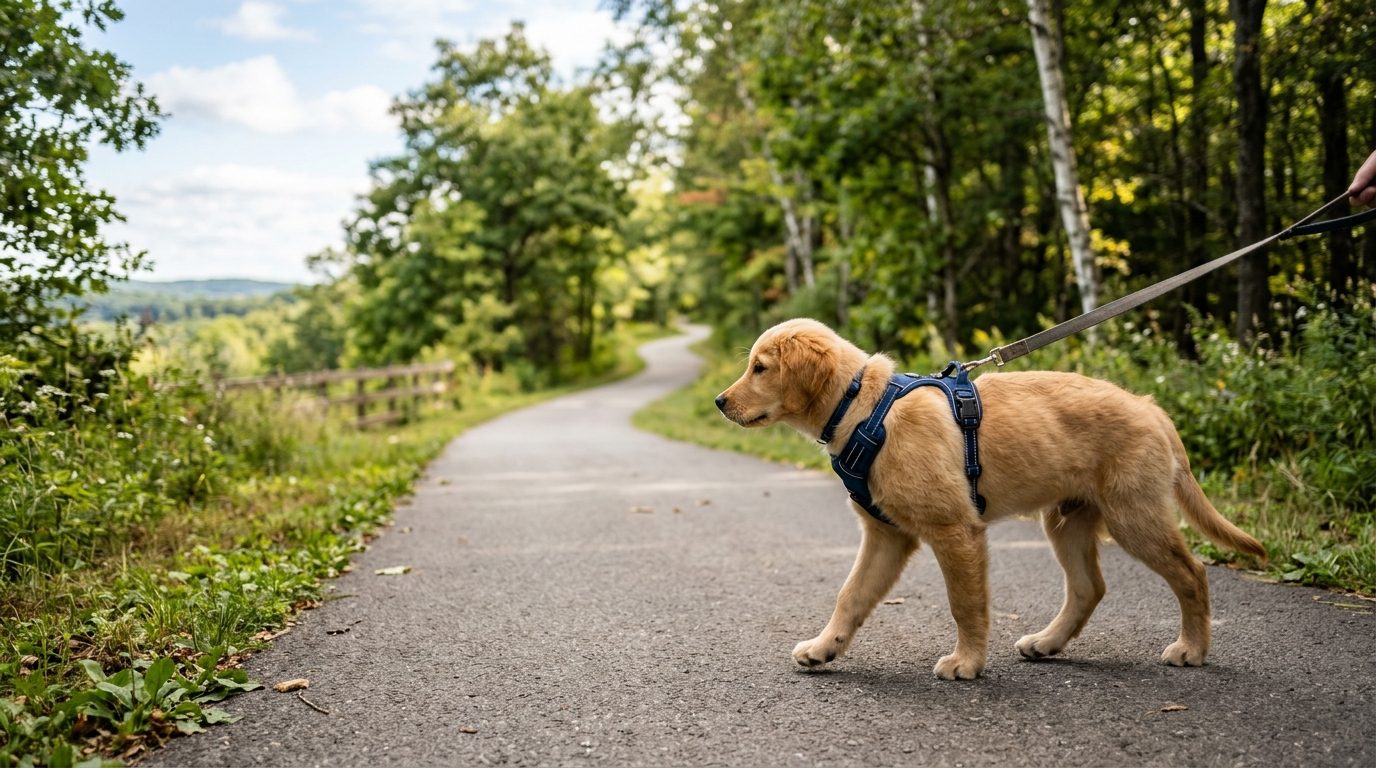
Understanding Natural Canine Walking Pace
Canine anatomy and locomotion differ significantly from human walking patterns. When asked to match a slower human pace, puppies naturally pull ahead simply to maintain their comfortable gait. Recognizing this natural difference helps owners remain patient rather than assuming a pulling puppy is being stubborn or dominant.
Furthermore, puppies are naturally goal-oriented animals. If pulling forward on a tight lead successfully allows the puppy to reach an intriguing fire hydrant, a patch of grass, or an approaching stranger, the pulling behavior is immediately reinforced. The environment itself becomes the reward for dragging the handler forward.
The Opposition Reflex Explained
When an animal feels physical pressure pushing or pulling against their body, a common response is to lean directly into that pressure. When an owner jerks or pulls backward on a leash, the puppy reflexively leans harder forward into the collar. Counteracting this habit requires teaching the dog that loosening leash tension is what produces forward motion.
Guidance from VCA Animal Hospitals emphasizes that reward-based positive reinforcement training creates durable behavioral habits while protecting the human-canine bond. Avoid physical corrections or harsh leash snaps, which can create fear and anxiety around daily walks.
Choosing the Right Equipment for Leash Walking
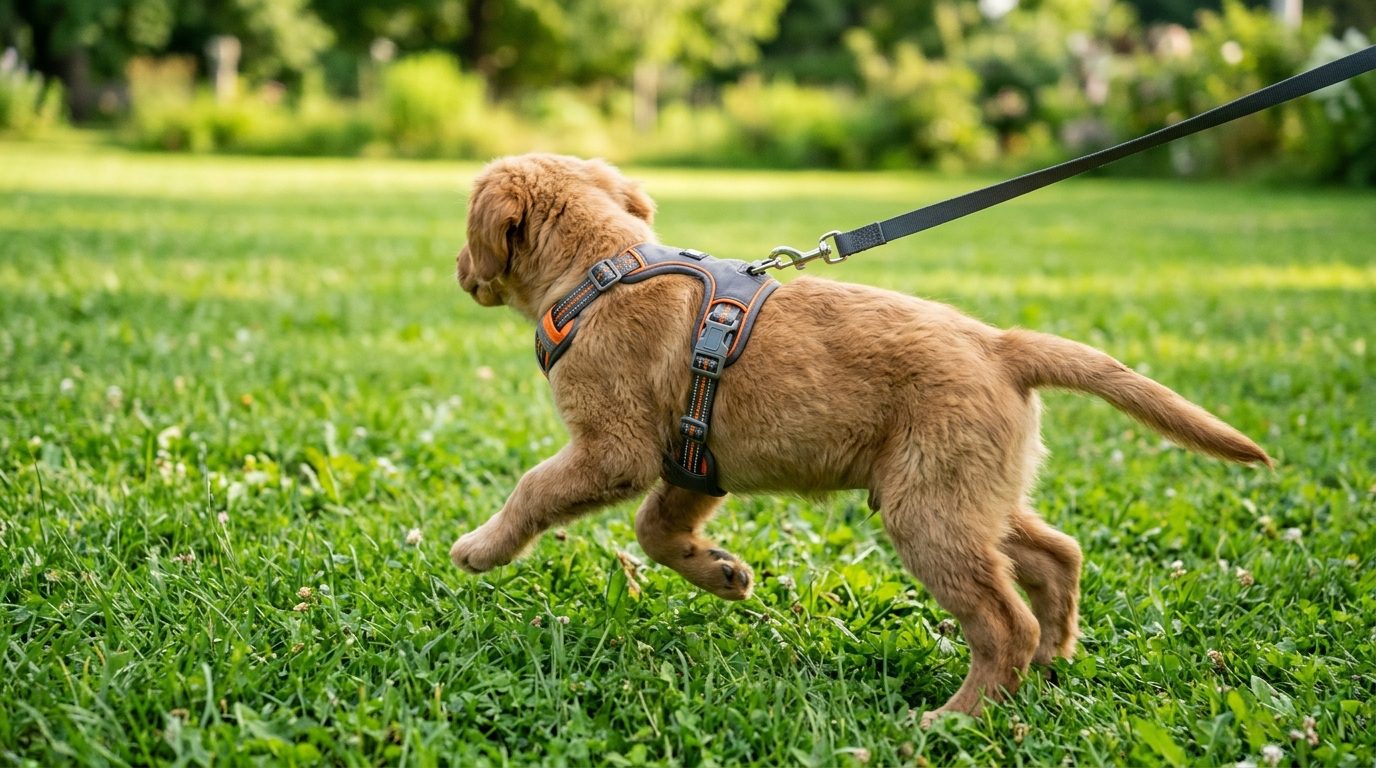
Selecting appropriate walking gear protects your puppy’s delicate throat and provides gentle mechanical assistance during early training. The equipment you choose sets the stage for comfort and safety.
Front-Clip Harnesses Versus Flat Collars
While standard flat buckle collars are ideal for holding identification tags and rabies licenses, pulling hard against a collar can risk throat discomfort or injury. Back-clip harnesses protect the neck but may not reduce pulling for puppies that tend to forge ahead.
According to guidance from the American Kennel Club, a front-attachment harness provides useful leverage for dogs that pull. Using a standard four-foot to six-foot fixed webbing leash provides steady control during training outings.
Step-by-Step Loose Leash Walking Techniques
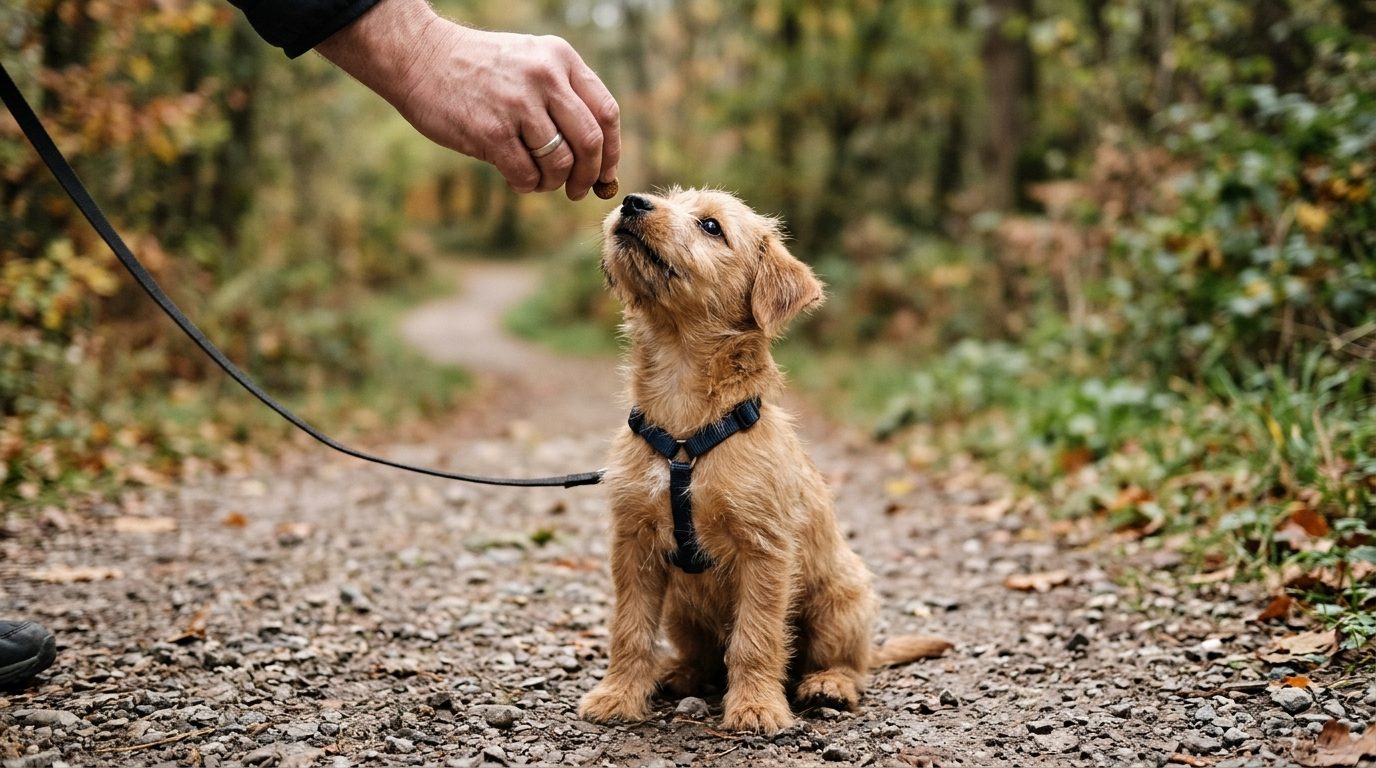
Mastering polite walking requires breaking the exercise down into clear, manageable steps that you practice in low-distraction environments first, such as a quiet hallway or living room, before heading outdoors.
The Red-Light Green-Light Method
The red-light green-light technique is a widely used, humane method for teaching leash boundaries through natural consequences. Follow these simple steps during your daily walking sessions:
- Begin walking forward on a relaxed six-foot leash with your puppy positioned near your hip or slightly ahead.
- The exact instant you feel tension on the leash, immediately freeze in place like a statue. This is your red light.
- Stand completely still without pulling back on the leash or saying anything harsh. Wait quietly for your puppy to respond.
- As soon as the puppy pauses, turns their head, or takes a step back toward you—causing the leash to slacken into a visible gentle curve—immediately resume walking forward. This is the green light.
- Deliver a small, tasty treat near your knee to reinforce the loose-leash position while continuing forward motion.
By consistently stopping whenever tension occurs, your puppy learns an undeniable rule of physics: pulling forward stops all movement, while maintaining a loose leash keeps the exciting journey moving ahead. Incorporating foundational obedience from our guide to puppy training commands reinforces attention on you throughout the walk.
Addressing High Distractions and Environmental Excitement
A puppy who walks beautifully inside your quiet living room may suddenly pull wildly when outdoors. Managing environmental stimulation requires gradual exposure and thoughtful distance management.
Managing Triggers on Neighborhood Walks
When executing puppy training leash pulling routines in bustling suburban environments, keep high-value rewards readily available in a treat pouch. Soft, smelly treats like cooked chicken or freeze-dried liver hold a puppy’s attention far better than standard dry kibble when competing against outdoor distractions.
If you spot another dog, a skateboarder, or an excitable group of children approaching down the sidewalk, increase the distance between your puppy and the trigger before your dog becomes overstimulated. Step off the walkway onto a grassy verge, ask for a polite sit, and reward continuous eye contact until the excitement passes by calmly.
Maintaining Consistency Across Household Members
Consistency is the glue that cements leash training habits. When practicing training a puppy not to pull on the leash, every single person who handles the leash must adhere to identical walking standards. If one family member permits pulling while another stops at every tug, the puppy becomes confused and pulling behaviors persist indefinitely.
Establish a household rule that no human takes a single forward step when the leash is tight. In addition, ensure your walking sessions do not conflict with bathroom urgency. If your puppy has a full bladder, walking politely is physiologically impossible; always allow them to relieve themselves using methods from our tutorial on how to potty train a puppy before beginning structured loose-leash practice.
Establishing Clear Walking Rules for Everyone
Keep training walks short, positive, and focused. For young puppies, five to ten minutes of loose-leash practice twice daily is far more productive than a grueling forty-five-minute trek that leaves both dog and owner exhausted. Celebrate small victories, end sessions on a high note with gentle play, and enjoy watching your companion blossom into a polite walking partner.
If your puppy displays sudden fear, severe lunging, or extreme resistance while wearing walking equipment, consult your veterinarian to evaluate for potential musculoskeletal discomfort or throat sensitivity. Working with a qualified positive-reinforcement professional dog trainer can provide personalized coaching for challenging walking behaviors.
Frequently Asked Questions
Why does my young puppy constantly pull forward on the leash?
Puppies pull forward because their natural walking pace is faster than humans, and their curiosity drives them to explore new scents and sights. In addition, dogs often instinctively lean against collar pressure when pulled. When pulling successfully takes them where they want to go, the habit becomes quickly reinforced.
What is the red-light green-light walking technique?
The red-light green-light technique involves stopping immediately like a statue the moment you feel tension on the leash. You remain completely still until the puppy steps back or slackens the lead, which acts as the green light to resume forward walking. This teaches the dog that a loose leash creates forward motion.
Should you use a harness or a collar to teach loose leash walking?
A front-clip harness is generally recommended for puppies learning loose-leash manners because it provides steering leverage without putting pressure on the throat. Standard flat collars are essential for carrying identification tags, but pulling hard against a collar can cause discomfort. Back-clip harnesses protect the neck but may not reduce pulling, while front-clip designs provide useful leverage.
How long should daily leash training sessions last for a puppy?
Leash training sessions for young puppies should be kept short, ideally lasting five to fifteen minutes once or twice per day. Young puppies have brief attention spans and tire quickly from mental focus and physical exertion. Keeping sessions brief and fun ensures the puppy remains engaged and ends on a positive note.