Bringing an adolescent dog or rescue into your household is immensely rewarding, but learning how to house train older puppy companions is often the most pressing challenge new owners face. Unlike an eight-week-old infant who simply lacks muscle development, an older pup between five and twelve months of age may have established confusing elimination habits, unmanaged indoor freedom, or past shelter stress that interrupts clean bathroom behavior. By resetting your daily household routine, supervising every indoor movement, and reinforcing outdoor bathroom trips with high-value praise, you can establish reliable housebreaking habits within several consistent weeks.
Adolescent housebreaking differs significantly from starting with an infant pup. Older juveniles possess greater holding capacity than young pups, gradually developing toward adult bladder control as they mature, meaning they can hold their waste for longer periods. However, if previous caretakers allowed them to soil rugs without redirecting, or if shelter kennel life normalized eliminating on concrete sleeping areas, the dog has learned that indoor surfaces are acceptable relief stations. Unlearning an existing habit requires more active human vigilance than creating a fresh habit from scratch.
A dependable puppy training schedule provides the structural backbone for successful adult and adolescent house training. When meals, water access, and scheduled outdoor breaks occur at identical times each day, biological elimination patterns become highly predictable. Aligning your household habits with our foundational principles on how to potty train a puppy eliminates guesswork and helps older dogs understand human expectations.
According to veterinary guidance published by VCA Animal Hospitals, house training older dogs requires treating them essentially like young puppies during initial weeks, using close supervision and positive reinforcement until clean habits are established. Assuming an older dog automatically knows household rules is a frequent mistake that leads to unnecessary frustration.
Understanding the Unique Biology of an Older Puppy
Physical Bladder Capacity Versus Learned Habit
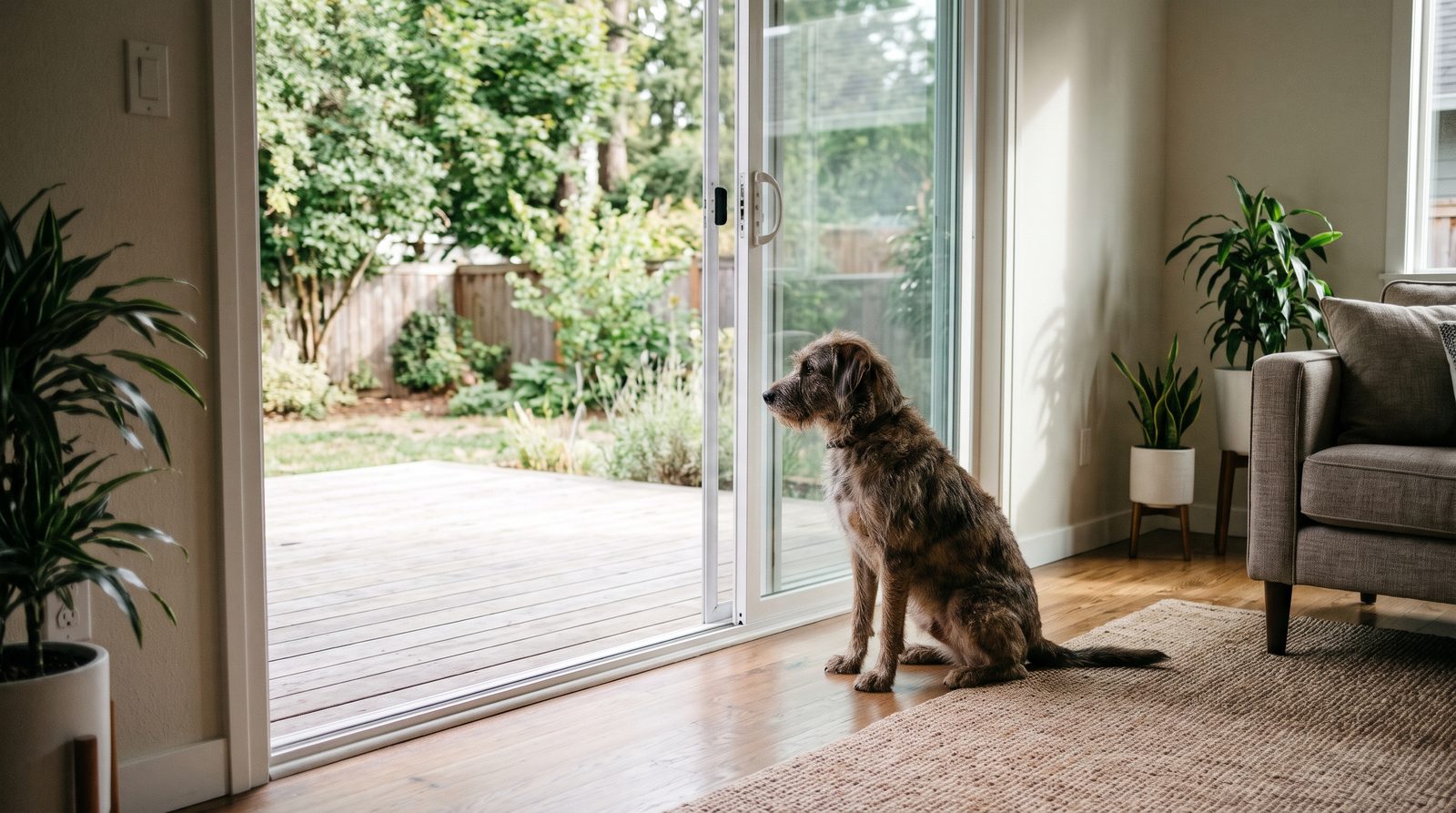
Physiologically, an adolescent dog possesses substantial physical bladder control. Clinical guidelines from the Ohio State University College of Veterinary Medicine suggest daytime holding capacity correlates roughly with age in months up to adulthood, meaning a six-month-old canine can comfortably hold their bladder for several hours under calm conditions. Despite this physical capability, if an older puppy has not learned that human living areas are a clean den, they will simply relieve themselves whenever the urge arises.
Distinguishing between lack of training and behavioral or emotional wetting is essential. Adolescent dogs frequently experience excitement urination or submissive wetting when greeted by humans or placed in stimulating environments. Excitement urination occurs spontaneously during high-arousal greetings, while submissive wetting happens when a dog feels intimidated or overwhelmed by direct eye contact, towering human posture, or raised voices.
Recognizing Submissive Urination and Excitement Wetting
If your older dog urinates while greeting you at the doorway, disciplinary scolding will severely worsen the problem. Submissive wetting is an appeasement gesture rooted in anxiety rather than willful disobedience. Handle greeting urination by keeping arrivals completely low-key, avoiding direct leaning over the dog, and escorting them immediately outside to eliminate before offering gentle physical affection.
Establishing a Reset House Routine and Feeding Schedule
The most effective way to rehabilitate an un-housetrained adolescent canine is executing a complete household reset. Treat your older dog as if they arrived home yesterday, eliminating unsupervised freedom across the entire residence until dependable outdoor reliability is proven.
Predictable Meal Schedules and Outdoor Timing
Free-feeding dry kibble by leaving food bowls out all day makes predictable housebreaking virtually impossible. Digestive transit time operates like clockwork when food is offered at fixed hours. Provide measured meals twice daily at consistent times, leaving the dish down for fifteen minutes before removing any uneaten portions. When food enters the stomach on a precise schedule, gastrocolic reflexes stimulate bowel movements within twenty to forty minutes, providing predictable opportunities for outdoor reinforcement.
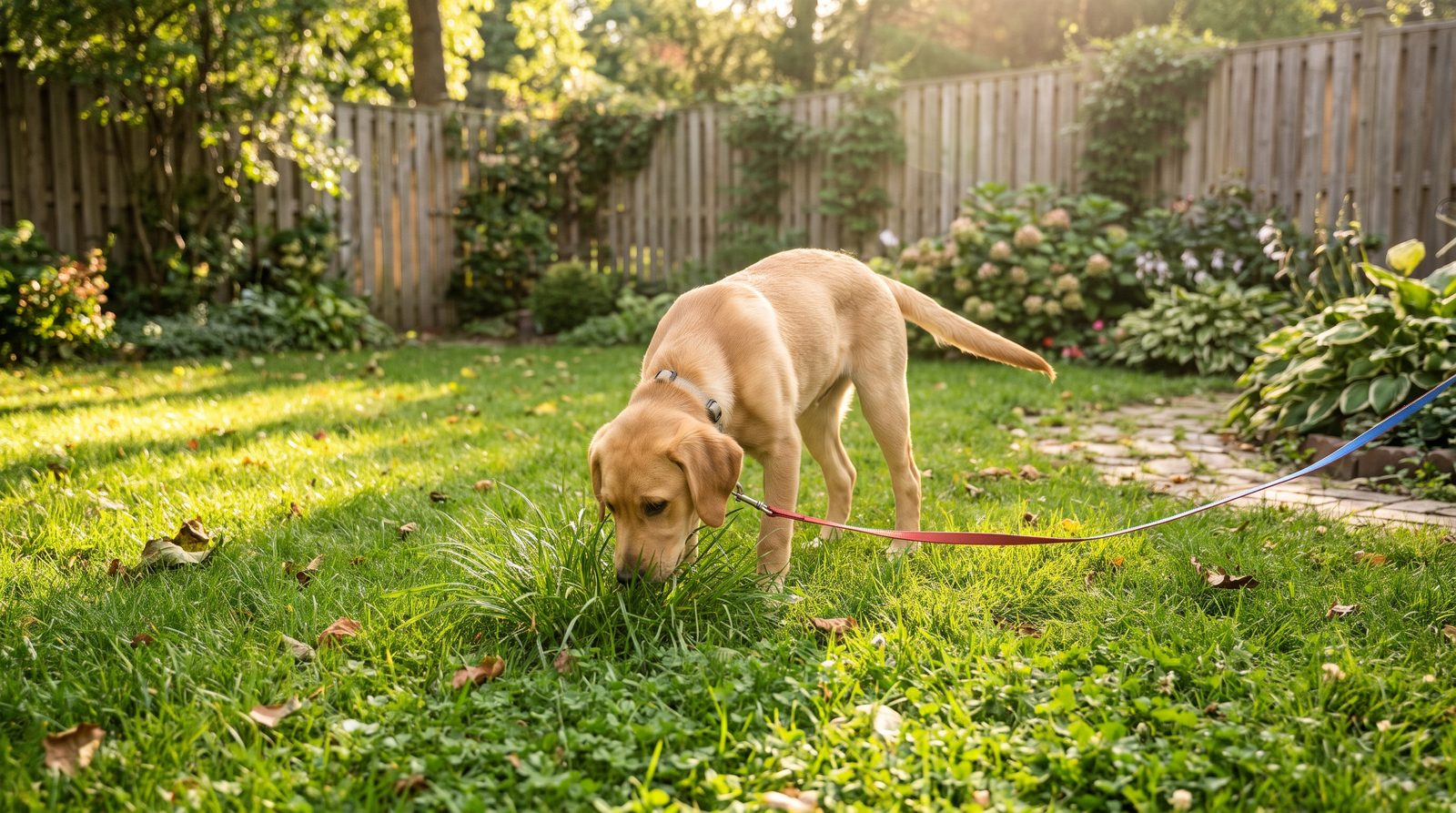
Escort your older dog outside on a six-foot leash directly to a designated bathroom area. Free roaming in a large backyard often distracts an energetic adolescent dog with squirrels, airborne leaves, and neighborhood sounds. Keeping the dog leashed keeps them focused on the task. Stand quietly in the elimination zone for five to eight minutes. When your dog finishes, deliver enthusiastic verbal praise and a high-value treat immediately on the grass before engaging in play or returning indoors.
If your dog fails to eliminate during the outdoor trip, do not allow them free access to carpeted living areas upon returning inside. Walk them directly to a safe confinement zone, wait ten to fifteen minutes, and escort them back to the outdoor spot. Repeating this cycle prevents indoor accidents and teaches your dog that outdoor grass is the exclusive toilet zone.
Using Crates and Confinement to Train Clean Habits
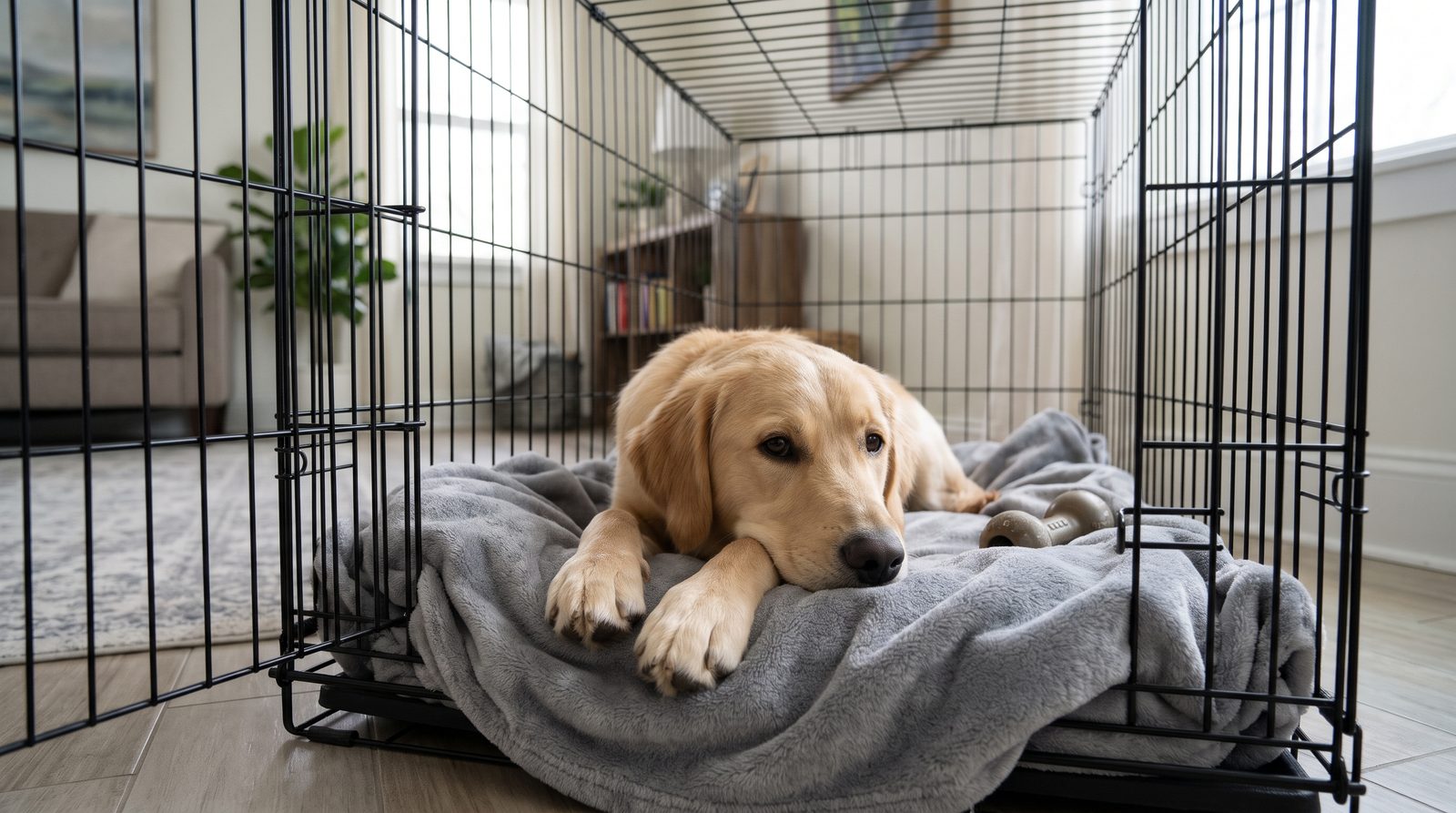
Confinement management is your most powerful asset when retraining older juveniles. Dogs possess a natural biological instinct to keep their immediate sleeping den clean, making a properly sized enclosure an invaluable teaching tool. If you are introducing confinement for the first time, our guide on crate potty training a puppy provides step-by-step acclimation exercises to keep the experience positive.
Appropriate Enclosure Sizing for Adolescent Canines
Enclosure dimensions must be chosen with care. The enclosure should only provide enough floor space for your dog to stand at full height, turn completely around without hunching, and lie flat on their side. If an adolescent dog is placed in an oversized enclosure, they will readily urinate in a distant corner and rest comfortably on the dry opposite side, completely defeating the den instinct.
When you cannot actively supervise your companion indoors, utilize umbilical cord leash tethering or secure pen confinement. Leash tethering involves looping a six-foot training lead around your waist or belt loop while working at home. Because the dog remains within your direct peripheral vision, you will immediately notice pacing, sudden sniffing, turning circles, or walking toward doorways, allowing you to intercept them before an accident occurs.
Managing Indoor Accidents and Scent Triggers Without Punishment
Indoor accidents are inevitable during the retraining phase, but human responses dictate whether progress accelerates or stalls. Never punish, scold, or physically reprimand an older dog for an indoor accident. Guidance from Ohio State University College of Veterinary Medicine emphasizes that punishing a dog for eliminating indoors merely teaches them to fear human presence, which can cause them to avoid eliminating when any person is around.
If you catch your dog actively squatting indoors, interrupt them with a cheerful, neutral noise such as clapping your hands, and swiftly escort them outside on a leash to finish. When they complete eliminating outdoors, reward them warmly. If you discover a cold accident after the fact, simply clean the surface quietly without reacting toward the dog; retrospective punishment has zero educational value because canines cannot connect past events with present anger.
Thorough cleaning of accident sites is critical for removing microscopic scent markers. Dogs possess olfactory senses thousands of times more sensitive than humans and will repeatedly target areas where urine enzymes linger. Clean all soiled carpets and hard surfaces with an enzymatic bio-cleaner to remove odors completely, as lingering scent markers can attract the dog back to the exact same spot.
Overcoming Rescue Backgrounds to Train an Adolescent Puppy
Adolescent dogs adopted from animal shelters, rescues, or neglected backgrounds frequently present unique housebreaking hurdles. Dogs housed in confinement runs where they must eliminate near their sleeping area can lose their natural reluctance to soil their living space. Restoring clean bathroom habits in these dogs requires abundant patience and gradual rebuilding of den cleanliness.
According to guidance from the Cornell University College of Veterinary Medicine, canine adolescence involves significant hormonal and behavioral transitions, often leading to temporary boundary testing and training setbacks. If a previously reliable dog experiences sudden house soiling, our guide on managing potty training puppy regression outlines practical diagnostic steps. Always consult your veterinarian to eliminate physical ailments such as urinary tract infections before assuming behavioral causes.
When you work to house train older puppy rescues or adolescent dogs, consistency and patience remain your most effective tools. By keeping feeding timetables rigid, eliminating unsupervised indoor freedom, and celebrating every outdoor success, your older companion will rapidly grasp household expectations and become a clean, dependable family partner for years to come.
Frequently Asked Questions
How long does it take to house train an older puppy?
Most older puppies and adolescent dogs achieve dependable housebreaking with several weeks of rigorous, consistent management. Because older dogs possess greater physical holding capacity, progress is often steady once clear routines are established. However, dogs originating from long shelter stays or puppy mills may require several months of patient retraining to rebuild den cleanliness instincts.
Why is an older puppy still having accidents indoors?
An older puppy usually has indoor accidents because they were granted excessive unsupervised freedom before understanding household bathroom rules. Residual urine scent from previous accidents, unpredictable feeding times, or sudden adolescent regression also contribute. In addition, underlying medical issues such as urinary tract infections can trigger unexpected indoor accidents and warrant a check with your veterinarian.
Should you use a crate when housetraining an adolescent dog?
Utilizing a crate is highly beneficial for adolescent housetraining because it leverages a dog’s innate instinct to keep their sleeping bed clean. The enclosure must be properly sized so the dog can only stand, turn around, and lie flat comfortably. For dogs unaccustomed to crates, gradual positive introduction with treats and toys ensures the space remains a calm sanctuary rather than a stressful cage.
How do you handle past shelter habits or dirty den history?
Handling a past shelter history requires treating the dog like a young beginner and patiently restoring their natural reluctance to soil their living space. Keep the confinement area pristine and immediately wash any soiled bedding with enzymatic cleaners. Provide frequent outdoor breaks directly to grassy surfaces, rewarding outdoor elimination enthusiastically to establish strong surface preferences.